A few years ago we wrote about a California law that almost led to coffee being labeled as a carcinogen. The chemical acrylamide is produced when coffee is roasted. It is found in many industrial products and in tiny amounts in many foods. It is thought to possibly be carcinogenic in sufficiently high concentrations and quantities in industrial settings. However, none of these quantities or concentrations are encountered in foods or coffee. Thus, it is unlikely that acrylamide in coffee causes cancer. This was finally determined to be the case by a California court thus preventing the need for “cancer risk” labeling on all coffee sold in California. That case was years ago. What is the current state of knowledge regarding coffee and cancer? Here is our 2026 coffee and cancer update.
Cancer Incidence in Coffee Drinkers
The best evidence regarding coffee and cancer comes from long term population sampling studies that help correlate incidence of various types of cancer with how much coffee folks drink. Evidence is clear that coffee drinkers have lower incidence of endometrial and liver cancers. There is also suggestive evidence that the incidence of colon, prostate, and mouth cancers is lower in coffee drinkers. Less clear evidence suggests that laryngeal and skin cancers are also less likely in coffee drinkers. The gold standard types of studies, namely double blind studies, have not been done regarding coffee and cancer. Such studies would require that people drink a beverage every day that might or might not be coffee, now know if it was coffee or not, and that their incidence of cancer be kept track of over the years. This is the sort of study required for medicines to be to OKed by the US Food and Drug Administration. It is highly unlikely that such studies will ever be done for coffee and the incidence of cancer. Nevertheless, current evidence from population studies is sufficiently compelling such that it allows us to proceed with more questions about why coffee drinking helps us avoid cancer.
Why Does Coffee Reduce the Likelihood of Cancer?
Coffee contains ample amounts of antioxidants such as chlorogenic acid, quinic acid, cafestol, kahweol, and N-methylpyridinium, all of which reduce inflammation. By reducing inflammation these compounds both reduce DNA damage and hasten the self-destruction of damaged cells. These two properties are likely ways that antioxidants in coffee reduce the risk of cancer. An informative articles in Antioxidants, published February 2025 recounts how antioxidants in coffee combat oxidative stress, improve cardiac and metabolic health, and even improve brain function (reduce the incidence of Alzheimer’s disease). Additionally, they comment on how antioxidants also help coffee improve the outlook for aging and longer lives.
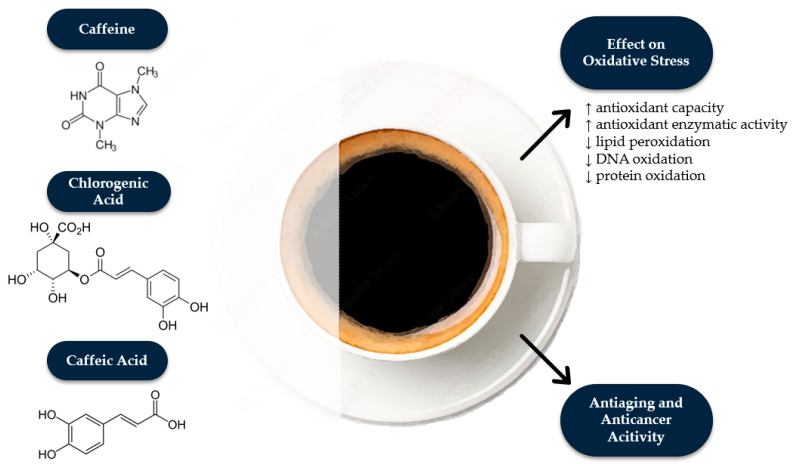
The Antioxidants article is pretty dense reading but it does a complete job reviewing pretty much every aspect of coffee pertinent to human health. The important part for us in reviewing current knowledge about coffee and human incidence of cancer is that the research is solid and compelling. There will never be double blind studies regarding coffee and cancer but the basic science, combined with population studies is compelling.
How Much Coffee Should You Drink to Get Its Anticancer Benefits?
The evidence is solid that even one cup of coffee a day has health benefits from reducing the incidence of type II diabetes to improving heart health to reducing the risk of cancer to even prolonging human life. The benefits increase with each extra cup of coffee a day up to six cups a day, where benefits level off. Because many people find six cups of coffee a day hard to tolerate due to jitteriness, higher blood pressure, or gastric distress one might wish to switch to decaf coffee at some point in order to achieve the full benefit of six cups a day. Nevertheless, as of 2026, scientific evidence supports our ongoing belief that coffee is good for your health and even reduces the risk of various types of cancer!