Normally we think of climatic risk to coffee as being hotter temperatures, increasing risk of coffee leaf rust, crop failure from drought, and less and room at the tops of mountains to grow fine Arabica coffee. 2026 has been a year of forest fires across Europe, North America, Asia, South Africa, Australia, Chile, Argentina and in the coffee belt in Indonesia. Going forward, is production of coffee at risk of forest fires as well as excess heat, drought and disease?
Why Are There So Many Forest Fires?
The United States National Park Service says that eighty-five percent of United States wildfires are caused by humans. Causes include burning cigarettes carelessly discarded, unattended fires burning trash and debris, campfires left unattended, sparks from electrical equipment, and arson. Lightning strikes cause the other fifteen percent of wildfires in the USA. Drought makes wildfires worse both because there is more dry fuel for fires and because water needed to fight fires may be scarce. There have not necessarily been a lot more fires in 2026 but they have been harder to contain because of dry conditions.
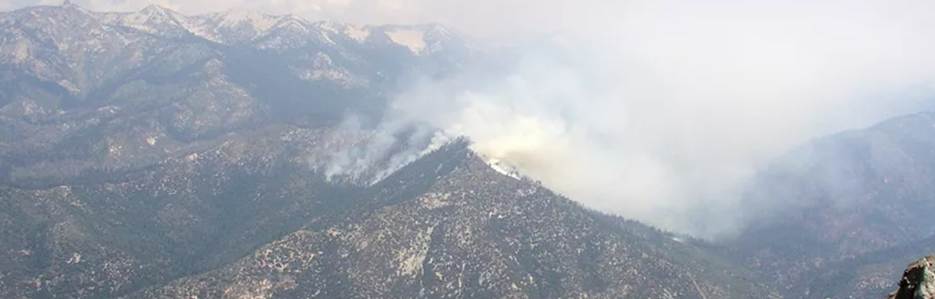
Drought and Forest or Wild Fires
As noted by the US Park Service fires are typically worse and harder to contain when conditions are dry to begin with. However, long term drought conditions result in vegetation dying back and therefore less fuel for new fires. Because coffee plants are planted and tended by active human activity we would not expect fewer fires in coffee areas due to plants dying back. But to the degree that coffee farmers give up on an area because of drought that would result in less fuel for fires.
How Often and Where Are the Fires in Coffee Growing Regions?
Just two years ago in 2024 a severe drought led to fires in Sao Paulo state in Brazil. This was an El Niño year when there were forest fires in regions like Colombia where it is typically wet virtually all year long. This year with another El Niño in the wings Colombia is keeping close track of fire risks throughout the country including in the coffee growing axis. In Indonesia the Sumatra and Kalimantan regions have had fires recently causing damage to coffee farms. Indonesia typically has very distinct wet and dry seasons. When dry seasons are worse such as during El Niño years wild fires are common and can very well burn into coffee farms causing significant damage.
Do Climate Change or El Niño Cause Wild Fires in Coffee Producing Areas?
Steadily increasing amounts of carbon dioxide in the atmosphere from burning fossil fuels is steadily driving temperatures up. Higher temperatures appear to be contributing to more droughts. However, climate change is not responsible for any given wild fire or forest fire. On the other hand, El Niño events generally add power to storms which can include lightning that causes fires. In both cases the effects on fires in coffee producing regions will be limited to dry conditions over both the long and short term. Rainfall reduction due to deforestation in areas like Brazil likely have a stronger effect on the drought and wildfire relationship.
Shade Grown Coffee and the Risk of Forest Fires
Wild coffee is naturally a plant that grows in the shade of the forest. Shade grown coffee is commonly excellent coffee. Sadly, as forest fires become more common in coffee growing regions of the world this excellent coffee will be at risk. To protect areas planted with shade grown coffee a coffee farmer will need to create fire breaks where there are areas free of combustible materials. This may be a good way to protect coffee crops in general from wild fires but will reduce income for the coffee farmer who will not derive any income from fallowed land.