We know that old Arabica coffee varieties that are susceptible to coffee leaf rust are commonly grown at very high altitudes where temperatures are lower and coffee plants both grow more slowly and are better able to fight off leaf rust infections. As a super El Niño approaches many coffee growing areas are looking at drought conditions. Not only will coffee plants be deprived of sufficient water but they will also be more prone to coffee leaf rust infestations. Why is that and are there things that a coffee farmer can do to help remedy the situation?
How Does Coffee Leaf Rust Affect Coffee Plants?
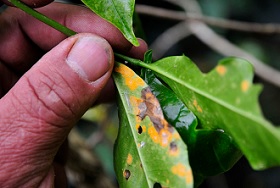
Hemileia vastratrix, the coffee leaf rust fungus is an obligate parasite. This means the fungus needs to find a host to feed upon. The spores of this fungus float up and attach to the underside of the leaves of coffee plants where the spores enter the leaves though tiny pores called stomata whose normal function is to allow water and gases to pass in and out of the leaves. Once inside of the coffee plant leaf the spores germinate and send out filaments throughout the leaves terminating in sacs called haustra which in turn absorb nutrients to feed the fungus and gradually kill the coffee plant by destroying tissue and depriving the plant of nutrients. In the process, yellow-orange pustules form on the underside of the coffee plant leaves giving the plant disease the “leaf rust” name. The process is gradual and as such a coffee plant may progressively weaken over years before dying.
How Does Drought Make Coffee Leaf Rust Infestations Worse?
During a drought there is not any more coffee leaf rust hanging around to infect coffee plants and drought does not make leaf rust spores any more virulent. Rather drought weakens coffee plants and reduces their resistance to leaf rust. Water stress makes plant nutrient transport weaker. In addition, coffee plants are less able to fight off any pathogens as they need to work to survive the lack of water. Coffee berry disease is prevalent during droughts for the same reasons that coffee leaf rust is more of a problem. A healthy coffee plant physically blocks propagation of leaf rust filaments both physically and by creating chemical compounds that inhibit the fungus. These defense mechanisms are greatly reduced in a heat stressed coffee plant.
Does Irrigation Help Prevent Coffee Leaf Rust During Drought Conditions?
The short answer is yes. Providing enough water helps keep a coffee plant healthy and the ground encasing its roots moist. Irrigation water can also contain nutrients to help boost plant growth and defense against diseases. It is important when irrigating coffee plants to avoid too much water which can lead to roots being deprived of oxygen. Irrigation works best with well drained soil and pulse irrigation where the soil is allowed to breathe between irrigation pulses. And it is always important to follow basic coffee leaf rust prevention procedures such as cleaning up debris around coffee plants and cleaning tools when moving from field to field to avoid carrying spores from infected to previously clean areas.