Vietnam used to be minor player in the world of coffee production as well as an impoverished country ravaged by war. Part of the Vietnam economic miracle over the last forty years has been the emergence of the country as the leading producer of Robusta coffee. However, one echo of the country’s wartime past is the potential for agent orange residue in coffee from Vietnam.
Vietnam as the Leading Robusta Coffee Producer
Ever since Vietnam was part of colonial French Indochina it has been a coffee producer but a minor one. The first step in making Vietnam the leader in Robusta production were the 1986 economic reforms in Vietnam when the government turned away from a strict communist economy and became a directed combination of capitalism and socialism. Part of this transition included many thousands of small independent coffee farmers who drove the massive increase in Robusta production. The next part of this transition was funding by the World Bankwhich provided money and expertise to the growing coffee sector. Funding and a change of the economic rules in Vietnam helped the coffee sector but could not undo all of the effects of military conflict from the French Colonial era on through the war with America. We are referring to the use of the Agent Orange defoliant.
What Is Agent Orange?
Agent orange is an herbicide used to kill broadleaf plants. It was used by American forces in Vietnam in the 1960s and early 1970s to kill the trees and other plants that provided cover and food for Viet Cong and North Vietnamese Army forces operating throughout the war zone. Agent Orange is not only toxic to broadleaf plants but is also a known carcinogen that caused cancers in Vietnamese soldiers and civilians as well as Americans who were involved in its application and fighting on the ground where the defoliant was applied. The two major defoliants in Agent Orange, 2,4-dichloro phenoxyacetic acid C8H6Cl2O3 (2,4-D) and 2,4,5-trichlorophenoxyacetic acid C8H5Cl3O3 (2,4,5-T), break down quickly but left the byproduct, TCDD, the dioxin, 2,3,7,8-tetrachlorodibenzodioxin, which is the carcinogen. This chemical also breaks down quickly when exposed to air and unlight but can persist for many decades in tropical soils and for up to a century in river sediments. Thus there could be a concern about lingering TCDD, agent orange residue, present in Robusta coffee grown and processed in Vietnam and shipped across the world.
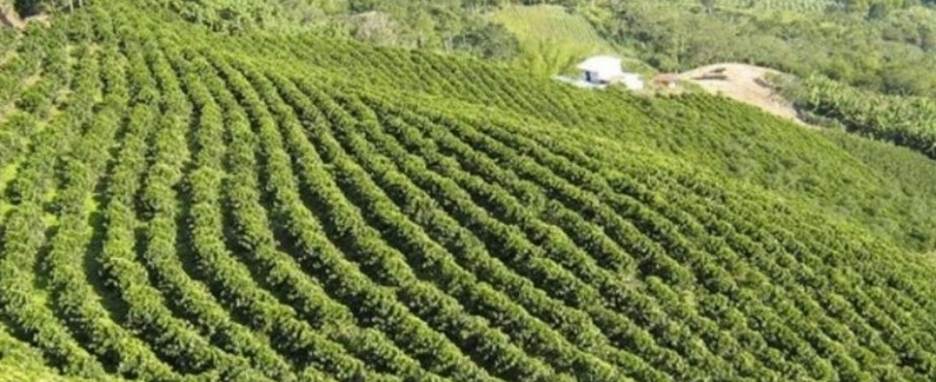
How Much TCDD Carcinogen Persists in the Soil in Vietnam?
The Journal of Soil Science published a report in 2019, 10.4236/ojss.2019.91001, in which they report persistent high levels of the TCDD agent orange residue especially around former US military bases where it was used extensively. The measurements were done more than fifty years after the end of the Vietnam war. The question we have is now much of this toxic agent orange breakdown product can show up your Robust coffee from Vietnam.
Coffee Plants Do Not Absorb TCDD
The TCDD agent orange carcinogen is not water soluble. There is no evidence of coffee plants absorbing this chemical. The chemical binds to soil particles and does not readily enter coffee plants. Furthermore, there is no good evidence of TCDD residue showing up in coffee beans. Thus the bottom line is that while this carcinogenic chemical can persist for decades in places like Vietnam where it was used during wartime, any persistent TCDD in the soil does readily get into coffee plants via their roots or into coffee beans. So any agent orange residue in coffee from Vietnam is minimal to non-existent.