The coffee belt straddling the equator includes more than ninety countries. More than a third of these nations are in the continent of Africa. Africa produces about an eighth of the world’s coffee with Ethiopia and Uganda being the leaders in African coffee production. A unique feature of much of African coffee is that it did not have to be imported from the source (Africa) to be cultivated in the East Indies or Latin America or Vietnam. Coffee, like other plants spreads naturally when its seeds (coffee beans) are carried away from the mother plant, germinate and take root.
How Coffee Spreads Naturally
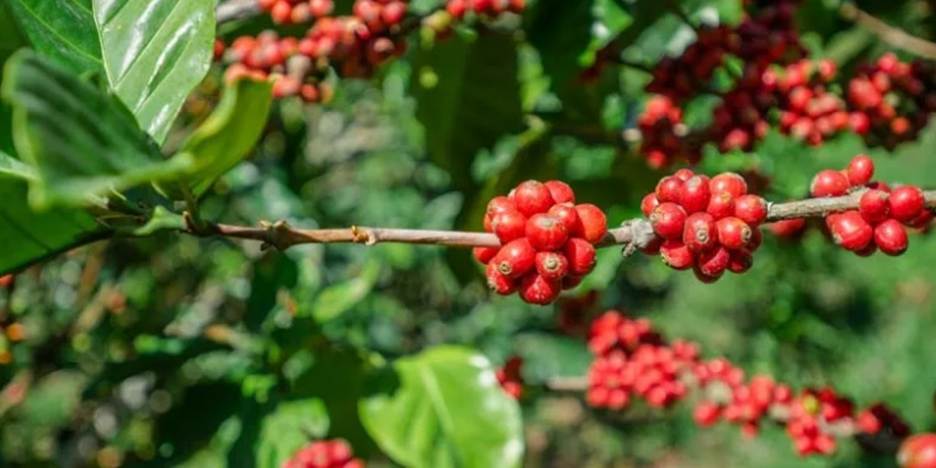
One coffee plant has the ability to spread and create more plants because coffee is self-pollinating. Like with other seed bearing plants animals will eat coffee cherries and pass the seeds in their excrement. In regard to coffee this has been seen in modern times in Australia and Hawaii where coffee plants have spread beyond cultivated areas and become “weeds” in forested areas. The point is that while genetic evidence as well as history points to Ethiopia as the point of origin of coffee, the plant grows naturally across the areas of the continent conducive to growing coffee. These generally include higher altitudes and always are limited to tropical habitats with sufficient rainfall thus excluding areas like the Sahara Desert.
Coffee Varieties That Evolved in West Africa
As coffee spread out of Ethiopia it evolved to create varieties different from the Arabica coffee at their point of origin in Ethiopia. The end result in West Africa in Liberia, the Congo Basin and the Ivory Coast was the evolution of Robusta and Liberica coffees. While these were originally “home grown” coffees with little commerce outside of their growing areas, they were both exported and used across the Coffee Belt in the late 19th century because of their native resistance to coffee leaf rust. Thus the huge amounts of Robusta produced by the world’s second largest coffee producer, Vietnam, originally came via West Africa from coffee that originated in East Africa. Liberica coffee is now grown in the Philippines, Indonesia, and Malaysia and is primarily a low altitude crop in regions with high humidity.
Evolution of Modern Coffee Varieties
While the bulk of African coffee evolved naturally, natural evolution of new types of coffee has also occurred outside of Africa. Examples are Bourbon which evolved spontaneously on the island of Bourbon in the Indian Ocean and the sub varieties of Caturra which occurred as a Bourbon mutation in Brazil at the start of the 20th century, Pacas which is a Bourbon mutation that evolved in El Salvador around the time of the Second World War, and Villa Sarchi which is another Bourbon variety that evolved in Costa Rica in the 1950s.
Natural Evolution and the Future of Coffee
There is ample reason to believe that an increasingly hot and variable climate will have detrimental effects on coffee crops across the globe. In that regard, natural evolution of new coffee varieties that may be better adapted to a changing climate may be a beneficial thing. We can only hope that such new strains of coffee arrive sooner than later!