How Can I Enhance the Fruity Notes in My Colombian Coffee?
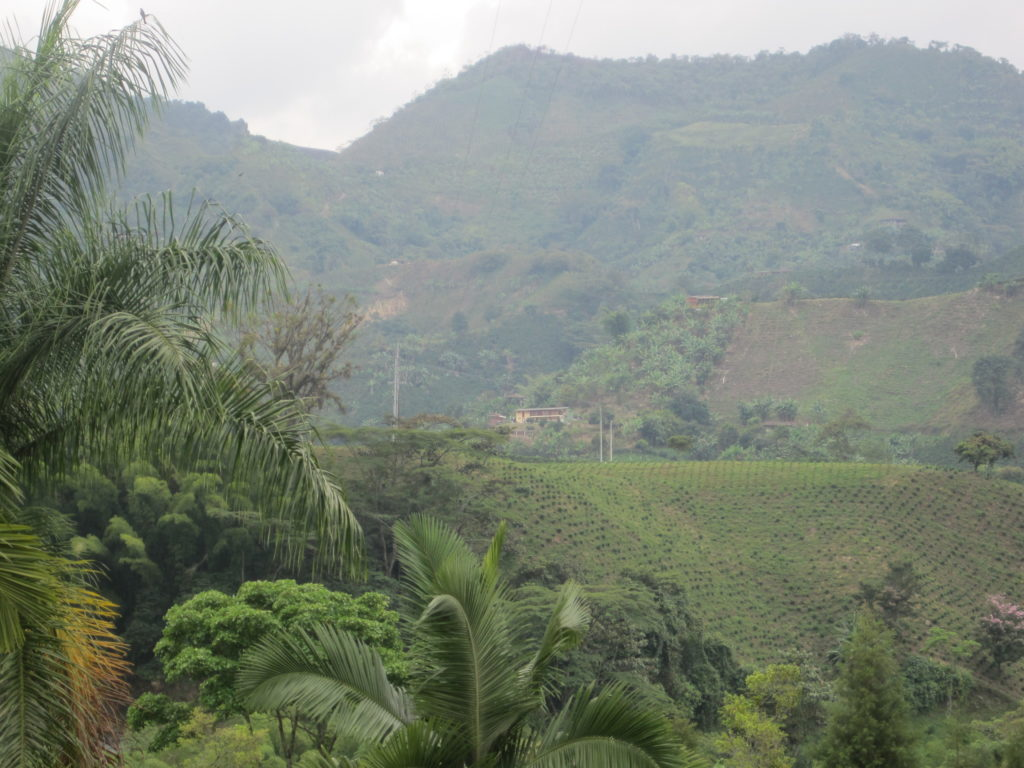
Coffee from the Colombian coffee growing axis, the Eje Cafetero, ranks with the best coffee in the world. And, while many great coffees are only available in small quantities, the area in the west of the Colombian Andes produces excellent Arabica coffee in substantial quantities. Coffee from this part of the world is grown at high altitudes in rich, volcanic soil and excellent mountain side drainage. These factors combine to produce coffee with excellent aroma, flavors, and notes. For those unfamiliar with what coffee notes are, notes are the aftertaste that helps to accentuate the excellent flavors of Colombian coffee. Colombian coffee is known for its fruity notes.
What If You Cannot Taste the Notes in Colombian Coffee?
A friend of this writer once remarked that he loved his coffee but could not for the life of him distinguish fruity notes in his Colombian coffee. He went on to ask what he was missing by not having the sense of smell and taste of a bloodhound. He did not mention that he was a pack a day smoker which, most likely reduced both his sense of smell and his sense of taste. In addition to my friend, there are non-smoking individuals who would love to experience the full range of taste of their great Colombian coffee and believe they are missing out because they do not have the taste buds of a professional coffee taster. What can they do?
First Ways to Help Enjoy Fruity Notes in Colombian Coffee
The first thing to ask yourself if you think you are missing the great flavor and notes in Colombian coffee is if your coffee is fresh. Do you buy green beans, store them properly, and only roast enough to make coffee the same day. That is the optimal way to retain freshness and optimal flavor and notes from your Colombian Arabica coffee. If you buy roasted coffee, do you buy whole bean that was roasted recently? Roasted coffee beans retain optimal freshness for up to two weeks and reasonable freshness for up to a month. The first best way to enjoy aroma, flavor and notes is to brew coffee from fresh beans. If you buy ground coffee that was vacuum packed, it begins to lose its freshness the moment you open the container. In this case your odds of enjoying the best that Colombian coffee can offer have gone way, way down.
Using Additives to Enhance Colombian Coffee Fruity Notes
If you have done everything that you can to ensure fresh coffee for brewing and think you are missing the fine fruity notes of your Colombian coffee, you might try additives to enhance the fruity notes. Specific additives you might try include fresh berries or drops of fruit juice. Orange blossom or rose water are also useful in this regard. Some folks use a fruit puree or infusion. In each case, add the fruit enhancements to the coffee grounds before you start brewing to ensure maximum infusion into the brew.
Our suggestion is to start with tiny amounts of enhancers and increase until you obtain the result that pleases you. What you are trying to do is taste the fruity notes or your coffee and not mask the coffee’s native flavors and notes with overpowering additives!
What Soil Conditions Result In Fruity Coffee Notes?
In our recent article about coffee notes we mentioned that fruity coffee notes are one of the hallmarks of Colombian Arabica Coffee. Why is this and what are the soil conditions that cause a coffee to have this quality? It is general knowledge that Colombian coffee is grown in rich volcanic soil at high altitude and with excellent drainage but what specifics cause fruity notes?
What Are the Immediate Causes of Fruity Coffee Notes?
A coffee with fruity notes is rich in aromatic compounds. Aromatic compounds are the result of rich carbohydrate and, specifically, sugar content of the coffee bean as well as ample protein and amino acid amounts. These, in turn are the result of slightly acidic soil in the pH range of 5.6 to 6.5 in addition to coffee being grown at high altitudes where slow growth results in a richer assortment of carbohydrates, amino acids, and, thus, aromatic compounds. The ideal acidity of Colombian volcanic soil is helped by high levels of potassium and phosphorus in the soil. In addition soil in the western Andes, which is the historic heart of Colombian coffee growing. The soil is rich in nitrogen fixing bacteria and beneficial fungi that aid coffee plants in absorbing nutrients like nitrogen and phosphorus. The excellent drainage where every coffee plant is located on the side of a mountain results in the excellent drainage that prevents coffee root diseases common to coffee planted in flatlands.
How Natural Coffee Processing Preserves Fruity Coffee Notes
When the coffee grower uses dry or natural processing on his harvested coffee beans, the pulp remains intact which lets the cherries ferment for as long as several weeks. This leads to deeper, floral and sweet flavors plus the fruity aftertaste or notes. In order to help preserve fruity notes it is important to use a light roast as well! If you do a medium roast you will caramelized flavors or notes just like if you cook or roast a sugary disk overly long in your oven. With natural processing the sweetness occurs in the pulp but because the pulp remains next to the coffee bean for an extended period, sugars absorb into the coffee bean resulting in fruity flavors and notes. Honey processing in which the skin of the bean is removed but not the mucilage results in flavors and notes in between wet and dry or natural processing.
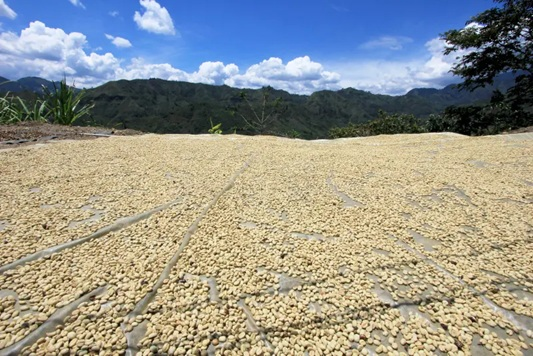
Dry or Natural Coffee Processing
Dry Processing Preserves Antioxidants
Besides resulting in fruity flavors and notes in your coffee, when your coffee way dry or naturally processed the coffee retains more antioxidants. Like with fruity notes, antioxidant levels are affected by the roast that you use. Reliably, the fruitier your coffee notes the more antioxidants your coffee has. Because antioxidants in coffee are mostly what confer long term health benefits you are getting healthier coffee when you drink Colombian Arabica coffee with fruity flavor and notes! If the health benefits of coffee are most important to you remember to stick with a light roast which also preserves fruity notes and antioxidants.
Fruity Notes Antioxidants and Brewing Method
The last step in the process of getting your cup of Java is brewing the coffee. In this regard, methods that leave the coffee in touch with the brewing water for longer result in greater extraction of antioxidants, and to a degree, flavor and note. Using a French press or making pour over coffee are both ways to increase contact time, flavor and antioxidants.
What Are Coffee Notes?
Very commonly when you Google a given type of coffee you are rewarded with a description of its aroma, flavor and notes. Most folks understand what aroma and flavor are but what are coffee notes?
Coffee Notes
When you taste your morning cup of coffee you will first notice the major flavors such as sweetness, bitterness, or acidity. If you pay attention and have not added other flavoring, too much milk or cream to your cup you may notice, almost as an aftertaste, more subtle flavors that are fruity, nutty or chocolaty. These are your coffee’s notes. They are commonly a result of where your coffee was grown as they are of the variety of coffee you are drinking. In this regard coffee is like wine.
Colombian Coffee Notes
Here at Buy Organic Coffee we are big fans of coffee from Colombia where coffee is grown west of the Colombian Northern Volcanic front in volcanic soil. Growing coffee in volcanic soil results in complex and balanced flavors. The coffee notes typically are chocolate-like, nutty, floral-like, or fruity as well as nutty. These coffee have a medium acidity.
How Volcanic Soil and High Altitude Affect Flavor and Notes
Part of the rich flavor and notes of coffee grown in Colombia in volcanic soil is a result of the high and balanced levels of potassium, phosphorus, and iron in the soil. Part is because of the fact that coffee is grown on mountainsides where drainage is excellent. Thus plants absorb their nutrients a little at a time. Because these coffee are grown at higher than usual altitudes the growing season allows for slow coffee plant grown and production of coffee beans. And this soil has an optimal pH for coffee plants. These factors all contribute in their own way to giving coffee grown in the coffee growing axis in the west of the Colombian Andes its uniquely excellent flavors and notes.
Colombian Coffee Tasting Notes
If you engage in a coffee tasting of most Colombian coffees you will notice fruity notes that will remind you of citrus, red berries, plum or peach. There will also be floral notes like honey-tasting floral roses. There will be sweetness like sugarcane panela (brown sugar cake) or caramel. You may also notice a hint of chocolate, nuts or even dark chocolate.

What If You Cannot Taste Coffee Notes?
Years ago a friend of this writer complained that, not for want of trying, he could not taste the “notes” in his coffee. Nevertheless, he was an avid coffee drinker. The fact that he was also a smoker may have been the reason for his diminished sense of smell and taste. However, there are folks who do not have the nose of a bloodhound or the sense of taste of a coffee gourmet who love their coffee just the same. Out message to you folks is that you should, please, enjoy your coffee and do not worry about hidden flavors and notes that you cannot distinguish. The point of drinking coffee is that you enjoy the experience and, to the degree that you are concerned about long term health benefits, coffee helps reduce the risks of type II diabetes, several types of cancer, Parkinson’s disease and Alzheimer’s disease.
At What Temperature Should I Brew My Coffee?
Welcome to the world of chemistry as it applies to your next cup of coffee. Actually, all food and beverage preparation relies on chemistry to a degree in order to optimize taste and aroma. In the case of coffee, the ideal brewing temperature is between 195 and 205 degrees Fahrenheit, not boiling temperature of 212 degrees or anything lower than 195 degrees. Why is that temperature range so important? Are you allowed some leeway in your daily coffee making routine?
Water Temperature and the Degree of Extraction When Brewing Coffee
You do not need to heat coffee in order to extract the caffeine and various flavorful antioxidants that it contains. However, if you brew at refrigerator temperature or room temperature you get what they call under-extraction. Your coffee will not have any body and will be sour and weak. This gets better the closer you get to the ideal temperature brewing range.
If you brew in boiling water you get what they call over-extraction. In this case your coffee will be bitter to the point where the bitterness overwhelms the rest of the potentially complex and pleasing taste of your cup of Java.
In this “Goldilocks” scenario the idea temperature range is from 195 degrees to 205 degrees Fahrenheit.
Do You Need to Use a Thermometer to Monitor Your Coffee Brewing Range Temperature?
This is the ideal solution if you want the perfect cup of coffee every single time. However, your automatic coffee maker may have a preprogrammed setting to control temperature. Once you have assured yourself that you are brewing at the right temperature range you can probably rely on the coffee maker to get it right and only recheck if and when you notice a change in the quality of you cup of coffee.

If you boil your coffee you are asking for trouble because you will routinely get harsh, bitter coffee. If you make pour over coffee, let your boiled water sit for a few minutes before pouring over your ground coffee in the cloth bag. The same applies when you use a French press. A pot of boiled water is at 212 degrees Fahrenheit but will cool off at a rate of about a degree and a half per minute. Thus if you wait five minutes before pouring hot water over your ground coffee for pour over coffee or adding to your French press, you will have water at the top of the 195 to 205 degree range and will be brewing at the right temperature without having to use a thermometer every single time.
Ideally we would like to make perfect coffee every single time but life tends to get in the way of excessive attempts at perfection. As a practical matter, follow our advice about coffee brewing temperature and don’t get an ulcer trying to achieve daily coffee brewing perfection! We commonly tout the health benefits of drinking coffee. Making it an anxiety producing experience may be worse than having a less than perfect cup of coffee!
Is Coffee Candy Good or Bad for You?
There are hundreds or even thousands of brands of coffee candy. To the degree that you might prefer coffee candy to a cup of coffee, the question we have is this. Is there enough coffee with beneficial health effects in coffee candy to balance the amount of pure sugar and other additives. In other words, is coffee candy good or bad for you?
What Ingredients Are in Coffee Candy?
A well know coffee candy brand is Kopico. Kopico contains extract from actual coffee beans as well as soy lecithin, butter, vegetable oil, glucose syrup, sugar. caramel coloring, and salt. The fact that a coffee candy like Kopico starts with real coffee gives it great coffee flavor. The rest of the ingredients are sort of like drinking a cup of coffee with several tablespoons of sugar added.
Is Having Coffee with Your Sugar a Bad Thing?
People who love sweet coffee drinks are usually more interested in the sweets than the coffee. The same can be true for folks who consume a lot of coffee candy. As a rule, doctors recommend that calories from sugar should be no more than ten percent of one’s diet. Sugar in excess of this guideline can lead to obesity, dental problems, heart disease, and type II diabetes. When the amount of coffee with its beneficial health effects dwindles and the amount of sugar goes up it can be bad for your health over the long term and troublesome in the short term.

What is Rebound Hypoglycemia?
A common physiological response to consuming too much sugar in your diet is irritability as well as sweating, confusion, and dizziness. These symptoms generally occur with in an hour or so of consuming an excessive amount of carbohydrates and are referred to as rebound hypoglycemia. What happens in this situation is that the person’s blood sugar rises in response to a big load of sugar or starch. The person’s body then produces a bolus of insulin to reduce the sugar level. The body is primed to do this because over the span of time that humans have existed this sort of sugar elevation has always come with a big meal that is not mostly sugar but rather protein and fat such as from a successful hunt. Sadly, in the modern era when pure sugar is so plentiful we have situations where the blood sugar rises briefly due to sugar and not for a longer time period. Because the body is primed to take care of a longer spike in blood sugar the insulin produced handles the high blood sugar and then proceeds to drive the blood sugar to uncomfortably low levels causes the above symptoms. Sadly people learn to consume more sugar to “treat” their symptoms which causes the same symptoms again and again. This is the main effect in the short term of too much sugar as with coffee candy. The long term problem that stems from this is that the person is always eating sugar or coffee candy and causing the long term health problems.
Pros and Cons of Adding Milk to Your Coffee
Depending on the coffee you are brewing, y cup of Java can be somewhat acidic. What we typically do in this case is add milk or cream to our coffee. Is this practice good, bad, or does it not even matter?
How Is Adding Milk to Your Coffee a Good Thing?
Folks who experience gastritis and heartburn from drinking coffee have less of a problem with milk in their coffee because it reduces acidity. It does not reduce caffeine, which also stimulates acid secretion. Thus, milk in coffee is a good thing for folks who get heartburn and gastritis from drinking coffee. Adding milk also adds natural sweetness to your cup of coffee and adds texture as well. If you use a flavored creamer this also adds new tastes to your coffee experience.
How Is Adding Milk to Your Coffee a Potentially Bad Thing?
The coffee constituent that makes it acidic is chlorogenic acid, an antioxidant. Antioxidants are generally responsible for all of positive health effects of drinking coffee such as a reduction in the incidence of type II diabetes and various types of cancer. We do not know of any research in this regard but, theoretically, you could be reducing the beneficial health effects of coffee by adding milk or cream. One way to get the benefits of adding cream or milk to your coffee and not reduce chlorogenic acids is to use soy milk! Soy milk also does a good job of adding texture and reducing acidity without potentially reducing the positive health effects of your cup of coffee.
When Does Your Cup of Coffee Cease to Be a Cup of Coffee and Become a Flavored Drink?
If you visit popular coffee shops like your local Starbucks, you will see folks enjoying drinks like a blond vanilla latte. Add to this the number of ice cream drinks with coffee added and you have a new issue to contend with. Yes, you will still see less acidity and lower levels of chlorogenic acids but now add risk associated with lot of dairy fat in your diet such as a higher cholesterol or even a reversal of the usual risk reduction for type II diabetes. We are not aware of any long term research studies looking at different outcomes from dinking plain coffee versus coffee drinks heavy in creams and ice cream. However, there is a lot of research showing negative health outcomes from a diet heavy in fatty foods! From a purely health related standpoint a plain cup of coffee or coffee with a touch soy milk would seem to be a good idea. Routine consumption of drinks heavy in ice cream and sugars is totally different matter and should be seriously considered if you are interested in preserving the health benefits of coffee.

Coffee Has Its Own Flavor
Coffee is in many ways similar to wine. It retains unique flavors based on the soil where it was grown as well as the fact that you are probably drinking a high quality Arabica variety. When you start adding too much to your coffee for whatever reason you are often disguising the natural taste of your fine Colombian coffee!
What Happens When You Reheat Coffee?
You have brewed a nice pot of coffee and have enjoyed one cup. Then the pot sits there and the coffee cools off while you are busy with your work or chores at home. When you want more coffee do you throw out the old pot and brew up a new pot or do you simply reheat your coffee? In that regard, what happens when you reheat coffee?
How Reheating Coffee Affects Flavor
When you let coffee cool off and then reheat it, the reheating process causes a breakdown of a coffee constituent, chlorogenic acid, and turns it into caffeic acid and quinic acid. These new ingredients lend a bitter taste to the reheated coffee. This breakdown happens because of reheating and it makes little difference if you reheat your coffee on the stove or in the microwave. Brief heating in a microwave may have a little less effect on coffee flavor.

What To Do About Avoiding Cold Coffee
Because reheating coffee messes with the flavor, the best way to drink your coffee from one brewed pot over an extended period of time is to keep it warm. Use an insulated mug or carafe. If you are traveling you may with to use a thermos bottle.
Reheating coffee, whether in the microwave or on the stovetop, leads to increased bitterness due to the breakdown of chlorogenic acid into quinic and caffeic acid.
Using a microwave for reheating is slightly better than using the stovetop as it retains more flavor.
The best way to keep coffee hot without reheating is to use a high-quality insulated mug or carafe. If you are traveling or otherwise on the go, consider pouring your how coffee into a thermos bottle.
Longer Term Storage of Brewed Coffee
If you want to keep your brewed coffee fresh past a few hours an alternative is to put in the sealed container and place in the refrigerator. It will keep for up to three days but by the third day it will start to lose flavor. If you have added milk or cream to your coffee that shortens the time to a few hours. Basically, if you want great coffee with optimal taste and aroma it is best to brew enough for the day and rebrew every day. Although coffee bean and ground coffee lose their freshness over time, we are not talking about a matter of hours.
Storing Coffee
Your best bet for retaining excellent flavor for your brewed coffee is to brew only enough coffee for what you are going to drink right away. Thus, the issue for fresh taste and aroma is proper storage of your green coffee beans prior to roasting, or your roasted whole coffee beans prior to brewing. In each case you want a cool and dry location away from sunlight. The first caveat is not to put your coffee in the cupboard above the stove where it is never really cool or dry. Green coffee beans can remain fresh for up to three years with proper storage and roasted coffee beans for at least a couple of months. With properly stored coffee to start from you can make brew enough coffee for what you need immediately and avoid reheating with its bitter taste.
Is Organic Coffee Better Than Regular Coffee?
Here at Buy Organic Coffee we promote both regular and organic coffee. Organic coffee is generally more expensive. Does that mean it is better than normal coffee? There are two issues when it comes to organic coffee. They are coffee quality and the absence of impurities commonly found in your regular cup of Java. As we have often noted, in places like the Colombian coffee growing axis west of the Northern Volcanic front of the Andes, you can find lots of coffee that is essentially organic in everything but name and certification. So, which is better?
What is Organic Coffee?
When growing organic coffee the coffee farmer avoids things like genetically modified organisms and synthetic fertilizers. They promote sustainable farming by using natural fertilizers such as manure or compost. When dealing with pests they do not use pesticides but rather plant coffee under a forest cover where birds live and come to eat coffee pests. Also they may introduce insects and predators that are likely to control pests. Botanical extracts such as soap spray or neem can be use as well. Diligent care of the ground around the coffee plant to remove refuse that provides a home for insects is also useful. These steps are what make organic coffee free of impurities. Next the coffee farmer needs to be certified.
Organic Coffee Certification Is Delegate to Local Agencies
The US Department of Agriculture certifies organic foods including coffee. Because the vast majority of coffee consumed in the USA is grown outside of the USA the USDA delegates certification to local agencies. For example in Colombia, Control Union is one of the agencies designated to do certification.
What Does Organic Coffee Certification Require?
This process is not instantaneous. Someone comes out to the coffee farm and tests for prohibited substances such as synthetic fertilizers, pesticides, and fungicides. The coffee farm must be proven to be free of these for at least three years. In addition, if the coffee farmer grows both regular and organic coffee, measures must be in place to make sure that there is no contamination of organic fields, processing facilities or storage by regular coffee or measures taken when growing it or dealing with infestations, etc. On top of this the coffee farmer needs to pay for certification. Depending on the size and complexity of the coffee farm and its annual production the total can range from a few hundred to several thousand dollars. Thus, it can be a significant cost to go organic and this cost needs to be covered by what the grower can make by selling his coffee. This, along with the greater amount of work required to grow organic coffee versus regular accounts for most of the cost difference between the two.
Which Is Better Coffee, Organic or Regular?
If your standard for judging coffee is its purity, organic coffee is clearly the better choice. But there is one caveat. There are many small coffee farmers who grow coffee using sustainable farming practices indistinguishable from those of certified organic coffee farmers. They simply cannot afford to pay the certification fee because of the price they get for their coffee. On the other hand your standard for judging coffee may simply be that of taste and aroma. Here organic coffee generally ranks with the best coffees. Typically, a coffee farmer will not go to the trouble of going organic without going with a fine Arabica variety. Thus, they end up producing a great tasting coffee with fine aroma and without a whole host of impurities. You can generally assume that when you buy organic coffee you will get top quality along with organic coffee safety.
Which Country Grows the Best Coffee?
If you ask this question of a coffee grower in any country in the world you will likely be told that their country grows the best coffee. Since we cannot go that route to get an answer to our question, how do we proceed? As a rule Arabica coffee has superior flavor and aroma when compared to Robusta coffee. So, we will start by removing countries that only grow Robusta from our list. Thus, remove Vietnam, the world’s biggest Robusta producer, from our list along with Indonesia, and India. That leaves us with countries that may grow some Robusta but primarily grow Arabia coffee. That list includes virtually all coffee growing countries in the Americas as well as Africa.
Arabica Coffee Growing Countries in the Americas
In South America we have Brazil and Colombia as well as Peru, Ecuador, Bolivia, and Venezuela) Central American Arabica growers include Mexico, Honduras, Guatemala, El Salvador, Costa Rica, Nicaragua, and Panama) In the Caribbean there are Jamaica, Puerto Rico, Cuba, and the Dominican Republic. In North America the only Arabica producer is the USA although Hawaii is the only coffee growing state and it is in the middle of the Pacific Ocean!
Coffee Growing Countries in Africa
African coffee growers include Ethiopia where coffee was born, Kenya, Burundi, and Uganda, all of which are Arabica producers. Uganda is primarily a Robusta producer.
As a rule if you like a fruity, bright coffee with floral notes you will prefer one of the Africa coffees. If you preference goes to sweet, chocolate and nutty flavors you will prefer a Latin American coffee. Beware the processing as well as the specific location where a coffee was grown as well as seasonal considerations also come into play when it comes to coffee quality. Within Africa, Kenya, Tanzania, and Ethiopia are all famous for exceptional coffees.
Arabica Coffee Growing Countries in Latin America
Within Latin America, Colombia stands out as a grower of exceptional Arabica coffees in large quantities year after year after year. Without other nations such as Ecuador, Guatemala, Mexico, Costa Rica and the rest there are great gourmet coffees but you generally have to look for them and the quantity available does not compare to Arabica from the Colombian coffee growing Axis, the Eje Cafetero.
Can Coffee Raise Your Cholesterol Level?
Coffee has a whole host of positive effects on our health. One of these positive effects is that drinking from one to five cups of coffee a day over the years is associated with a lower incidence of heart disease including rhythm problems and heart failure. Thus it may be surprising to learn that coffee can possibly raise your cholesterol level. What is this all abou?
What Are Diterpenes?
Many coffee lovers love using a French press to make their coffee. This method does not use a filter and allows for more antioxidants and natural oils to remain in your cup of coffee. However, one of the substances that remain in French press coffee as opposed to filtered coffee are diterpenes. Diterpenes help fight inflammation but they can also raise your cholesterol level. Specifically they raise low density and very low density cholesterol but can lower high density cholesterol. This can be a problem because the low density cholesterols are good for you and high density cholesterol is bad. It turns out that you can get a significant elevation of high density cholesterol levels with diterpenes.
Should You Avoid Using a French Press?
This question similar to whether you should avoid drinking coffee because the caffeine can raise your blood pressure. If you have a high cholesterol level and a family history of heart disease you probably want to avoid using a French press. You can talk to your doctor about this but better safe than sorry is probably a good path to take. If you have a low cholesterol and no significant family risk of heart disease you can probably use a French press and enjoy the extra flavor that comes with this method and not worry a lot. As with all health risks, talk to your doctor if you are concerned.
Advantages of Using a Coffee Filter
You can get rid of the cholesterol risk with coffee by using a filter which takes out the diterpenes. This also lowers coffee acidity and can make digestion better after drinking coffee with a meal. And this gets you back to the long term benefits for your heart of routine, daily coffee consumption, namely a reduced risk of arrhythmias and heart failure!

Health Advantages of Coffee Drinking
Whether you use a French press or not, you get a whole bunch of positive health effects including reduces chances of getting type II diabetes, various types of cancer, Parkinson’s disease, Alzheimer’s disease and a generally longer and healthier life. So, as with many things in life you need to decide what sorts of risks there are and what sorts of benefits. In our humble opinion, drinking French press coffee in moderation if you are not being treated already for a high cholesterol would seem like a rational choice. The key part of this is the moderation and making sure that you have had your cholesterol checked to make certain that you are not starting out with a treatable cholesterol condition! Remember that no matter what the short term effects of coffee are, the long term results of coffee drinking are positive and provide good reason to enjoy your java every day.