When something like the Iran war causes the price of energy to go up the effect ricochets through the economy. The coffee sector is not immune from such effects. So, what do higher energy prices do to the price and quality of coffee? The effects range from higher transportation costs to greater expense in roasting coffee. Mechanized coffee farms see higher costs for running their equipment. Additionally, urea for fertilizer comes from natural gas so when that commodity is increasingly scarce and expensive the cost of fertilizer goes up, providing that there is any fertilizer available. In the current situation how long will all of this last?
Short and Long Term Effects on Coffee of the War in Persian Gulf
The attacks by Israel and the USA on Iran and the Iranian response are not limited to the country of Iran. Rather, the war involves various parts of the Middle East and, perhaps most importantly, the oil and natural gas producing nations around the Persian Gulf. The first and current issue is the closure of the Strait of Hormuz to ships that normally carry a fifth of the world’s oil and natural gas out to the world. The second longer lasting issue is that Iran has chosen to attack its Persian Gulf neighbors, causing significant damage to production and processing facilities. Experts estimate that it will take a decade or more to repair all of the damage. Even if the Iran war turns out to be short term, it is likely that supplies of oil, natural gas, and urea for fertilizer will be in diminished supply for years to come. The issues we noted regarding how this will affect the world of coffee will also linger for a decade or more.
Costs of Coffee Production Passed on to the Consumer
Businesses confronted with higher costs generally try to pass those costs on to their customers. This generally works when the costs are felt equally by all of those in a given business niche. Thus, coffee exporters, roasters, and retail outlets will raise their prices. Experience has shown that while prices go up quickly in such circumstances, they tend to linger even after costs fall and sometimes never return to previous baselines. Thus, coffee lovers can expect to see higher priced coffee for years to come due to the conflict in the Persian Gulf.
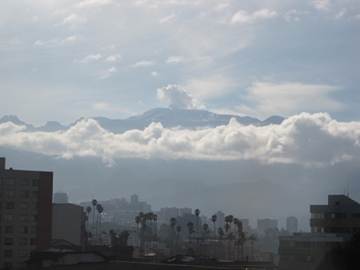
Nevado del Ruiz Overlooks the Heart
of the Colombian Coffee Growing Region
The Persian Gulf Conflict and the Quality of Coffee
There are too issues in this case. In order to keep up cash flow it is likely that many large commercial operations will opt for maintaining production volume at the cost of higher quality. However, this will probably apply more to mechanized coffee farms in the lowlands of Brazil more than to high altitude coffee operations in countries like Colombia and Ethiopia. Small, family owned and operated coffee farms in these locations are not mechanized and often rely less on synthetic fertilizers. Processing is often by hand and will not be affected by higher cost and scarcer oil and natural gas or urea for fertilizer. In fact, many of these operations may benefit from stable costs combined with a higher market price for green coffee.