Where Does Your Coffee Come From?

Americans love their coffee. Although Northern European countries like Finland, Denmark, Sweden, and the Netherlands drink more coffee per capita the larger US population times a high consumption rate results in the US drinking more coffee than any other nation. Where does all of this coffee come from? The only state in the US that grows coffee is Hawaii so the US gets her coffee from the topical coffee belt that in the western hemisphere starts in Mexico and extends to Brazil. The two biggest producers in this region are Brazil which is the biggest producer of coffee overall and Colombia which is the biggest producer of Arabica coffee.
US Green Coffee Imports
The United States Department of Agriculture June 2022 pdf covering world markets and trade for coffee reports that the majority of imported unroasted coffee is Arabica of which the most is imported from Brazil followed by Colombia. Imports from these two nations have increased at the expense of imports from Mexico and Central America mostly because production has increased substantially in the two biggest South American producers.
Imports of Arabica Versus Robusta
Over the last decade the US has imported increasing amounts of Arabica coffee at the expense of Robusta with Arabica going from 68% of imports to 80% during those years. Because of inflation in the coffee market as well as everywhere else, Arabica prices are outpacing Robusta prices causing the USDA to speculate that US coffee roasters might start buying more Robusta and selling blends of Arabica and Robusta to remain competitive in pricing. Over the last decade Arabica imports went from 16.1 million bags a year to 19.4 million bags while Robusta fell from 3.5 million bags to 2.6 million bags.

Increased Coffee Imports from Brazil and Colombia
Over the last decade Brazil has increased its US market share from 29% to 36% while Colombia’s market share has gone from 17% to 23%. During this decade Mexico fell from an 8% share to 4% and Central America as a group fell from 25% to 23%. Because much of this reshuffling of market share came from increased Colombian and Brazilian production there could well be a trend reversal if Central America catches up. The report does not note the degree to which the Colombian civil war has cooled down and allowed production to resume in previously troubled regions.
World Coffee Production Increases
Production is up this year largely because of Brazil and the fact is that this is the “on” year of the two-year production cycle, important coffee growing regions are recovering from a severe frost in 2021 as well as drought. The increase is also being fueled by Brazil’s increasing production of Robusta going from 21.7 million bags to 22.8 million bags. Meanwhile production in Vietnam fell from last year’s record harvest to 30.8 million bags this year of which 95% is Robusta. Arabica production in Colombia will be flat this year as fertilizer shortages due to Russia’s war in Ukraine have limited potential gains. Production is estimated to come in at 13 million bags with 11.8 million to be exported to the USA.
Can Coffee Be Dangerous?

We have written extensively about the health benefits of drinking coffee. But we have to admit that there can be some negative aspects of drinking coffee as well. All of them have to do with drinking large amounts of coffee when you are already experiencing side effects of the stimulant aspects of caffeine. While the benefits of coffee seem to increase as you move up to as many as six cups a day, drinking more than that does not seem to help and is where many of the side effects lie. And some folks are simply more sensitive to the stimulant effects of caffeine. So, can coffee be dangerous? Here are a few examples.
When You Are Already Anxious More Coffee Is Not a Good Idea
A normal cup of coffee, eight ounces, contains ninety-five milligrams of caffeine. About 500 milligrams or five cups a day is commonly where caffeine starts to cause anxiety, stress, or depression according to the Journal of Pharmacology. If you are consuming 1,000 milligrams of caffeine a day or ten cups, they say that this is a reliable predictor of a higher level of anxiety than usual. There are many things in life that can cause you to be anxious but when evaluating why you are nervous think about how much coffee you are drinking.
When You Sleep Is Not Giving You Rest Ask What Role Coffee Has
A cup or two of coffee helps you wake up in the morning and keeps you going in the afternoon. However, six hours after you drink coffee half of the caffeine is still in your body. Twelve hours later a fourth still is hanging around. That means a fourth of your 2 pm coffee is still there at 2 am. If you have a nice espresso after supper at 8 pm half of that is still in your system at 2 am. People vary in terms of how fast their bodies metabolize (process) caffeine but if you find yourself staring at the dial of your alarm clock at 2 am consider limiting your coffee to mornings only and if that is not working, cutting your total consumption in half!

A Fast Heart Rate Can Be from Too Much Coffee
How a person’s heart responds to caffeine in the system varies from person to person. As much as two cups of coffee every five hours or even every hour has little effect on the heart rate for some people. For others a single cup of brewed coffee causes an irregular beat and a fast rhythm. If a person has a heart condition that affects their heart rate or regularity of their heart rhythm it is wise to discuss coffee intake with their treating physician. For the average person drinking a couple of cups of coffee a day this is not an issue.
Too Much Coffee Can Cause the Jitters
Some people get jittery when they drink too much coffee. This is an “overdose” of caffeine. Whether or not this happens to you depends on how much caffeine is in your coffee, how much coffee you drink, if you drink all of your daily coffee in a short time, and your innate sensitivity to caffeine. In addition to the jitters, too much caffeine can cause headaches, a fast heart rate, and trouble sleeping. Cutting back on your coffee intake will help but we suggest tapering off instead of going “cold turkey” as caffeine withdrawal causes headaches and fatigue and can last up to nine days.
Can Coffee Make You Feel Tired?
The caffeine in coffee is a stimulant. We use it to wake up and keep going. However, the body needs rest and when a person continually uses coffee to stay awake and keep going eventually the underlying fatigue overcomes even multiple cups of coffee and the person crashes. If you need to stay up for one night because of an emergency, using coffee as a stimulant is OK. But as a constant habit this will catch up with you and you need to time your coffee consumption so that you get uninterrupted sleep.
Can Coffee Be Dangerous? – SlideShare Version
Is Juan Valdez a Real Guy?
You have probably seen him in the side of a package of coffee or on television. Juan Valdez is leading his burro who is in turn loaded with bags of coffee down out of the Andes Mountains in Colombia. When you see Juan Valdez on the label that means your coffee is 100% Colombian. So, is Juan Valdez a real guy? He has always been portrayed by a real person although not always Colombian and not necessarily someone in the business of growing or selling coffee.
History of Juan Valdez
Back in the 1950s coffee growers in Colombia wanted a way to distinguish their coffee from coffee produced elsewhere. Colombian coffee is uniformly very good Arabica coffee and commands a premium on the market. An American advertiser, William Bernbach, came up the idea of using a guy with a burro to emphasize the Colombian origin of the product. Thus, Juan Valdez was created. He was portrayed on TV and in print by a Cuban actor, José F. Duval, from 1958 to 1969. From 1969 to 2006 the role was taken by the Colombian actor Carlos José Sánchez Jaramillo with voice-overs, when necessary, by Norman Rose. Finally, in 2006 the Colombian Coffee Growers actually chose a Colombian coffee grower to play the part. Now Juan Valdez is played by Carlos Castañeda who is a real coffee grower from Andes, Antioquia, the department of Colombia where Medellin is located and in the Eje Cafetero.

What Does Juan Valdez On the Label Tell You?
There are lots of great coffees in the world. And Colombia is only the third ranking coffee producer after Brazil and Vietnam. However, Vietnam produces exclusively Robusta coffee and Brazil produces a substantial amount of Robusta. Thus, the biggest producer of Arabica coffee is Colombia. The fact of the matter is that the place in the entire world where you can most reliably find excellent Arabica coffee in is the Andes in the West of Colombia in the coffee growing axis, the Eje Cafetero. The climate with cool temperatures at high altitude, ample rain, excellent drainage, and rich volcanic soil combined with a multi-generational coffee growing culture to produce coffee that is routinely of the highest quality. The point of creating Juan Valdez was to provide a visual cue for coffee consumers that would lead them to always purchase the highest quality coffee from Colombia.
Juan Valdez Coffee Shops
A relatively recent addition to the Juan Valdez legacy is the chain of coffee shops with the Juan Valdez name. These are found primarily in Colombia but also throughout the Western Hemisphere. Juan Valdez coffee shops only serve Colombian coffee and feature coffees from specific departments such as Caldas, Huila, and Antioquia. They also feature organic coffees. Any of these can be ordered and brewed on the spot and customers can purchase bags of coffee from virtually any coffee growing region in the country. Juan Valdez coffee shops are popular meeting places and can be found in central regions of major cities, shopping malls, and even movie theater lobbies.
Is Juan Valdez a Real Guy? – SlideShare Version
Update: Coffee and Diabetes
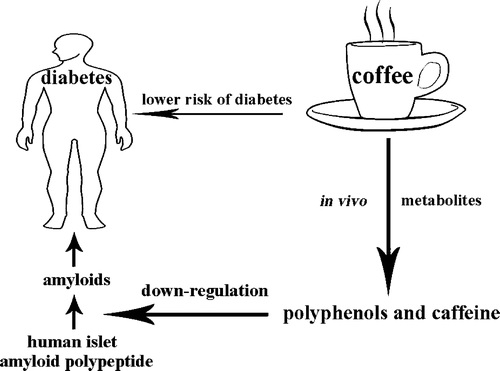
We have known for several years that coffee drinkers tend to have a lower risk of developing Type II diabetes. The Mayo Clinic website notes that the risk of developing diabetes is reduced by drinking coffee but that drinking coffee does not actually cure you if you have diabetes. The protective effect of drinking coffee increases up to about five to six cups a day and it’s the same for caffeinated and non-caffeinated coffee. Adding cream and sugar may tend to raise a person’s blood sugar momentarily but do not reverse the protective effect of not getting type II diabetes.
Drinking Coffee If You Have Diabetes
Polyphenols are the molecules in coffee with antioxidant properties. They are what help prevent type 2 diabetes, heart disease, cancers, and other diseases. In addition, the magnesium and chromium present in trace amounts in coffee also reduce type II diabetes risk. The risk reduction ranges from about 11% for one cup a day up to 17% for those who consume more than a cup a day. There is some evidence that in diabetics caffeine further reduces insulin sensitivity. Thus some experts suggest drinking decaf coffee. the best choice for diabetics who drink coffee is to use skim milk instead of cream, Splenda instead of sugar, or just plain black coffee.
Coffee Can Lower or Raise Blood Sugar in Diabetics
While the research is pretty clear that coffee drinkers are less likely to develop diabetes it is not clear in regard to whether in a specific individual with diabetes if coffee will lower or raise their blood sugar. The bottom line that we can discern from looking at research on this subject is that there are two different effects of coffee. Routinely drinking coffee has a strong tendency to reduce whatever factors drive a person to get type II diabetes and very likely continue to have this protective effect in diabetics. In other words, a type II diabetic will probably not get a worse case of their disease if they continue to drink coffee. The other effect is that by drinking coffee a type II diabetic may tend to temporarily either raise or lower their sugar.
Should a Type II Diabetic Quit Drinking Coffee?
If you are a diabetic you should be checking your blood sugar. As such, you will be able to see if your morning cup of black coffee raises or lowers your blood sugar. This is probably the most practical approach. For diabetics who already have complications such as retinal or kidney disease the wise approach is to ask your doctor what to do and to strictly follow their advice. Because there is some evidence that diabetics who drink coffee experience a drop in their blood sugar this is beneficial and, as we noted, there appears to be a long-term benefit of coffee drinking even in those who are now diagnosed as having type II diabetes.
Medium Roasted Coffee for Maximum Phenol Content
Since it is the polyphenols that provide the most protection against developing type II diabetes which coffee gives you that benefit? Medium roasted coffee provides the greatest phenol levels, and the best coffees are Arabicas like Coffee from Colombia!
Update: Coffee and Diabetes – SlideShare Version
Who Invented Coffee?
The coffee plant is native to East Africa where it still grows in its original home in the forest of the Ethiopian plateau. Thus the plant was not invented but grows naturally. However, it did take a person to roast coffee beans and brew coffee. No one really knows how coffee made it from being an upland forest plant to the most popular drink on the planet but the story goes that a goat herder named Kaldi saw his goats eating the beans of the coffee plant, getting excited, seeming to enjoy them, and not sleeping at night. The story continues that Kaldi brought berries to a nearby monastery where the abbot experimented with the berries and discovered that roasting, grinding and brewing the beans resulted in coffee as we know it. Thus the person who invented coffee in its original form was someone like the abbot in the story who first brewed coffee.
Who Invented the Coffee Business?
No matter which individual or individuals came up with the idea of roasting coffee, grinding it, and brewing it to make a cup of coffee, it would have been a local beverage in the highlands of Ethiopia without commercialization of coffee on the Arabian Peninsula in 1400s in what is today the country of Yemen. A century later trade within the Ottoman Empire had taken coffee to Persia, Syria, Egypt, and the seat of the Empire in what is today the country of Turkey. It took another hundred years for coffee to be consumed in Europe. By that time Dutch traders were planting coffee throughout the East Indies and Spanish colonials were planting it in the New World.
Who Invented The French Press?
At the seat of the Ottoman Empire coffee was made using an Ibrik. Coffee grounds were boiled just like they are for making Turkish coffee today. Over time people came up with different methods for brewing coffee. The French Press came into being in the middle of the 19th century and both the French and the Italians claim credit for inventing this method for making coffee. This method remains popular today because it is cost-effective and gives a person better control over the taste of the coffee.

Who Invented the Automatic Coffeemaker?
By the twentieth century coffee makers arrived in which boiling water was poured or dripped over coffee grounds which got rid of the problem of having grounds mixed with the coffee after boiling the coffee grounds with the coffee. Electric percolators allowed for commercial quantities of coffee to be made for restaurants or large kitchens serving many people.
Who Invented Vacuum Packed Coffee?
By the turn of the 19th to 20th century it became popular to buy roasted and ground coffee instead of buying whole beans and grinding them. In order to preserve freshness of ground coffee on the shelf the Hills Brothers invented a method of vacuum packing their coffee so all of the air was sucked out of the can of coffee before it was sealed.
K-Cup Invented in 1992
The idea of single serve coffee started with Ernesto Illy who created pre-measured espresso pods in 1974. It was 18 more years before Green Mountain invented the K-cup and so the history of invention in the world of coffee continues after hundreds of years from when coffee crossed from Africa to the Arabian Peninsula and then spread around the world.
Who Invented Coffee? – SlideShare Version
Does Coffee Cause Dehydration?
We drink coffee to wake up in the morning and to keep going in the afternoon. We drink coffee because we like it. The wakeup part of coffee comes from caffeine which also acts as a diuretic. That is, caffeine causes your kidneys to produce more urine. So, if you drink lots of coffee does coffee cause dehydration? The quick, short answer is that if you drink lots of coffee that has lots of caffeine you will lose more water than you take in with the coffee.
Metabolism and Effects of Coffee
When you drink coffee, it passes into the intestinal tract and is absorbed into the blood stream. The many health antioxidants in coffee serve to decrease inflammation, reduce the likelihood of Type II diabetes, cut back on your chances of getting Alzheimer’s, and even decrease the risks of various cancers. Caffeine goes to the brain where it serves to wake us up and when it passes through the kidneys it stimulates increased urine formation. The direct effect of caffeine is that it increases blood flow to the kidneys which in turn ups urine creation. This effect has the potential to cause dehydration. Does it?

How Much Coffee Does It Take to Cause Dehydration?
Coffee contains water so it should hydrate our bodies. Caffeine causes excessive urination which should cause dehydration. The key to the question of how much coffee it takes to dehydrate a person has to do with getting enough caffeine to overcome the water that one drinks with the coffee. Thus, stronger coffees are more likely to dehydrate than weaker ones and one needs to drink enough coffee to get enough caffeine to get the dehydration effect. How much is that? Studies have shown that a person of average size needs to ingest at least 500 mg of caffeine to get enough diuretic effect to overcome the amount of water they ingest with their coffee. Because an average cup of brewed coffee contains 90 mg of caffeine this means you need to drink more than five and a half cups of coffee a day to lose more water from your coffee drinking than you take in as part of the coffee.
Caffeine Content of Various Types of Coffee
Brewed coffee is the kind that most people drink. This includes using a percolator, pour over coffee, or a French press. The amount of caffeine in an eight ounce cup of brewed coffee ranges from seventy to one hundred forty milligrams with ninety milligrams being the average. Robusta coffee has a higher caffeine content than Arabica coffee from Colombia so you can drink more Colombian coffee than Death Wish coffee before you have to worry about dehydration.
Caffeine In Instant Coffee
Convenient instant coffee generally has less caffeine than brewed coffee ranging from thirty to ninety milligrams per eight ounce serving. So, if avoidance of dehydration is your only goal you can drink more instant coffee than brewed and accomplish your goal.
Caffeine In Espresso
A shot of espresso carries on average sixty-three milligrams of caffeine. Of course the volume of water is lower as well as thirty to fifty milliliters. However, the concentration of caffeine in espresso is as much as five times stronger than in brewed coffee.
Decaf coffee contains no more than seven milligrams of caffeine in an eight ounce cup so if your only goal is avoiding dehydration this is the next best step to drinking a glass of water!
You Need To Drink Lots of Strong Coffee To Achieve Dehydration
The bottom line to our question about dehydration is that you need to drink at least nine shots of espresso or about five and a half cups of brewed coffee for the amount of caffeine that you ingest to cause you to lose more water through your kidneys than you take in with the coffee. The amount of coffee goes down to around three cups a day if you are only drinking strong Robusta coffee.
Does Coffee Cause Dehydration? – SlideShare Version
American Coffee Consumption by Age Group
Americans drink a lot of coffee. Per capital consumption is not the highest in the world, however. The US lags behind Finland, Norway, Iceland, Denmark, Netherlands, Sweden, Switzerland, Belgium, Luxembourg, and Canada. Part of that is because they simply drink more coffee in Northern Europe nations. And part is because not all age groups in the USA are keeping up with the oldest which drinks the most coffee. American coffee consumption by age group varies from 48% to 64% with the oldest Americans drinking the most coffee.
Random American Coffee-drinking Facts
The average worker in the USA spends just over $20 a week on coffee. While more than 80% of coffee drinkers drink coffee at home, millennials are more likely to drink coffee at the coffee shop or at work. Workers in the 18 to 34 age group spend $24.74 a week for their coffee while the 45 and older group pays $14.15 a week. This makes sense in that older coffee drinkers are brewing their coffee at home and the younger set is paying Starbucks for their Java. An interesting tidbit is that nearly half of Millennials spend more on coffee than they put aside for retirement. When K-cups became popular they helped reduce overall US coffee consumption because people were not making full pots of coffee and not drinking all of their coffee to the same degree as before.
Coffee Consumption by Age Group
The lower percentage of coffee consumption is in the 18 to 24 age group at 48%. The next lowest is 53% in those aged forty to 59 years. We go back to the 25 to 39 age group for an increase to 60% coffee drinkers. The highest coffee consumption by percentage of drinkers is in the oldest group, 60 years and older. This group is the most likely to drink more coffee at home then when out and about and the youngest group is the least likely to have any coffee stocked at home!
Who Goes to the Coffee Shop the Most?
As you might have guessed, the youngest coffee drinkers who do not stock coffee at home are the ones who frequent coffee shops the most. The average age of people in the US who frequent coffee shops lies in the 20 to 30-year old range. This, by the way, is just over half of the US population.

Coffee Type Preference by Age Group
The older you are the more likely it is that you brew your coffee to a tune of 65% of older folks. Just 35% of the “senior” group prefers alternative coffee drinks like lattes, iced coffee, or cappuccino. On the other end of the spectrum the 18 to 24-year-old group opt for alternative coffees 55% of the time. The 35 to 44 crowd likes brewed coffee 60% of the time. What is interesting as that millennials report increased consumption of brewed coffee as they get older. This implies that they learn their coffee drinking in a social, coffee house, setting and then learn how to brew their coffee at home which they may not have known how to do before they got to like their coffee.
American Coffee Consumption by Age Group – SlideShare Version
Aroma of Coffee
Wake up and smell the coffee. This expression generally means to pay attention to what is going on around you. However, it also can bring to mind an early summer morning in your youth with birds singing in the trees, dew on the lawn, and the hope and promise of the day. Just what is responsible for the aroma of coffee? The scientific explanation is that roasted coffee contains more than eight hundred different chemicals of which many contribute to the aroma of coffee.
What Gives Coffee Its Aroma?
The chemicals in coffee that give it aroma include heterocyclic compounds like thiophenones, thiophens, quinolines, pyridines, pyrroles, hydrofurans, thiazoles, indoles, oxazoles, quinoxalines, pyrazines, and furans. There are more than three hundred of these in coffee beans. Other chemicals include aliphatic compounds like dimethyl sulfide, propanal, isopentanal, methanol, n-hexane, acetaldehyde, isopentane, isobutanal, and 2-methylfuran. There are as many as one hundred-fifty of these. Phenols like chlorogenic acids not only provide coffee with its aroma but also provide antioxidant properties when absorbed.
What We Smell When We Smell the Coffee
The names of all of the specific chemicals that result in coffee aroma can only be loved by a chemist. What we coffee drinkers love is when the aroma is fruity, honey-like, earthy, spicy, catty, and more. While chemicals called furans are the ones most likely to pass the “olfactory threshold” the combination of many often combines to provide a pleasant background aroma that often cannot be immediately identified. While the furans are important so is the breakdown of sugars in coffee with roasting. Pyrroles also give a caramel aroma. Walnut-like aromas come from pyrazines. A meaty aroma arises from sufficient amounts of thiophens.
Aromatic Compounds in Green Coffee and After Roasting
While there are aromatic compounds in green coffee beans, nobody smells green beans and says what a nice aroma they have. The majority of aromatic compounds come from roasting. This is also where many of the health oxidants come from. The degree of roast also affects the aroma so that a full roast is going to have more caramelization than a light roast. One of the chemicals that is created during roasting is methylpyridium. This chemical not only contributes to the great smell of coffee but also increases phase II enzymes in the body. These enzymes do things like protect the body against colon cancer.

Where To Get the Coffee With the Best Aroma
There are two factors that affect coffee aroma, the type of coffee and freshness. Arabica coffee has more flavor and better aroma than Robusta coffee. Arabica coffee from Colombia reliably has the best aroma and flavor of the Arabicas. Green coffee retains its freshness for up to three years if property stored. Roasted coffee retains its freshness for up to six months. Roasted and ground coffee starts to lose its freshness, taste, and aroma as soon as the grounds are exposed to air. For the best coffee aroma buy Coffee from Colombia, grind only enough for the day’s use and never store right above the stove!
Aroma of Coffee – SlideShare Version
Coffee Price Inflation
The United States is experiencing its worst inflation in forty years. The price of coffee is up 49.7% year on year as of June 2022. When the price went up in 2021 the increase was blamed on drought in Brazil and then on disruption of the global supply chain. However, over the years coffee beans have been a bargain as the price has not gone up as much as many other commodities. On the other hand, the price of a cup of brewed coffee has gone up significantly. Coffee price inflation is worse at the cup than on the coffee farm.
Coffee Futures Over the Years
Coffee fluctuates in price with high prices alternating with low prices year after year. Macro Trends has a chart of futures prices for the last 45 years. Although coffee futures recently peaked at $2.38 from a 2019 low of $0.91, a higher previous peak was $2.88 in 2011. Futures hit $2.57 in 1997, $2.56 in 1985 and $3.23 in 1977.

This is the world of the coffee farmer in which the weather, competition, and markets control the price. That world differs from the world of the coffee shop consumer where the price of a cup of coffee goes up with labor costs and other costs of doing business in a society with the highest rate of inflation in 40 years.
Price of a Cup of Coffee Over the Years
The average price of a cup of black coffee around the world is $2.70. There are those of us who remember 1950 when a cup of coffee was a dime! However, with inflation a 1950 dollar would be worth $12.13 today so that dime would be worth $1.21. So, your cup of black coffee has inflated two and a half times. You could buy a pound of coffee beans for $0.33 in 1950 which is about a seventh of today’s price.
Don’t Blame the Coffee Farmer for the Price of a Cup of Coffee
While the price for green coffee beans fluctuates with the market there is not the steady increase in price that we see across other sectors like fuel, housing, and labor costs in the USA. In the current surge in inflation oil and natural gas are up significantly. This translates into higher transportation costs for coffee as coffee is grown in the tropics and consumed in North America, Europe, Japan, and across the globe. As the cost of living goes up workers seek jobs with better wages which drives up labor costs. That translates into a higher price for your cup of black coffee. Of course, in today’s Starbuck’s world you are probably having a mocha, latte, or something else substantially fancier than a cup of black coffee. Nevertheless, the cost of doing business is going up and those costs get tacked onto everything that we consume which includes your coffee. Sadly for the coffee farmer, the price he or she can get for coffee beans goes up and down with the weather and the market while the cost of growing coffee goes up with the prices of oil, fertilizer, and other necessities of the farming business.
Coffee Price Inflation – SlideShare Version
Many Ways to Make Coffee
For coffee lovers there are many ways to make coffee. Espresso is the basis for all coffee house coffees. Coffee made at home is brewed with a percolator or a k-cup. If you are of an age and grew up on a farm you may remember egg coffee in which coffee grounds are boiled in a large pot and two cracked-open whole eggs are added. Residents of the Colombia coffee growing region, the Cafetero, commonly make pour over coffee by grinding whole coffee beans and putting in a cloth bag and then pouring boiled water over them. Or you may prefer a French press, Ibrick, or café al la olla. Do you add cream, milk, or sugar? Which of the many ways to make coffee is the best?
Best Coffee Beans for the Best Coffee
No matter what process you use to make coffee, better coffee beans make better coffee. The two varieties of coffee are Arabica and Robusta. Robusta is a bigger plant that produces sooner, produces more, has more caffeine, and is less prone to coffee plant diseases. Arabica is better tasting, has superior aroma, is more prone to plant diseases, and has less caffeine. The best coffee beans for the best coffee flavor come from Arabica plants. Fresh coffee beans give you better flavor and aroma so, ideally, you have green coffee beans and you roast just enough each day to make coffee. That is how coffee houses operate. If you buy whole bean roasted coffee keep the beans intact and only grind what you need to make coffee. If you buy ground coffee you should purchase smaller quantities as this is the least fresh coffee. In all cases, coffee from Colombia is your safest and best choice.
Good Water for Good Coffee
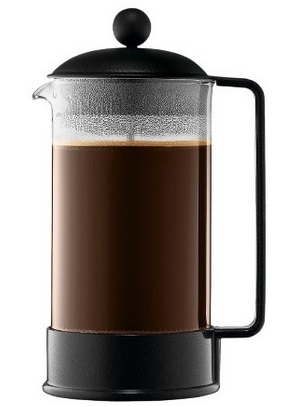
For good coffee make sure to use filtered or bottled water if your tap water has a high chlorine content. A tablespoonful or two is how much ground coffee to use per six ounce cup of coffee. Making espresso takes thirty seconds while a French press system takes about two minutes before depressing the plunger. Drip coffee makers take about five minutes to make coffee. Coffee brews best at about 200 degrees Fahrenheit. Coffee is always best right after it is brewed no matter what method you use to make coffee. In the Colombian Cafetero in Manizales, Colombia at Buy Organic Coffee we make pour over coffee using a cotton bag. Grind the coffee very finely. Boil water and let it rest for a minute before pouring over the grounds.
Coffee from the Coffee Shop
You will need an espresso maker for coffee house coffee. This system forces water at the boiling point through very finely ground coffee. This process results in the strongest taste, higher caffeine content, and a thicker consistency in one ounce portions. By adding steamed milk, you get latter and by adding chocolate syrup you get mocha. If you want Americano, just dilute your espresso half and half with water. Americano got its name when Europeans realized that post-World War II GIs wanted coffee like their moms made on the farm in Ohio, Illinois, or Iowa, about half the strength of a good espresso.
Many Ways to Make Coffee – SlideShare Version