Organic Alternatives to Coffee
If for some reason you don’t like or cannot drink coffee what are some organic alternatives to coffee? Mind Body Green has a few suggestions.
Here are five healthy coffee alternatives that will give you a morning boost without the adrenal crash.
Hot Maca
A couple of tablespoons of maca blended in a cup of warm almond milk, with a splash of raw honey and ground cinnamon is a delicious way to start the morning.
Dandelion Herbal Coffee Blend
This is the closest to coffee flavor that you’ll get. Roasted dandelion, chicory root and maca come together to give you a fairly close rendition.
Matcha Green Tea
Matcha green tea is all the rage right now. It’s been touted as a superior antioxidant, detoxifier and energy booster.
Lemon Water
Not like coffee, but waking up with a cup of warm lemon water gently wakes up your liver and kicks off your system on the right foot.
Organic, Single-Origin Coffee
Poorly sourced coffee contains mycotoxins (mold) that make your coffee less healthy.
Our take on the subject is that if you are getting too much of a buzz from your coffee it is not all that hard to cut back on the caffeine. First of all cut out the Death Wish and the rest of the world’s strongest coffees. Robusta coffee has a lot more caffeine than Arabica so stick with high quality Arabica coffee from Colombia. Consider buying directly from the source in places like Manizales, Colombia.
Manizales was founded in the mid-19th century by 14 families who moved into this mountainous region specifically to grow coffee. They are now known as the founders or Fundadores. The local upscale mall is the Fundadores and a large local grocery store is La 14 in reference to the founders. Coffee culture is everywhere and Manizales is the home of the Colombian Coffee Growers Association. There are large coffee roasting companies everywhere but our focus is on the small family operations. We visited one such company recently. Dad came from Tolima, Colombia a generation ago and founded a tilladora. This word translates as thresher in Google but is the operation for removal of the husk on the green coffee bean before roasting.
Directly from the Colombian Coffee Processor to You
If you are interested in high quality wholesale green coffee or Arabica coffee just picked, processed and roasted contact us today. And take a look at our coffee price list for select coffees from Panama as well. Cutting out the middleman is a good way to assure good quality organic coffee free from impurities and high in healthy antioxidants.
A study by the Australian Food Standards Authority revealed that as many as 133 contaminants may be in a cup of commercially available coffee. These contaminants include metals such as aluminum and zinc, pesticide residues, ochratoxin A, acrylamide, furan, and polycyclic aromatic hydrocarbons. Some polycyclic aromatic hydrocarbons are found to cause cancer. Furans have been associated with skin disorders, liver problems, certain kinds of cancers, impairment to the reproductive, endocrine, and immune system, as well as effects on embryonic development.
Stick with organic coffee, Arabica and from Colombia.
What Are the World’s Strongest Coffees?
When we wrote about Death Wish Coffee we believed it was the strongest coffee in the world. We may have been wrong.
Mike Brown, owner of Death Wish Coffee mixes Arabica and Robusta coffee beans to make Death Wish Coffee.
Robusta coffee is properly named Coffea robusta, or Coffea canephora. This variety of coffee is a more hardy plant than the Arabica variety. It is less prone to infestations of insects or plant disease so it is also cheaper to grow. Originating from plants in the western and central sub-Sahara Robusta yields more coffee beans than an Arabica plant and Robusta coffee beans contain about 2.7% caffeine as opposed to 1.5% for Arabica. The Robusta plant can grow as high as thirty feet. It is the primary coffee grown across most of Africa from Ethiopia on the Indian Ocean to Liberia on the Atlantic and South to Angola. The most recent export of Robusta coffee beans has been to Vietnam where coffee farmers produce the second largest volume of coffee in the world after Brazil.
Caffeine in non-coffee drinks comes from Robusta coffee beans. And a Robusta Arabica mix is used in Italian espresso blends.
Move Over Death Wish
According to Fox News there is a stronger coffee just arrived from South Africa, Black Insomnia Coffee.
Black Insomnia Coffee, which made its debut in South Africa last year, packs a serious punch. According to creator Sean Kristafor, the java jams 702 milligrams of caffeine into just 12 ounces. Compare that to a Tall Starbucks Pike Place, which has about 230 milligrams.
According to the coffee company, the makers sent bags of its coffee to a Swiss-based laboratory to confirm its claims as the world’s strongest brew. Samples were then tested via liquid chromatography (the separation of a mixture by passing it in a solution) and Black Insomnia was the strongest of those reviewed with 17.5 grams of caffeine per kilogram of coffee.
By comparison, “Death Wish” coffee was evaluated as having 13.2 grams per kilogram, while WodFee (marketed as the “world’s strongest coffee blend with added caffeine”) had 13.8 grams. A dark roast from Starbucks has around 5 grams of caffeine per kilogram, approximately.
These three strongest coffees have more than twice the caffeine per cup than the coffee you are drinking today. What is the point of stronger coffee?
Flavor, Health Benefits and Staying Awake
For many people the point of drinking coffee is to wake up in the morning and stay awake at mid-day. If you are a long distance truck driver who needs to keep your rig on the highway at 3 am the world’s strongest coffee makes sense. On the other hand if you like the flavor of high quality Arabica coffee you will be missing out by adding robusta beans or straight caffeine to your brew. And most of the health benefits of coffee come from the antioxidants so simply adding more caffeine to you mug may keep you awake but will not help you prevent diseases or live longer.
Is Organic Coffee Healthy?
Organic coffee is typically made from high grade Arabica coffee beans so it has great taste and aroma. And organic coffee is great for the environment because it requires sustainable agriculture to grow it. But is organic coffee healthy for you? Organic coffee is healthy on two counts. First of all coffee has all sorts of health benefits. And second organic coffee does not have a whole lot of impurities that may be found in regular coffee. First what are the health aspects of coffee?
Healthy Organic Coffee
It has been six years since we posted an article, Healthy Organic Coffee.
Healthy organic coffee contains calcium. It contains antioxidants such as polyphenols which are also called condensed tannins and help prevent tooth decay in addition to their antioxidant activity. The antioxidant properties of a healthy cup of organic coffee include the ability to lessen age associated cellular damage, prevent new blood vessel formation in cancerous tissue, and inhibit the long term inflammation seen in atherosclerosis. Ongoing research points to uses of polyphenols as treatments for specific age related conditions. And all of this from a cup of healthy organic coffee!
In that article we mentioned the fact that coffee drinkers have a reduced risk of type II diabetes. Over the years we have added articles reporting reduced risk of cancer, depression, suicide, Alzheimer’s, Parkinson’s and cirrhosis of the liver. Coffee drinkers have a reduced risk of dying at any age compared to their friends who avoid java. And coffee improves exercise performance as well as sex! All of those benefits come from a cup of coffee.
But why do you want organic coffee? In the same article years ago we noted the findings of the Australian Food Standards Authority.
A study by the Australian Food Standards Authority revealed that as many as 133 contaminants may be in a cup of commercially available coffee. These contaminants include metals such as aluminum and zinc, pesticide residues, ochratoxin A, acrylamide, furan, and polycyclic aromatic hydrocarbons. Some polycyclic aromatic hydrocarbons are found to cause cancer. Furans have been associated with skin disorders, liver problems, certain kinds of cancers, impairment to the reproductive, endocrine, and immune system, as well as effects on embryonic development.
This is why organic coffee is healthier for you than regular coffee. Organic coffee certification tells you that your coffee has been produced, processed and stored according to a strict set of standards.
The soil in which organic coffee is grown must have been verified as free from prohibited substances for at least three years. In addition there must be distinct boundaries between land on which organic coffee is grown and land where pesticides, herbicides, and prohibited chemical fertilizers are used. This guarantees that drift of substances sprayed or otherwise applied on adjacent land will not contaminate the organic plot of land. Organic coffee certification includes the adherence to a specific and verifiable plan for all practices and procedures from planting to crop maintenance, to harvest, de-husking, bagging, transport, roasting, packaging, and final transport. Along the way procedures must be in place at every step to insure that there is no contamination of the healthy organic coffee produced in pristine soil with regular coffee produced on soil exposed to herbicides, pesticides, and organic fertilizers.
Is organic coffee healthy? You bet it is!
Organic Coffee with Mushrooms
You may like mushrooms on your steak, mushrooms on a hamburger or especially sliced mushrooms on a lettuce salad. But, mushrooms in coffee? Remove the image of slices of mushroom in your cup of java and let’s start over. There is a mushroom that grows only in a remote part of China that is a folk medicine. Recent research shows that the ganoderma mushroom may help strengthen the immune system of people with cancer. But if you take ganoderma you might get a dry nose and throat as well as nausea. And ganoderma may interfere with chemotherapy meds or anticoagulants. Organic ganoderma coffee combines the benefits of this medicinal mushroom with healthy organic coffee. And there are other kinds of organic coffee with mushrooms.
Cordyceps
Cordyceps is a kind of mushroom that grows throughout the world. Some of these contain chemicals with biologic properties. For example the immunosuppressive drug cyclosporine used after organ transplants is extracted from a variety of Cordyceps. One variety of organic coffee with mushrooms is simply a Cordyceps powder that is prepared like one prepares coffee. This is similar to making chicory coffee instead of real java. The same arguments that apply to ganoderma apply to Cordyceps. Is this a coffee variety or replacement or is it a medicine?
What we said about ganoderma applies to Cordyceps as well.
Is This an Herbal Supplement or an Unregulated Drug?
For more than a century the United States has had laws requiring that medications do not cause any harm. For forty years the law has required that medications do what they claim to do. These laws, unfortunately, do not apply to dietary supplements. Thus products like ganoderma are commonly marketed in such a way as to suggest that they have numerous benefits to your health. However, if you read the fine print they never really say that. If they make clear claims about the effectiveness of their products the Food and Drug Administration will require them to provide proof or take their products off the market. Thus the way these products are marketed is to provide “testimonials” about how someone felt better or suggests this product to friends. This level of “proof” is not scientific and not based on research. So, go ahead and try some organic ganoderma coffee but be aware that while there is a ton of proof that coffee is good for your health you may be wasting your money by adding the mushroom from China.
The health benefits of coffee are many and researchers seem to find more every day. Coffee is known to reduce the risk of type II diabetes, various forms of cancer, Alzheimer’s and Parkinson’s diseases and the risk of depression and suicide. There is little to evidence that combining organic coffee with mushrooms improves the health benefits of coffee. There is evidence that drinking coffee helps you live longer and although mushrooms in your coffee may not reverse that effect there is no evidence that they will help either.
Organic Colombian Coffee K Cups
Here is the dilemma. People like single serve coffee because of the convenience. And many folks prefer high quality organic coffee from places like Colombia. What to do? Can you find organic Colombian coffee k cups? First of all here are a couple of sources or organic Colombian coffee k cups that we found on the internet.
Caza Trail Coffee
On Amazon, of course, you can buy a box of 100 single serve cups of Caza Trail Colombian coffee.
- Harvested in regions of Colombia where the coffee is renowned for its rich, mild flavor
- Medium body and acidity complemented by a floral aroma for enticing depth
- Convenient for busy mornings or when you need an on-the-go treat
- Fair Trade certified and Kosher certified
- Single serve cups compatible with all 1.0 & 2.0 Brewers
Nature’s Promise Organic Colombian
If you have access to instacart same day grocery delivery you can order 12 packs of organic Colombian coffee medium roast k-cup packs.
- Our organic Colombian coffee has a medium roast profile that is flavorful and complex. Enjoy a hot cup in the morning for a perfect way to start the day.
- USDA Organic and Fair Trade Certified
White Coffee
We mentioned White Coffee k cups recently. If you shop at Walmart or Walmart online you can get a ten count pack of White Coffee k-cup organic Colombian pods
This coffee is listed as USDA organic and the packaging and pods are said to be biodegradable.
K Cups and Freshness, or Lack of the Same
If you are going to go to the trouble of finding high quality Colombian Arabica coffee make sure that what you are buying is fresh. Single serve pods contain ground coffee.
Many coffee drinkers purchase regular ground coffee because it is cheaper and quicker to prepare than organic whole bean coffee. Our belief is that buying ground coffee is a mistake! There are ways to store coffee and preserve freshness if you use ground coffee but you still lose flavor, health benefits and aroma compared to storing whole beans, especially if you roast your own.
Single serve pods have a “use by” date on them but that date has more to do with spoilage than true freshness. Green coffee beans are good for up to two years if properly stored. Roasted coffee is good for up to 6 months if properly stored. Ground coffee starts to oxidize as soon as it is exposed to the air so the freshness of k cups is suspect form the very start. In the end you can certainly get organic Colombian coffee in k cups but you might as well be buying a lower quality coffee and saving money. If you really want fresh Colombian coffee or great coffee from Panama, check out our coffee price list and contact us via the “leave a reply” comment box at the bottom of the page. We would be please to send you coffee directly from the Colombia coffee growing district, the Eje Cafetero. Whole bean roasted coffee send by air from Manizales can be at your door in a week after roasting!
Coffee Butter on Toast Anyone?
If you really need that coffee to get going in the morning here is another source of caffeine. The Japanese food products company, Snow Brand Milk Products, has come up with a coffee butter spread to put on your breakfast toast.
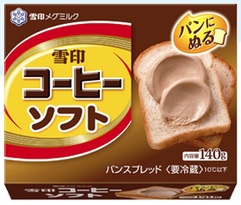
Who would have thought? We have our doubts about this product being organic. In fact it is probably made from robusta coffee beans which are the mainstay of caffeine in soft drinks and other products. Nevertheless spreadable coffee has arrived in Japan. How long will it take to get to your breakfast table?
What Other Foods Contain Caffeine?
Since we are on the subject of sources of coffee aside from your cup of java what other foods contain coffee? Livestrong.com provides a list of foods & drinks that contain caffeine.
While caffeine can be used in a wide variety of foods and beverages, it is derived from a few main sources. Those sources include tea leaves, cocoa beans – which are used to make chocolate – kola nuts and coffee beans. Some of the most common foods and drinks that contain caffeine include tea, chocolate, soft drinks, coffee and ice cream.
Most of these are ones you would think of as sources of caffeine. And of course energy drinks contain lots of sugar and lots of caffeine. But what if there is caffeine in oatmeal? Health lists surprising sources of caffeine and includes morning spark instant oatmeal.
Instead of adding fruit or nuts to this healthy food, Sturm Foods has amped up its instant breakfast with caffeine. The packaging boasts that a serving has about as much caffeine as a cup of coffee. Why not just have the coffee with a bowl of regular oatmeal?
And you can get caffeine in beef jerky.
Perky Jerky
Looking for your afternoon pick-me-up in a package of beef jerky just seems strange. However, this version actually has less fat and sodium and fewer calories per serving than traditional beef jerky. And it packs a serious punch: One serving has about 75 milligrams of caffeine, about the same as a can of Red Bull.
Or in Sunflower seeds.
SumSeeds Energized Sunflower Seeds
Marketed as a healthier alternative to energy drinks, these seeds are infused with caffeine, plus natural energy boosters taurine, lysine, and ginseng. Sunflower seeds are a vitamin powerhouse, packed with folate, B6, and vitamin E, and they don’t contain the added sugar of sodas or energy drinks. But one serving of energized seeds has 140 milligrams of caffeine, about the same as four cans of Coke.
Of course if you want healthy antioxidants, great aroma and superb flavor with your morning caffeine you will want healthy organic coffee.
Start the day with a hot cup of healthy organic coffee and you can receive a number of health benefits. Healthy organic coffee contains calcium. It contains antioxidants such as polyphenols which are also called condensed tannins and help prevent tooth decay in addition to their antioxidant activity. The antioxidant properties of a healthy cup of organic coffee include the ability to lessen age associated cellular damage, prevent new blood vessel formation in cancerous tissue, and inhibit the long term inflammation seen in atherosclerosis. Ongoing research points to uses of polyphenols as treatments for specific age related conditions. And all of this from a cup of healthy organic coffee!
In the meantime, where can you order that Japanese coffee spread?
How to Grow Organic Coffee
If you live in a warm climate or perhaps if you own a greenhouse you could grow your own organic coffee. Coffee is a tropical evergreen shrub. It grows naturally between the Tropic of Cancer and the Tropic of Capricorn. In the Americas this region reaches from the middle of Mexico down to the Northern edge of Argentina. This area includes Southern Mexico, Belize, El Salvador, Guatemala, Honduras, Nicaragua, Costa Rica, Panama, Colombia, Ecuador, Peru, Northen Chile, Bolivia, most of Brazil, Northern Paraguay, French Guayana, Surinam, Guyana and Venezuela. The only region in the USA where you can grow organic coffee out of doors is Hawaii. So how to grow organic coffee may require that you move to a Southern climate. Having said that how do you grow organic coffee?
Planting Coffee from Seed
You can purchase organic green coffee beans and start from there. Make sure that your green coffee is as fresh as possible. If you live in an area where they grow coffee you can simply pick the cherries off the plant and remove the fruit. Dry a bit but not a lot. If you don’t live where they grow coffee you can buy green coffee from a coffee roaster but make sure to specify a recently arrived batch. If you want really fresh Colombian beans contact us for specifics of pricing and shipping and we will arrange to have very freshly picked green coffee beans sent directly to you.
Sprouting Coffee Seeds
Soak the green coffee beans in water for 24 hours and then plant in damp sand or wet vermiculite. When the seed has germinated you can plant it. Put the seed flat side down in loam soil. You will want high humus content and can add bone meal, dried blood or rotted manure. Cover the seeds but do not tamp down the soil. Water daily just enough to keep the soil most.
Waiting for the Coffee
It takes two or three years for your coffee tree to flower and produce coffee cherries. As the plant grows you will need to water it less but thoroughly to encourage deeper roots. If you would like to speed up the process consider buying coffee trees that are about a year old. One source of year old coffee trees will give you Kona coffee beans, Arabica coffee from the Kona region of the Big Island of Hawaii. Blair Estate from Kauai, Hawaii provides coffee plants and says how to plant them.
If you are planting more than one coffee tree you should space them in the following fashion. Plant your rows running north to south leaving 6 feet in between trees and 12 feet in between rows. This is important if you intend to maximize your crop as it will allow the maximum amount of sunlight to hit your trees. It will also allow for easier maintenance for mowing and weed control. You should carefully lay out your rows with string and mark beforehand where your holes will be dug. It is important to note that planting in this style and in open fields will require frequent watering. Shade grown coffee will obviously require less watering and is easier to maintain but it will produce less coffee per tree. If you are planting in the row method and with a large number of trees (more than 200) you should consider irrigation. Cost per acre to set up a drip irrigation system is about $2000. There are approximately 623 trees that can be planted per acre using the 6×12 spacing method. In most cases where only a few trees are planted-watering and fertilization are an easy task.
If you get your coffee plants from a supplier you save a year or more. Follow their instructions for planting and care.
Would You Like Wine Infused Coffee?
An article about wine infused coffee got us thinking. Organic coffee antioxidants are good for you. And red wine has antioxidants as well. In fact red wine may be the reason for the French fatty food paradox. The National Institute of Health writes about the French Paradox.
The French paradox is the observation of low coronary heart disease (CHD) death rates despite high intake of dietary cholesterol and saturated fat.1,2 The French paradox concept was formulated by French epidemiologists in the 1980s.
The answer proposed for the French Paradox was that the French drink red wine which is high in antioxidants. They are coffee drinkers as well which give you a double shot of antioxidant protection. So, wine and coffee have health benefits. Would you like your wine and coffee served separately or would you like wine infused coffee? Time writes about wine-infused coffee.
The improbable combination of alcoholic depressant and energy-boosting stimulant comes to us courtesy of Napa Valley’s Molinari Private Reserve, a vineyard partnership with a master roaster for Peet’s Coffee, as FoodBev reports. They’ve apparently worked for over two years to perfect the combination of a house-made red and “carefully selected” coffee beans. The beans “relax” in the “artisan-crafted” wine to absorb its flavors, then get dried and hand-roasted. The result? A rich small-batch coffee with a blueberry note, according to Molinari. Plus, a double boost of antioxidants.
The folks at Molinari say that the wine infused coffee works for iced coffee or any coffee house coffee. The question is which coffee are they using? It had better be good coffee when they are selling it for $19.95 for a half pound bag. On the other hand the wine is from Napa Valley. Our suggestion is to skip the wine-infused coffee and go with the real items on both counts. You can find excellent Napa Valley or Sonoma Valley wines throughout the world and you can get excellent coffee from Panama or coffee from Colombia freshly roasted and sent to your door. Take a look at our Organic Coffee Price List and contact us via the comment box.
It’s All about the Antioxidants
It is the antioxidants in coffee that account for the majority of its health effects. The American Institute for Cancer Research says that coffee contains the following:
- Chlorogenic acid, an antioxidant compound that is the major phenol in coffee
- Quinic acid, a phytochemical that contributes to the acidic taste of coffee
- Cafestol and kahweol, compounds that are extracted from the beans’ oil during brewing. Unfiltered coffee, such as French press or boiled coffee, contains these compounds
- Caffeine, a naturally occurring stimulant that affects the central nervous system
- N-methylpyridinium (NMB), created by roasting, may make the antioxidants more potent
Chlorogenic acid may be slightly lower in decaf coffee according to limited research, but it still contains plenty of phytochemicals. Lab studies suggest that instant may be lower in antioxidant potency than brewed coffee, though more research is needed.
And just what do antioxidants do?
An antioxidant is a molecule that inhibits cell damage and cell death in human cells caused by oxidative breakdown of other molecules. Oxidation is a factor in sickness and aging. Antioxidants in coffee do the same things chemically as other antioxidants and because we drink so much coffee worldwide coffee is the primary source of antioxidants.
Because wine also contains antioxidants it also has benefits for your health. Wine-infused coffee may be a good idea but we prefer a glass of one and a cup of the other.
What Is Organic Coffee Fruit?
When they harvest and process coffee are they throwing away some of the good parts? What about the fruit? What is organic coffee fruit? These are the parts of the fruit of the coffee plant. The seed of the coffee plant is what we call a coffee bean. It is surrounded by the coffee fruit. The fruit and bean together is called the cherry. We wrote about how coffee is processed.
Natural Process
During the natural drying process, the entire cherry is left intact. The soon-to-be coffee beans still nestled in the center absorb some of the characteristics of that sweet pulp and flavorful cherry skin, until the milling stage when the dried fruit and parchment layer surrounding the bean are hulled.
Wet Process
Washed process separates the bean from the cherry in a procedure called de-pulping. Coffee beans are placed into fermentation tanks, also known as wet mills, and the beans are de-pulped as they pass through a series of stations. First, directly after harvest, coffee cherries are dropped in a hopper at the top of a mill, and water carries the cherries to a holding tank. Any damaged, less dense floating cherries are skimmed off. The good cherries sink and are sent through a de-pulping device. From there the seeds are directed to a fermentation tank to rest for 36-72 hours.
In both cases the coffee fruit is discarded and on an organic coffee farm tilled back into the soil as mulch. What are we missing when we throw out the regular or organic coffee fruit?
The Wasted Super Food
I remember when I was a child one of our teachers saying that the best nutrients and vitamins are in the outer layers of fruits, vegetable and nuts. That may apply the coffee fruit as well. PasteMagazine.com writes about coffee fruit and calls it nature’s wasted superfood.
Coffee is one healthy vice. Along with keeping you from drooling all over your desk mid-day, it’s low in calories, packed with antioxidants and may protect against ailments like Type 2 Diabetes, Parkinson’s and liver disease. However, the thin and juicy coating on the outside of the coffee bean does this and more. A true superfood packed with antioxidants-due to the uber-concentrated polyphenols-coffee fruit has the power to boost the immune system, protect against free radicals and act as an anti-inflammatory.
But coffee fruit ruins the taste of coffee which is why it is separated from the bean. So, what are the uses of regular or organic coffee fruit? When coffee fruit is not composted it can be made into concentrates for energy drinks, enhanced waters, coffee powder, beauty products full of antioxidants and even coffee fruit juices.
Jump Start Your Brain with Organic Coffee Fruit
There are potential brain benefits of coffee fruit extract. Coffee fruit extract has been shown to boost levels of brain-derived neurotrophic factor (BDNF) which is important for memory and learning new skills. Low levels of this protein are found in people with depression, obsessive-compulsive disorders, dementias and Alzheimer’s. The rationale for producing a commercial product from coffee fruit is to help prevent or treat these conditions.

Coffee Fruit and Bean
How Do You Make the Best Cup of Coffee?
Look on the web for how to make the best cup of coffee and you see a bunch of ads promoting coffee makers, do it yourself coffee gismos and a French press for only $14.99 plus shipping and handling. How do you make the best cup of coffee? It starts with good coffee beans and proper handling and storage. Then it moves on to roasting, grinding and boiling the water. Here are a few common sense thoughts about how to make the best cup of coffee.
High Quality Arabica Coffee
Last week we wrote about how in Nicaragua they are planting robusta coffee beans as a climate change resistant coffee. Robusta is the “other” coffee bean. It is more disease resistant than Arabica but does not give you the best cup of coffee. So long as they are still growing high quality Arabica coffee in the highlands of Central and South America, Africa and the East Indies use Arabica coffee beans for the best cup of coffee.
Fresher Is Better
Coffee taste and aroma comes from the antioxidants. They degrade (oxidize) over time. As a rule of thumb properly stored green coffee beans are good for two years. Properly stored roasted coffee beans are good for 6 months. Ground coffee starts to degrade as soon as it is exposed to the air. If you really want fresh Arabica coffee, especially organic coffee, consider having your green or roasted coffee shipped directly to you from the processor in the coffee growing axis, the Eje Cafetero, of Colombia. If you buy green coffee beans roast only enough for the day when making coffee. If you buy roasted coffee buy only enough for a few months to ensure freshness. Then store in a cool and dry place. Grind only enough to make each serving of coffee.
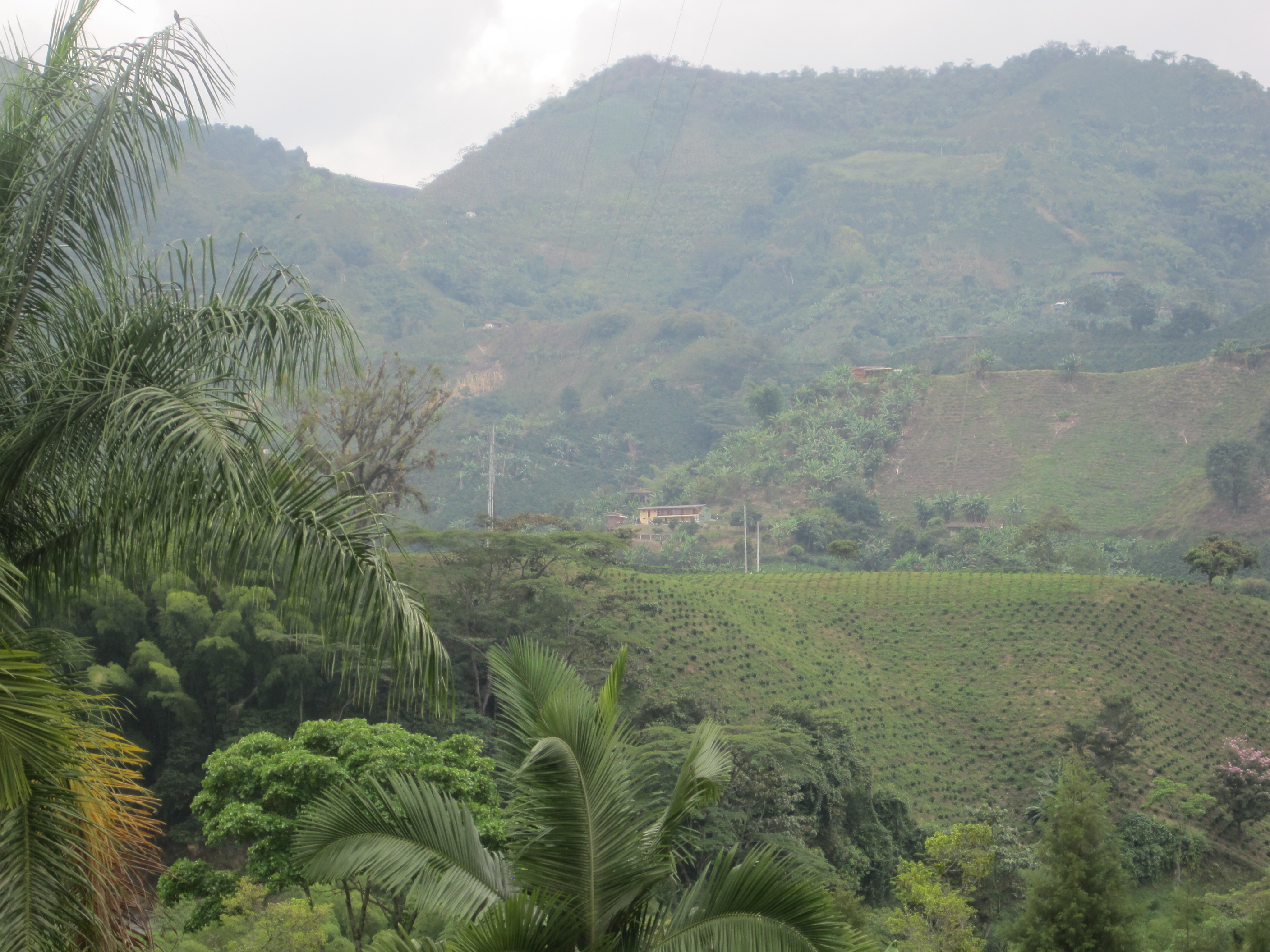
Coffee in Colombia
Basic Coffee Brewing Is Best
Single serve coffee is the latest craze. It is efficient in that you can make yourself a single cup of coffee. It is inefficient in that single serve coffee results in millions of plastic cups in the land fill. And single serve does not result in the best cup of coffee! To make the best cup of coffee use the best and freshest coffee. Then all you need to do is boil the water and add to your ground coffee. The commonest way to do this in Colombia where coffee is a way of life is to put the ground coffee in a cotton strainer and pour boiling water over the coffee and into a container below. In the low lands you may wish to let the boiled water sit for a minute to let the temperature reduce just slightly but if you are making coffee in Manizales, Colombia at about 7,000 feet boiling water is 198 degrees and you need not wait. Another basic way to make the best cup of coffee is to use a French press.
When you use a French press the coffee steeps just like tea. Because no filter is used you get the oils and particulate matter that contains so much of the aroma and flavor of the coffee. And the temperature of the coffee remains the same throughout the process until you pour into your coffee cup.
How to make the best cup of coffee is to stick with the basics which are great coffee, property stored, basic brewing and, of course, organic coffee.

Highway Sign Near Manizales Colombia