What Does Organic Coffee Mean?
You may have heard that organic coffee is better than regular coffee. What just what does organic coffee mean? Organic.org tells us what organic means.
Simply stated, organic produce and other ingredients are grown without the use of pesticides, synthetic fertilizers, sewage sludge, genetically modified organisms, or ionizing radiation. Animals that produce meat, poultry, eggs, and dairy products do not take antibiotics or growth hormones.
As we noted in our article, Organic Coffee Certification,
The soil in which organic coffee is grown must have been verified as free from prohibited substances for at least three years. In addition there must be distinct boundaries between land on which organic coffee is grown and land where pesticides, herbicides, and prohibited chemical fertilizers are used. This guarantees that drift of substances sprayed or otherwise applied on adjacent land will not contaminate the organic plot of land. Organic coffee certification includes the adherence to a specific and verifiable plan for all practices and procedures from planting to crop maintenance, to harvest, de-husking, bagging, transport, roasting, packaging, and final transport. Along the way procedures must be in place at every step to insure that there is no contamination of the healthy organic coffee produced in pristine soil with regular coffee produced on soil exposed to herbicides, pesticides, and organic fertilizers.
Years ago in Australia health authorities tested regular coffee and found more than 130 impurities including residues of herbicides and pesticides and many other unwelcome ingredients. Drinking organic coffee means that you skip having all of those bad things in your cup. Coffee is good for you as it helps reduce the incidence of diabetes and various forms of cancer, Alzheimer’s and many other conditions. Organic coffee does the same and you also get the skip the impurities that are all too often found in regular coffee. And besides being good for you organic coffee is good for the environment.
Organic Coffee and the Environment
The process of growing organic coffee as well as other organic produce is called sustainable agriculture. Organic coffee growing is sustainable coffee production.
Although organic coffee grown and certified by the USDA is the result of sustainable coffee production so is coffee that is UTZ certified or Rainforest Alliance certified.
Rainforest Alliance is an NGOP that works to conserve biodiversity. They seek to convince buyers to purchase what is good for the environment and good for small farmers. Their certified coffees are produced using good land use practices. Certified coffee farms meet a strict set of environmental standards including ecosystem preservation and minimal use of synthetic chemicals.
The UTZ Certified label tells you that the coffee came from a farm that employed sustainable agricultural practices, good environmental practices and efficient farm management. UTZ Certified label is that UTZ Certified coffee is traced from grower to roaster.
Before farmers learned to use crop rotation it was common for land to be “farmed out.” In the American Great Plains farmers rotate corn, soybeans and alfalfa on the same land. Because coffee is a perennial and not an annual crop farmers don’t change plants every year. But what they do is use mulch from dead plants and other organic natural fertilizers when needed to avoid polluting the water table with chemicals. In addition they commonly plant coffee among trees in a forest environment where the habitat is natural and self-sustaining.
What Is Single Origin Coffee?
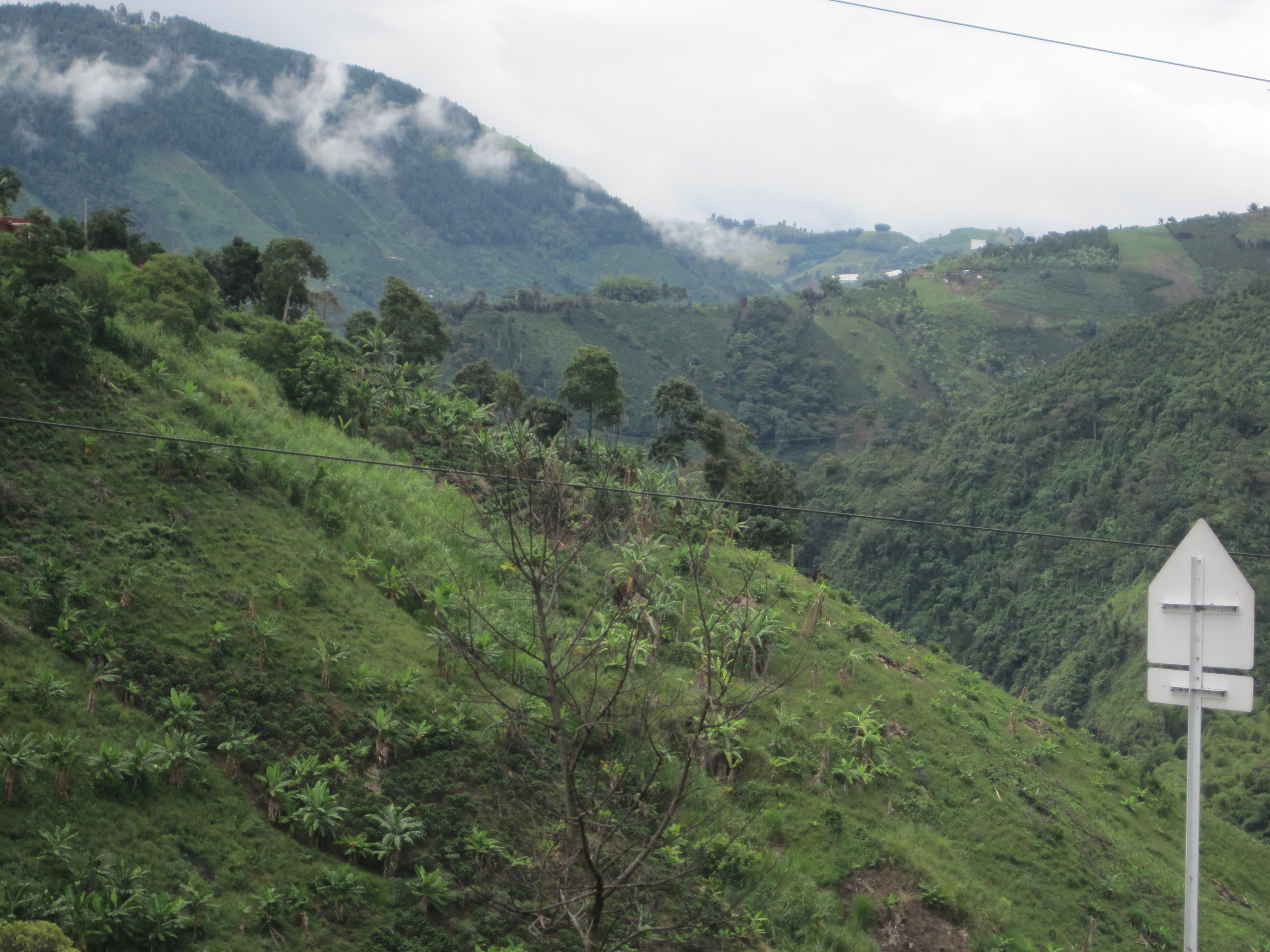
Colombia produces the finest Arabica coffee in the world. But, many Colombians would be surprised to know that the coffee they commonly buy at the grocery store probably was grown in Ecuador! If you want to be assured that your coffee is 100% Colombian look for Juan Valdez on the label. This fictional character was dreamed up half a century ago by the Colombian Coffee Growers Association as we noted in our article, Juan Valdez Organic Coffee. We wrote that article more than five years ago and noted the lack of organic coffee at Juan Valdez coffee shops. Since that time you can find bags of single origin Juan Valdez coffees at their shops. What is single origin coffee? It is coffee that is entirely and specifically from a single location. That could be a country or even a single farm although typically it is an area such as around Manizales, Armenia, Cali, Medellin, Pereira or Huila.
Single Origin Coffee From Colombia
There is a lot of coffee in Colombia and the vast majority goes for regular coffee, roasted, ground and sold in the grocery store. This is where a few extra beans from Ecuador might find their way into the mix. But what if you want single origin organic coffee from the heart of the Colombian Cafetero?
Wholesale Coffee versus Retail Quantities
Coffee just off the mountain is quoted on the NYMEX and runs about $2 a pound. When that coffee is processed, sorted and the husk removed the price goes up but not much. The largest bump up in price is in roasting. This assumes that you deal in shipping container quantities of coffee. But what if you want single origin organic or at least export quality coffee from the heart of Colombia but in ten to twenty pound range? It turns out that BuyOrganicCoffee.org can help you in both cases. We deal with suppliers who ship via Buenaventura on the Pacific or Cartagena on the Atlantic and can fill a shipping container with your favorite whole bean green or roasted coffee. And we deal with suppliers who can send you ten or twenty pounds of your favorite, green or roasted, via Fed Ex or UPS. Roasted coffee will be freshly roasted just before sending and green coffee has a two year “shelf life” when properly stored.
Why Single Origin?
Coffee lovers know that coffee is much like wine in that the flavor and aroma are affected by the soil in which it grown and the climate as much as by the type of bean and the quality of care given to the coffee plant. Coffee grown around Huila differs from coffee grown West of Medellin and that coffee differs from the coffee from the Valle de Cauca near Cali. Roasters who are interested in single origin organic coffees from the Colombian Cafetero or simply high quality 100 Colombian coffees please contact us at BuyOrganicCoffee.org.
Who Makes Organic Coffee?
We know that coffee is good for your and organic coffee is better. But, who makes organic coffee? The only organic coffee producers in the USA are in Hawaii. But coffee is produced throughout the tropical regions of the world and virtually every country that grows coffee grows a little healthy organic coffee as well.
Coffee Growing Countries
Here are the top coffee growing countries ranked by production by 60 kg bags in 2014.
- Brazil, 45,342,000
- Vietnam, 27,500,000
- Colombia, 11,600,000
- Indonesia, 6,850,000
- Ethiopia, 6,500,000
- India, 5,005,000
- Mexico, 4,500,000
- Guatemala, 4,000,000
- Peru, 3,500,000
- Honduras, 2,700,000
But not all of these countries produce a lot of organic coffee. For example, Vietnam produces mostly robusta coffee which is used for the caffeine in soft drinks. They produce very little Arabia coffee which is where organic coffee typically comes from. The top producers of Arabica coffee are Brazil and Colombia followed by Mexico, Guatemala, Peru and Honduras. Other Central American Arabica coffee producers are Costa Rica, El Salvador, Nicaragua and Panama. Both Colombia and Panama are widely known for the quality of their organic coffee.
Organic Coffee from the Mountains of Panama
Panama is a small country and a small producer of organic coffee but what they lack in size they make up in quality. Panama Mountain Grown Organic coffee wins awards.
A prime example of Panama mountain grown organic coffee is Duncan Estate organic coffee produced by Kotowa Coffee in the Chiriquí Highlands of Panama. This Arabica coffee grown by sustainable practices received honors as the best organic coffee in Panama in 2005 and the best organic coffee in the world in 2006. Duncan Estate organic coffee by Kotowa is certified by Bio Latina. Other Panama mountain grown organic coffee certified producers receiving Bio Latina organic coffee certification include the following:
- Los Lajones Estate Coffee S.A.
- Leap Of Faith Farms, Inc
- Hacienda La Esperanza
- Hacienda Barbara Jaramillo
- Finca Señor Ramón Arauz
- Finca San Miguel de La Montaña
- Finca Ramon Arauz
- Finca El Remedio – Ama de Casa
- Finca Dos Jefes
- Asociación de Caficultores Orgánicos Ngöbe Ascon
Coffee growing in Panama centers on the towns of Boquete and Volcan. This area is the Northeastern end of the arco seco, Spanish for dry arch, which is the agricultural breadbasket of Panama.
The Eje Cafetero of Colombia
Colombia is a country about the size of Texas or California. Mountainous region in the West of the country is cloudy with rich volcanic soil ideal for growing coffee. There are a good number of great coffees from Colombia. The region roughly bounded by the cities of Medellin, Cali and Manizales is the Colombian coffee growing axis, the Eje Cafetero. Virtually all coffee grown in Colombia is high quality Arabica coffee and there are many organic producers both for local sales and high volume exports.
As there are many Colombian organic coffee brands and Spanish speaking producers, feel free to contact us today at https://buyorganiccoffee.org/contact-us/ for help finding the organic coffee that you need.
What Is Shade Grown Coffee?
If you are looking for great coffee and coffee farming that helps the environment, look for shade grown coffee. What is shade grown coffee? The quick answer is that shade grown coffee is grown under the forest canopy and not in full sun. Why is that important? Shade grown organic coffee is how coffee was originally grown.
Natural coffee strains grow best in partial or total shade. In fact, many plants dry out and die if planted in full sun. Thus coffee has traditionally been grown under a canopy of trees. This method of planting on hillsides helps prevent erosion as is still seen in regions of Colombia, Panama, and other parts of the world where coffee is grown on steep slopes. However, new sun tolerant coffee strains were introduced over the last two generations. These plants thrive in full sunlight and are capable of producing up to three times as many coffee beans as traditional coffee plants in a shaded environment. Unfortunately, in order to boost production rates growers use synthetic fertilizers, herbicides and insecticides to protect the monoculture of coffee that they plant. By taking coffee out of its more normal habitat growers subject it to the same risks as other field crops and orchards in which individual infective pests can enter and destroy a crop.
The ideal habitat for growing natural coffee in the shade is in a forest in the mountains in the tropics. In these habitats there are typically up to forty different species of trees on traditional, organic coffee plantations. This mixture of trees helps maintain soil quality and provides habitat for numerous smaller plants as well as animals and birds. A mature plantation producing shade grown organic coffee is a mature ecosystem that is virtually self-sustaining. It does not require insecticides as birds and other animals living in the coffee forest consume the pests. It does not require large amount of synthetic fertilizers as the natural products of plant decomposition slowly leach into the soil to fertilize new plants and do not poison downstream water or the water table.
What is shade grown coffee? It is the ideal product of a sustainable habitat, free of impurities and most commonly an excellent coffee.
Shade Grown Coffee and the Birds
Shade grown coffee is good for the environment because the coffee farmer leaves the trees and other plants alone. And, because the tree canopy is left intact, shade grown coffee is good for the birds. In our article about coffee for the birds we noted that preserving the rain forest canopy means preserving bird habitat and that the best certification if you want to save the birds is from the Smithsonian Migratory Bird Center.
The Smithsonian Migratory Bird Center has a Bird Friendly Coffee page on their web site.
The Smithsonian Migratory Bird Center has developed the only 100% organic and shade-grown coffee certification available: Bird Friendly.
That’s right-no other bag guarantees that every bean is produced organically and under high-quality shade. Our seal of approval ensures tropical “agroforests” are preserved and migratory birds find a healthy haven when they travel from your backyard to those faraway farms producing the beans you so enjoy every morning.
The point is that USDA certified and other certifications do not guarantee that the forest habitat was preserved while the Bird Friend Coffee certification does.
How Can Coffee Beans Be Organic?
Coffee is good for your and organic coffee is better. There are many health benefits to drinking coffee so that it has tongue-in-cheek been called a wonder drug. Organic coffee is better because it contains virtually none of the impurities that can be found in regular coffee. But just how can coffee beans be organic? Healthy organic coffee is grown using sustainable agricultural practices and is processed, stored and shipped separately in order to avoid contamination with regular coffee.
Healthy organic coffee has been around for a long, long time. Unfortunately in the modern era the use of pesticides and herbicides has entered the picture in growing many crops, including otherwise healthy organic coffee. Although non-organic contaminants do not necessarily reduce the beneficial health effects of a healthy cup of organic coffee the non-organic contaminants cause problems of their own.
A study by the Australian Food Standards Authority revealed that as many as 133 contaminants may be in a cup of commercially available coffee. These contaminants include metals such as aluminum and zinc, pesticide residues, ochratoxin A, acrylamide, furan, and polycyclic aromatic hydrocarbons. Some polycyclic aromatic hydrocarbons are found to cause cancer. Furans have been associated with skin disorders, liver problems, certain kinds of cancers, impairment to the reproductive, endocrine, and immune system, as well as effects on embryonic development.
So you really want organic coffee when you can get it. The best way to make sure that your coffee is organic is to look for certification on the bag. The three most reliable certifications are USDA, UTZ and Rainforest Alliance.
USDA Certified Coffee
USDA organic coffee is certified by the United States Department of Agriculture. Many consider this the gold standard in organic coffee certification.
According to the USDA, the following applies to USDA organic coffee as well as to all organic food production. “… Organic food is produced by farmers who emphasize the use of renewable resources and the conservation of soil and water to enhance environmental quality for future generations. Organic meat, poultry, eggs, and dairy products come from animals that are given no antibiotics or growth hormones. Organic food is produced without using most conventional pesticides; fertilizers made with synthetic ingredients or sewage sludge; bioengineering; or ionizing radiation. Before a product can be labeled ‘organic,’ a Government-approved certifier inspects the farm where the food is grown to make sure the farmer is following all the rules necessary to meet USDA organic standards. Companies that handle or process organic food before it gets to your local supermarket or restaurant must be certified, too.” Organic coffee certification reliably gives you a safe and flavorful coffee.
Because the only state in the USA that produces coffee is Hawaii most USDA certification is “farmed out” to designees of the USDA, such as Bio Latina.
UTZ Organic Coffee Certification
UTZ certified coffee meets the same standards as USDA certification but in addition UTZ works to teach coffee farmers good practices and helps to market their product.

Rainforest Alliance Organic Coffee Certification
Rainforest Alliance certified coffee also meets USDA standards and, like UTZ, this group helps small farmers develop their operations and market their product.
How Important Is It to Drink Organic Coffee?
The news is full of reports about the health benefits of coffee. But, how important is it to drink organic coffee? Healthy organic coffee is typically made from high grade Arabica coffee beans. Organic coffee offers all of the health benefits of regular coffee. And, organic coffee has far fewer impurities than can be found in a cup of regular coffee. How important is it to drink organic coffee? First, let’s start with what you might find a a cup of regular coffee.
Safe Organic Coffee
Years ago we wrote an article about Safe Organic Coffee.
If you are worried about all of the junk that someone might be putting in your food consider safe organic coffee. USDA organic coffee is certified to be grown according to sustainable growing practices. Coffee used to be grown in the shade and commonly in forested areas. Historically the environment and spacing out the coffee plants took care of much of the problem of insects and plant diseases. However, new coffee strains were introduced which can grow in the full sun. With the use of synthetic fertilizers the grower produces more coffee. This also erodes the soil and leaves synthetic fertilizer residue in the coffee bean. Crowding of plants brings about more plant diseases and pests which growers commonly treat with fungicides and pesticides, which also end up on the coffee bean. Safe organic coffee, on the other hand is grown and certified to be grown without use of pesticides, herbicides, or synthetic fertilizers. When the consumer has his cup of safe organic coffee each morning he can be assured that the product he is drinking is good for the environment. And, he is not drinking a contaminated beverage.
Over one hundred thirty contaminants can be found in a cup of regular coffee. The Australian Food Standards Authority found metals such as aluminum and zinc, pesticide residues, and many other unwelcome substances in commercially available regular coffee. The effects of some of these chemicals are impairment the immune system, liver problems, and even certain kinds of cancer. On the other hand, antioxidants in black organic coffee in easy to find organic coffee brands can help prevent disease.
Antioxidants Are Good for You
Antioxidants are good for you and the major source of antioxidants for most people is coffee. There are other good sources of antioxidants but, because we drink so much coffee, it is the major source. Organic coffee antioxidants are available all day long in your coffee cup.
Healthy organic coffee is not only free of many of the impurities found in regular coffee but contains things that are beneficial to your health. These things in organic coffee include antioxidants. So, just what are antioxidants and why should we want to have more of them? Scientifically an antioxidant is a molecule that inhibits the cell damage and cell death in human cells caused by oxidative breakdown of other molecule in the cell. Oxidation is a factor in sickness and aging. Antioxidants help prevent the damage caused by excessive oxidation and to a degree inhibit the aging process. When an oxidative reaction brought on by disease gets going it produces free radicals that start chain reactions which in turn cause cell and tissue damage. The human body has or uses antioxidants to control this situation. Natural means of controlling oxidation include vitamins C and E as well as glutathione. It is low levels of antioxidants that can lead to a condition referred to as oxidative stress and resultant damage to cells in the body. Organic coffee antioxidants are in the same class of molecules that help reduce oxidation.
For information about the health benefits of coffee that come mostly from antioxidants read a couple of our articles on the subject. How important is it to drink organic coffee? Read the articles.
Health Aspects of Organic Coffee
Less Diabetes with Daily Organic Coffee
How Is Coffee Good for You?
A morning cup of coffee is great for waking up and starting the day. But otherwise how is coffee good for you? It turns out that coffee has a lot of health benefits. The benefits of drinking coffee range from living longer to reducing the risks of various diseases. According to The New York Times the more coffee you drink the better off you are. And this is true to a point.
Even The New York Times is jumping on the coffee band wagon with an article about coffee’s benefits. Here is a snippet of what they have to say.
Just last year, a systematic review and meta-analysis of studies looking at long-term consumption of coffee and the risk of cardiovascular disease was published. The researchers found 36 studies involving more than 1,270,000 participants. The combined data showed that those who consumed a moderate amount of coffee, about three to five cups a day, were at the lowest risk for problems. Those who consumed five or more cups a day had no higher risk than those who consumed none.
The author goes on to report research showing lower risk of cancer, depression, suicide, Alzheimer’s disease, Parkinson’s disease and Type II diabetes. In fact, recent studies show a reduced risk of death from all causes! So the benefits of drinking coffee include getting to drink it for more years!
Maximizing the Benefits of Drinking Coffee
CBS News reports on how to maximize the health benefits of coffee.
But heavy java drinkers beware: consuming coffee does come with diminishing returns. “There’s a U-shaped relationship, meaning if you have less than one or two cups a day, the benefits are weaker, but it also drops off if you have more than five or six cups a day,” Phillips said.
The point is that drinking three to five cups of coffee a days is good for you in many ways. Drinking a lot more is not any better and may even be associated with fewer benefits. Moderation in all things is required for the best benefits of drinking coffee.
Where Does Organic Coffee Fit into the Picture?
Think of healthy organic coffee as the cleanest and healthiest of the lot.
Organic coffee is typically Arabica coffee, the best tasting and most aromatic of al coffees. And organic coffee is commonly grown on small family farms where you are assured of the best quality beans and processing. Certified organic coffee is free of as many as 130 impurities that can be found in regular coffee.
The soil in which organic coffee is grown must have been verified as free from prohibited substances for at least three years. In addition there must be distinct boundaries between land on which organic coffee is grown and land where pesticides, herbicides, and prohibited chemical fertilizers are used. This guarantees that drift of substances sprayed or otherwise applied on adjacent land will not contaminate the organic plot of land. Organic coffee certification includes the adherence to a specific and verifiable plan for all practices and procedures from planting to crop maintenance, to harvest, de-husking, bagging, transport, roasting, packaging, and final transport. Along the way procedures must be in place at every step to insure that there is no contamination of the healthy organic coffee produced in pristine soil with regular coffee produced on soil exposed to herbicides, pesticides, and organic fertilizers.
As the experts say up to six cups of coffee a day provide increasing health benefits and the more organic coffee you drink the more free your coffee is of pesticides, herbicides and other unwanted ingredients.
How Was Your Coffee Processed?
After coffee is picked it is processed. How your coffee was processed affects the flavor and aroma of the final brew. Eater.com published a concise description of natural, washed and honey coffee processing.
A number of factors result in a bean’s suggested notes of caramel, stone fruit, pine nut, and sesame. Coffee flavor profiles have to do with genetic cultivars-Bourbon, Caturra, Castillo, and Gesha all carry distinct tastes. Elevation, also plays a role. Lower levels of oxygen in the air create a dense, more complex bean. But to tap into those flavors, coffee must first be transformed from its original state, as the seed of a fruit, into a roast-ready green bean. And how producers handle this transition has a lasting effect on the coffee.
The three processes are as follows:
Natural Process
During the natural drying process, the entire cherry is left intact. The soon-to-be coffee beans still nestled in the center absorb some of the characteristics of that sweet pulp and flavorful cherry skin, until the milling stage when the dried fruit and parchment layer surrounding the bean are hulled.
The pitfall of the natural process is that strong off-flavors known as ferment can happen if processing is not done with care and so-called stinkers are not removed. The flavor profile of natural processed coffees is commonly described as fruity, diverse and bold.
Wet Process
Washed process separates the bean from the cherry in a procedure called de-pulping. Coffee beans are placed into fermentation tanks, also known as wet mills, and the beans are de-pulped as they pass through a series of stations. First, directly after harvest, coffee cherries are dropped in a hopper at the top of a mill, and water carries the cherries to a holding tank. Any damaged, less dense floating cherries are skimmed off. The good cherries sink and are sent through a de-pulping device. From there the seeds are directed to a fermentation tank to rest for 36-72 hours.
A drawback to the wet process is excessive acidity if the processer does not watch the pH of the fermentation tank. Wet process coffee has more bean flavor and less flavor of the cherry. Common descriptors are well-balanced, complex and pronounced acidity.
Honey Process
Also known as pulped natural this process washes the coffee to loosen the mucilage but skips fermentation. The bean and clinging fruit are left to dry together.
The result is the sweetness consistent with the natural process but without the distinct fruit flavors. Commonly descriptors are jammy, sugary and creamy.
How Does Processing Affect Fermentation?
According to Dark Matter Coffee fermentation refers to the microbial action of yeasts and bacteria breaking down the sugars in the coffee berry or mucilage. How your coffee was processed determines the degree of fermentation.
Low Fermentation
The washed, or wet, process is a common practice all over the world. This process greatly controls fermentation.
Medium Fermentation
Pulped natural, semi-washed or honey processing are all moderately fermented to highlight sweetness and body.
High Fermentation
In the natural process producers pick ripened coffees and immediately spread them on patios or raised beds to be dried. This allows for fermentation to occur within each individual bean. Each cherry will have slight variances in sugar content, and therefore slight variances in fermentation will occur. To be successful, coffees must be picked at uniform ripeness to ensure that sugar content within each cherry is similar.
So long as your coffee was competently processed, all manners of processing are good. Just make sure that you ask for healthy organic coffee no matter how it was processed or roasted.
Coffee Reduces the Risk of Colorectal Cancer
There is yet another study showing a health benefit of drinking coffee. According to The Economic Times researchers in Sweden have shown than drinking coffee decreases the risk of colorectal cancer.
Coffee lovers, rejoice! Drinking coffee, including decaf, instant and black, may decrease the risk of colorectal cancer, according to a new study which found that the benefits increase with more consumption.
Researchers from the University of Southern California (USC) examined over 5,100 men and women who had been diagnosed with colorectal cancer within the past six months, along with an additional 4,000 men and women with no history of colorectal cancer to serve as a control group.
This study reveals that drinking just a cup or two of coffee a day is related to a 26% reduction in your chances of developing colorectal cancer. And if you up your consumption to two and a half cups a day on the average your risk is reduced by 50%! And the benefits are the same for decaf as for regular coffee. The researchers mention the likely role of antioxidants in limiting the growth potential of colon cancer cells. Several years ago we published an article, More Organic Coffee Can Lead to Less Colon Cancer.
One of the antioxidants obtained during the process of roasting organic coffee may well reduce the risk of getting colon cancer, the second leading cause of cancer death in the USA. Methylpyridium is produced as a breakdown product of the antioxidant trigonelline during the roasting process for organic coffee. It is trigonelline, by the way, that gives coffee its aroma and slightly bitter taste.
For many years medical researchers have known that a set of enzymes in the human body, phase II enzymes have a protective effect. They help us avoid getting colon cancer. The higher the level of phase two enzymes you have the lower your risk is of getting colon cancer. Here is where [coffee] comes in. The methylpyridium produced as a natural byproduct of roasting organic coffee raises phase II enzyme levels. In fact more coffee means more methylpyridium which means higher levels of phase II enzymes.
This information is consistent with the fact that drinking more coffee further reduces the risk of colorectal cancer.
The More Coffee the Better?
According to NYMagazine a Harvard nutritionist gives you permission to drink 5 cups of coffee a day in regard to rumors about coffee affecting the lining of your stomach.
Not only is this stomach-lining claim not supported by any evidence – the bulk of the research on coffee highlights the drink’s benefits more than anything else. “Coffee, provided that it is minimally sweetened with sugar and not loaded with whipped cream, can definitely be part of a healthy diet,” Malik wrote. Whether caffeinated or decaf, it “contains a number of healthful vitamins and nutrients” – beyond that, research done by nutrition scientists at Harvard “have shown associations with reduced risk for diabetes, cardiovascular disease and mortality.”
The best part, though, is this: These benefits are seen when a person consumes up to five cups of coffee per day.
While coffee reduces the risk of colorectal cancer it does a lot more as well. And it is coffee, not some vile tasting medicine. So, enjoy your java!
Maple Syrup Coffee Liqueur
Those who love coffee, rum and North Woods maple syrup will be pleased to know there is a maple syrup coffee liqueur. Liqueur coffee comes with various sources of alcohol but Ardilla Negra from the Black Squirrel Distillery is the first use of maple syrup for this purpose. Buffalo Rising reports that a local distillery in Buffalo, New York has a new coffee liqueur product, Ardilla Negra Maple Coffee Liqueur. By the way, ardilla negra is Spanish for black squirrel.
The Buffalo distillery that is known for ingeniously using NY State maple trees to create its line of spirits, has struck sugary gold again. Black Squirrel Distillery is unveiling its third distilled product in the form of Ardilla Negra Maple Coffee Liqueur. The distillery, discretely camouflaged at the corner of Elmwood and Amherst, first opened a little over a year ago. Since that time, the outfit has been busy producing its initial varietal, Aged Maple Spirit, along with its spin-off product, Mapleshine.
The newest distilled masterpiece to utilize Grade A New York State maple syrup is sure to become a household favorite in no time. According to the distillers, the maple has been blended with a proprietary cold brew coffee blend and aged Caribbean rum, giving the concoction a completely unique flavor profile that will appeal to a wide variety of coffee, maple and/or rum fans.
If you want more info go to the Black Squirrel Distillery page. And if you are considering innovative ways to serve Ardilla Negra Maple Coffee Liqueur read a few of our articles about various coffee drinks with alcohol.
Irish Coffee
Irish coffee has been around for quite some time. We wrote about making the organic variety. But you can modify this recipe with maple syrup liqueur.
Organic All the Way
Start your organic Irish coffee with Panama Mountain Grown organic coffee or coffee from Colombia. You can order organic whiskey from http://www.graigfarm.co.uk/ if they do not have any at your local liquor store. Use organic brown sugar and organic whipping cream. Because of all the cooler ingredients you will be adding make sure that you start with hot coffee poured into a pre-heated glass. For each cup of organic Irish coffee use the following:
- Coffee mug (A glass mug is traditional.)
- Tablespoon
- 4 ounces of hot coffee freshly ground and brewed organic coffee
- 1 ounce of organic, preferably Irish, whiskey
- 2 teaspoonful of brown sugar
- 1 ounce of organic double cream whipped just lightly
The Steps
- Have everything ready.
- Warm your coffee mug.
- Put the brown sugar into the glass and then add the hot organic coffee.
- Stir until the sugar dissolves.
- Add the whiskey and stir again.
- Add the cream by pouring gently over the back side of the tablespoon so that the whipped cream sits on top of the coffee.
- A little cinnamon and or nutmeg sprinkled on top of the whipped cream are an American addition to this treat and are optional.
If you want to spruce up your maple syrup coffee liqueur, consider using this liqueur instead of Irish whiskey and skipping the brown sugar.