What Kind of Coffee is Good for You?
We have known that coffee is good for you for years. But even back years ago medical research was beginning to show that coffee benefits depend on several factors such as your age, how much coffee you drink, and what kind of coffee you prefer. The New York Times published a useful article recently about how and why coffee is good for you.
In moderation, coffee seems to be good for most people — that’s 3 to 5 cups daily, or up to 400 milligrams of caffeine.
“The evidence is pretty consistent that coffee is associated with a lower risk of mortality,” said Erikka Loftfield, a research fellow at the National Cancer Institute who has studied the beverage.
For years, coffee was believed to be a possible carcinogen, but the 2015 Dietary Guidelines helped to change perception. For the first time, moderate coffee drinking was included as part of a healthy diet. When researchers controlled for lifestyle factors, like how many heavy coffee drinkers also smoked, the data tipped in coffee’s favor.
We noted years ago that more organic coffee can lead to less diabetes and noted early studies showing the benefit off coffee for prevention and treatment of Type II diabetes. Over the years evidence has grown that drinking up to five cups of coffee a day helps protect against not only diabetes but Parkinson’s disease, liver cancer and cirrhosis. There is good evidence that coffee enhances certain types of athletic performance as well as sex! The most recent data on Type II diabetes is that five cups of coffee a day cuts the risk of this form of diabetes by 30%!
Arabica or Robusta?
If you want lots of caffeine in your coffee and are not picky about taste, you probably like coffee from strong Robusta coffee beans. The biggest producers of Robusta coffee are Brazil and Vietnam. Although much Robusta production goes for extraction of caffeine for soft drinks, this bean also lends a kick to Italian espressos and other strong coffees. If you prefer a better tasting coffee, you will want Arabica coffee beans and the best of the best are Colombian organic Arabica coffee beans. Colombia and Brazil are the biggest producers of high quality Arabica coffee and the Colombian coffee growing axis is where you can reliably get the largest quantities of the highest quality Arabica coffee, both regular and organic.
In regard to what kind of coffee is good for you, some of the benefits of coffee seem to come from the coffee but not a lot of them as folks who drink caffeinated soft drinks do not get the health benefits that coffee drinkers do. The key to coffee health benefits appear to the antioxidants in coffee and the best source of these antioxidants is an Arabica coffee from Colombia.
Older Folks Benefit More from Drinking Coffee
Age-related inflammation is involved in many diseases in later life. A study at Stanford University looked at coffee drinkers over fifty versus the twenty to thirty-year-old group. The benefits of fewer inflammation-related diseases and a longer life were very clear in the over-50 age group!
The bottom line to all this is that drinking coffee up to five cups a day is good for you. Drinking Arabica coffee is better and drinking coffee when you are over 50 years of age is a great idea. And, the best high-quality Arabica coffee comes from places like Manizales, Colombia!
Colombian Coffee History
With a yearly production that routinely tops 10 million bags of high-quality Arabica coffee, Colombia is the third largest coffee producer in the world. However, Colombia is the largest producer and exporter of Arabica coffee. Although the history of coffee goes back a millennium to the mountains of Ethiopia, it took a couple of centuries to spread into the Middle East and then across the world. That is when Colombian coffee history began in the 18th century.
Coffee Arrives in Arabia and Then Europe
It as in the 1400s when coffee was being grown, consumed, and traded on the Arabian Peninsula and the 1500s when it spread to the center of the Ottoman Empire in Istanbul in what is now Turkey. It took another century before coffee got to Europe by way of Venice where the church disliked it until Pope Clement VIII tasted it and approved of its consumption by everyone.
Coffee Arrives in the New World
Although Dutch traders brought coffee to New Amsterdam (New York) in the 1600s, this was too far north to grow coffee and supplies initially came from Dutch plantations in the East Indies from islands such as Java. Coffee for planting arrived in the New World by a curious route.
The Mayor of Amsterdam gave Louis XIV of France a gift of a coffee plant in 1714. The king had it planted in Paris in the Royal Botanical Gardens. It was a naval officer, Gabriel de Clieu, who obtained a seedling from this plant and in 1723 carried it on a perilous voyage to the island of Martinique in the windward group of islands in the Caribbean Sea.
The plant thrived in its new home is credited with producing eighteen million offspring over the next 50 years. These coffee plants were the first to spread throughout the Caribbean as well as Central and South America.
Coffee Is First Grown in Colombia
The first written record of coffee in Colombia comes from the writings of a Jesuit priest, José Gumilla, in his book The Orinoco Illustrated. Gumilla lived and traveled for 35 years in the region that now includes Colombia and Venezuela. His book written in the 1730s, describes customs, foods, and medicines in the area as well as his work at the Orinoco Mission where he was the Provincial Superior of New Granada. Gumilla noted that coffee was grown and consumed at the mission of Saint Teresa of Tabajé near the junction of the Meta and Orinoco Rivers. Fifty years later in 1787 the region’s Archbishop and Viceroy Caballero y Gorgora noted that coffee was being grown near Giron and Muzo which are today Santander and Boyaca to the North or present day Bogota.
Increased Coffee Production in the Northeast of Colombia
Commercial production of coffee was first recorded in 1808 when 100 bags of green coffee (60 kg each) were exported from Cucuta. Local legend attributes the increase in coffee production to a priest, Francisco Romero, who is said to have required his parishioners in the village of Salazar de Las Palmas to plant coffee as penance for their sins! No matter what the reason was, coffee production increased and spread from the departments of North Santander and Santander to Cundinamarca, Antioquia and the historic center of later coffee production in Viejo Caldas around Manizales.
The 14 Families Arrive at and Found Manizales
The department of Caldas was virtually empty of human in the early 19th century due to the massive deaths of the indigenous population due diseases caught during the European conquest. Despite there being colonial cities in Colombia like Cartagena and Santa Marta that date to the early years of the 1500s, the city of Manizales was only founded in 1849 after the “expedition of the 20” that came from the west in Antioquia around the present day towns of Niera and Salamina. To this day the fourteen founding families are part of the local culture including a grocery store chain named “La 14” and a large and modern mall named “Los Fundadores.”

Despite coming late to the business of growing coffee, the region around Manizales became the center of Colombian coffee production for the next century until it spread back across the rest of the “triangulo de café” demarcated by Manizales to the east, Medellin to the northwest and Cali to the southwest. Later spread resulted in major coffee production in the Department of Huila to the South of Manizales, Caldas.
Exportation of Coffee from Colombia
It was not until the later part of the 1800s that Colombia began to export larger quantities of coffee to the USA and Europe. Initially, most coffee production for export came from large landowners. However, periodic collapses of the coffee market made pure coffee production unsustainable for many. Thus, small coffee growers became the backbone of Colombian coffee growing.
Coffee Leaf Rust and the Pivot of Coffee Production to the Western Hemisphere
Sri Lanka, formerly known as Ceylon, was the largest coffee producer in the world until the appearance of coffee leaf rust, the fungus that destroys coffee crops. As coffee production suffered in Ceylon (which switched to growing tea) and elsewhere in Asia, the world had to look elsewhere for coffee. Thus Colombian coffee growers found more customers in markets across the world. The fungus made it to Africa by the beginning of the 20th century and to Brazil by 1970. Although the disease eventually got to Colombia, the Colombian Coffee Growers’ research arm, Cenicafé, began in the 1980s producing a Colombian leaf rust resistant coffee. The initial Colombian leaf rust resistant coffee came in two varieties, Colombian and Castillo. The first is a cross between an old Colombian variety, Caturra, and a rust-resistant strain from Southeast Asia, the Timor hybrid. Castillo is an offshoot of further cross breeding of the first Colombian leaf rust resistant coffee strain. Replanting with Colombian leaf rust resistant coffee in Colombia reduced the incidence of leaf rust from 40% to 5% a decade ago.
Colombian Coffee during the Covid-19 Crisis
The Covid-19 pandemic has affected many businesses including the Colombian coffee harvest! The problem is getting enough workers into the fields to pick the coffee as the beans ripen. Every year in Colombia about 150,000 workers enter the coffee fields (and mountain slopes) to harvest coffee. This work is “social distancing” at its core because workers scatter throughout the fields and do not work side by side. The problem is one of getting from field to field as Colombia has restricted travel across the country with its nationwide quarantine.
Covid-19 Situation in Colombia
Colombia had the advantage of not getting a lot of travel from Europe or, especially, China as the pandemic began although there were vacationers who picked up the disease in Italy and needed treatment upon their return. Having watched how the disease unfolded in China and then in Italy and Spain, Colombia shut down early and hard with the military patrolling trouble spots to ensure compliance.
Hardest Hit Areas
The hardest hit area is the capital city of Bogota with 8,000,000 people and 2,408 of the 5,549 known cases in the country. The Cali and Medellin areas are next with 881 and 463 cases respectively at the end of April, 2020. (Colombia Ministry of Health Update, April 29, 2020)
Compared to the USA which a 0.3% case rate (one million reported cases per 328 million people, Colombia has a 0.015% case rate (5,549 cases per 36 million people).
Colombia Coffee Harvest, Processing, and Exports
The problem with the coffee harvest in Colombia is that the quarantine has shut down travel across the country. Every year about 150,000 are needed to pick coffee. Many of these workers move from area to area as needed. This year, growers are having to rely on just locals which may be difficult in scarcely populated mountainous areas where coffee is grown.
Colombian coffee roasters have not been spared the lockdown need to contain the virus and some are also concerned about lower global demand so they are not as willing to take on higher inventories.
Then the problem goes to the two main ports of Cartagena and Buen Aventura which are also large shut down due to the virus.
Things Are Getting Better in Colombia
The good news is that the “curve” has flattened in Colombia due to their early efforts at containment and the numbers, especially in areas like Manizales (one million people) in the heart of the Eje Cafetero, have not increased at all for a week. Thus, people are getting back to work slowly but surely and are we are likely to see fewer restrictions on travel so that workers will be able to get to the fields.
The Colombian Coffee Growers Federation is actively involved in protecting the health and lives of all coffee workers as noted on their website.
The FNC has adopted the necessary measures to preserve everybody’s health and well-being at all levels, including its headquarters in Bogotá, departmental and municipal coffee grower committees, Almacafé, Cenicafé, the freeze-dried coffee factory Buencafé Liofilizado de Colombia, Procafecol (Juan Valdez stores), the Coffee Park, the Manuel Mejía Foundation, and other branches.
Supported by our own technology platforms, we seek to ensure that the service to coffee growers, customers, partners, allies and suppliers is not interrupted. Our work team will remain available, through their email addresses, cell phones and virtual meetings, to provide the best possible service in these circumstances.
Coffee Making
Coffee lovers know that there is more to a good cup of coffee than just throwing coffee grounds in the percolator, adding water, and plugging it in. Coffee making is an art and a science. And, like all art and science, the details are what make the difference. With the rise of the coffee house in modern society, many people have gotten used to good coffee. But, how can you make a good cup or two at home? First, we offer a “quick and easy” way to make a good cup of coffee. Then, we delve into the details. Feel free to skip around and read what you want.
Quick and Easy: Coffee Making with Organic Beans and a French Press
When you buy certified organic coffee, you are almost always getting Arabica coffee beans, the highest quality and best tasting ones. Organic coffee is free of many chemicals that may otherwise show up in regular coffee and therefore in your morning cup of java. Unless you already have a coffee grinder, buy ground coffee to start with. If you have a coffee grinder, grind just enough beans for a serving or two. And, use a coarse grind with a French press.
Why French press coffee, you ask. A French press is (typically) a glass coffee pot. A metal rod (passing through a hole in the lid of the pot) is connected to a metal filter. Because this device uses a metal screen instead of a paper or cloth filter, more oils and minute solids remain in the coffee. The result is a deeper and richer taste that many coffee lovers prefer.
- Put the coffee grounds in the pot, one to two tablespoonsful for each six ounces of water
- Boil water and let it sit for a minute before adding to the pot
- Let the coffee and water sit for two to four minutes
- Push the plunger down and the grounds are pushed to the bottom of the pot
- Serve the coffee
Use this method of coffee making and you will reliably get a good cup of coffee. Then, if you want to improve your knowledge, your skills, and the coffee that you brew, read on.

French Press Coffee Maker
Now, here is a detailed breakdown of what you need to know and what you need to do to steadily improve your coffee making results.
Coffee Making
Successful coffee making requires that you use good coffee, clean equipment, clean water, and the correct process. Here is how we broke down the details. Feel free to read the parts that interest you.
- Equipment
- Coffee Beans
- Origin
- Variety
- Type of Roast
- Roast Your Own
- Grind texture
- Grind Your Own
- How Old Are the Beans: Fresh Coffee
- Water
- The Brewing Process
- Ratio of Coffee to Water
- Temperature of the Water
- Time to brew
- Time to extract
- Brewed Coffee is Best When Fresh
- Alternative methods
Clean the Coffee Making Equipment
No matter what you use to make coffee, keeping it clean is important. If you grind your own coffee beans, make sure to wipe out the grinder with a dry cloth or paper towel. You should rinse the coffee maker with hot, clear water and then wipe dry with an absorbent towel. Make sure that no coffee grounds or coffee oil remain as they will give the next batch a bitter or rancid taste. And, if you have a single-serve coffee maker like a fourth of us do, clean that too after each use.
Basic to Complex Equipment to Make Coffee
Percolator Coffee: What You Grew Up With
Many of us grew up in a home with a coffee percolator. Add coffee grounds, add water, plug it in and wait. There are electric percolators that can make 40 cups of coffee and there are stovetop models. In both cases, boiling hot water rises up a metal stem and splashes onto the coffee grounds in a metal basket. The water runs out though tiny holes in the bottom of the basket only to return again and again. This is a “perk and forget” device that can make a lot of coffee for a lot of people.
One downside to using a percolator is that the boiling hot water extracts more coffee chemicals than you want and the coffee is typically bitter. Another is that you really need to clean this device well after each use. And, last but not least in importance, be careful not to open the top when perking for fear of being scaled by the boiling hot water.

Vintage Coffee Percolator
For best results, use freshly ground coffee, between one heaping tablespoonsful per every cup of water. The coffee will be best when just brewed. Unfortunately, the last folks to drink percolator coffee from a 40 cup urn are getting caffeine and a bad cup of coffee.
(Talk about Coffee)
Pour Over Coffee
In places where they grow coffee, like the coffee triangle in Colombia, pour over coffee is what they make at home. This consists of a pan or pot to boil the water, a cloth or wire mesh filter filled with ground coffee, and a pot to receive the coffee. Boil the water, let it sit a minute or two, and pour over the coffee grounds. Then, serve the coffee. You should still clean the coffee pot and the filter, but otherwise this simple setup makes great coffee without a lot of fuss.

Pour Over Coffee
This is how folks make coffee in places like the Coffee Triangle in Colombia or in Panama, where this photo was taken.
Espresso Machines
And if you want to make espresso, you will want an espresso machine. This method forces water near the boiling point through a small quantity of finely ground coffee and a filter. The result is thick and concentrated. All coffee house coffee starts with espresso.

Making Espresso
If you grind your own beans, grind them extra fine to about the size of grains of table salt for espresso. The grounds go into a cup-with handle device called the portafilter. Put in enough to be rounded over the top of the device. Then tamp down the coffee so that it is packed tight and below the rim of the portafilter. Your espresso machine should come with a tamper.
The portafilter fits onto the bottom of the machine. Fill the water container as directed and make your espresso. Fancier machines have lots and bells and whistles and simple machines simply make the espresso. Most machines have a metal tube that provides steam for frothing milk to go with your espresso.
Ibriks and Large Pots on the Farm
And, you will want a pot called an Ibrik for making Turkish coffee, or a really big coffee pot for making egg coffee like great-grandma did back on the farm.
Coffee Beans
No matter how fancy your coffee making gear is, or how simple, a good cup of coffee starts with good coffee beans.
Varieties
The two main types of coffee beans are Arabica and Robusta. Arabica is the superior coffee for taste and aroma and is what you want to buy for making a really fine cup of coffee. Robusta has more caffeine and if you want more of a jolt in the morning that may be your choice. Gesha coffee is an heirloom varietal. The seed stock has not been cross bred or altered from the original near Gesha, Ethiopia. Gesha has much more of a floral note than Arabica. It can also sell for $100 for a pound of beans or $11 for a cup in a coffee house. Until you get the hang of coffee making, we suggest that you forget about the Gesha or other gourmet coffee brands. Return to these when your coffee making abilities consistently result in a great cup of Arabica!
When you are buying coffee beans, consider the country and region of origin, the variety, the type of roast (assuming that you are not roasting your own), and whether the grind is coarse or fine.
Where Did Your Coffee Come From?
Coffee from the Americas
- Kona coffee, the only produced in the USA (Hawaii) is aromatic with a medium body.
- Mexican coffees are good for dark roasts and have impressive aroma and depth of flavor.
- Coffee from Puerto Rico is known for its fruity aroma and balanced acidity.
- Guatemala produces medium-bodied coffees that are spicy or chocolatey.
- Costa Rican coffee is Arabica, medium bodied, and sharply acidic.
- Colombia produces only high quality Arabica coffee. The highest quality bean, Supremo, has an aromatic sweetness and Excelso, the next best, is slightly more acidic and softer.
- Brazil produces lots and lots of coffee. The best Brazilian coffee is sweet, low-acid, and medium-bodied.
Coffee from Africa
- Ethiopia is the birthplace of the coffee plant. Their best coffee is full flavored and full bodied.
- Kenya is just South of Ethiopia. Its best coffees are full bodied, fruity and acidic, and richly fragrant.
- The Ivory Coast produces Robusta coffee, strong and slightly aromatic.
Middle East
Yemen was the first stopping point for coffee coming out of Africa. Its coffee is distinctive, deep and rich.
Asia
- Vietnam just recently edged out Brazil as the leading coffee exporter. Most of their production is Robusta but with good balance and light acidity.
- Indonesia: If you really want a cup of Java, buy Indonesian coffee from the island of Java! These coffees have mild acidity, rich flavor, and full body.
How Was the Coffee Roasted?
Coffee undergoes chemical transformations when it is roasted. Light, medium, and dark roasts are carried out at successively higher temperatures.
A light roast is used for mild coffee varieties preserves flavor and aroma that would otherwise be overcome by the effects of roasting.
- Light City
- Half City
- Cinnamon
A medium roast results in a stronger flavor and like with the light roast, the coffee oils do not break the surface of the bean.
- City
- American
- Breakfast
Medium dark roasts leave some oil on the surface of the bean and results in a slightly bitter aftertaste.
Full City
Dark roasts result in a black, shiny bean with an oily surface. A dark roast results in a bitterer but less acidic coffee. With a dark roast the results of roasting largely overcome the original coffee aroma and flavor.
- High
- Continental
- New Orleans
- European
- Espresso
- Viennese
- Italian
- French
A medium roast or medium dark roast is a good choice for anyone new to coffee making at home.
How Coarsely or Finely Is the Coffee Ground?
When you expose coffee to water, the chemicals in the coffee get dissolved and that results in the coffee that you drink. The longer the coffee grounds sit in hot water, the more caffeine and flavor enters the water. The finer the grind, the more surface area is exposed and the more caffeine and flavor come out.
For coffee making with a French press you want coarsely ground coffee because the grounds remain with the coffee. If you are making pour over coffee or using a percolator or drip coffee maker, you will want a finer grind because the hot water just passes through the grounds. If you are making espresso, you want the coffee very finely ground. And, if you are getting out the Ibrik for Turkish coffee, the grounds should be the consistency of powdered sugar!
Fresh Is Best with Coffee
Unlike a fine wine, coffee generally does not get better with age. If the bag of gourmet coffee you bought was on the shelf for a few years, it will have lost significant flavor, aroma, and even health benefits. And the green beans need to be fresh as well. Several years ago, Brazilian coffee growers put significant quantities of green coffee beans in storage because prices were so low. When prices went up, they were only able to sell those green beans for institutional use as the 8-year-old green beans had dried out and lost flavor.
Ordering green coffee directly from the source is an option. Store them in a cool and dry location. Only take out enough to roast for the day. Green coffee beans properly stored can be good for a couple of years!
But, let’s say that you just bought a bag of roasted whole bean organic coffee. How do you keep it fresh?
The flavor and aroma of coffee comes from chemicals called antioxidants. These chemicals combine with oxygen when exposed to the air. The process of “oxidation” speeds up when beans are stored in a warm location, exposed to sunlight, or allowed to become moist. And, ground coffee has more surface exposed to the air so ground coffee loses its freshness a lot faster than whole beans.
Although you want your coffee beans close for coffee making, the shelf next to the stove is a bad place because it is too hot! Pick a cool and dry pantry shelf. Only take out enough beans to grind for the current batch of coffee. When you buy whole bean roasted coffee, buy just enough for a couple of weeks. If you prefer ground coffee, buy weekly.
Some folks like to refrigerate their coffee. The coolness is a good idea. Unfortunately, every time you take the bag out of the fridge, moisture from the warm kitchen air will condense on the cold beans. If you buy a lot of coffee and want to preserve it in the refrigerator, store in several smaller bags.
Air tight containers are a better choice than the bag the coffee comes in because you can properly reseal these containers.
Coffee Is Mostly Water
You can use tap water to make coffee, providing that the water does not have an odor or too much chlorine. If that is the case, use bottled or filtered water. The water should be cold. And, do not use softened water or distilled water. Start by using one or two tablespoonsful of coffee for each six ounces of water. Then add or subtract coffee according to your taste.
Best Temperature for Making Coffee
The best coffee brewing temperature is between 195 degrees and 205 degrees Fahrenheit. When the temperature is lower, the water does not extract the chemicals that give coffee its aroma and flavor. When the water is closer to boiling at 212 degrees Fahrenheit, extraction is too efficient and your coffee will have excessive bitterness.
Coffee makers typically take care of the temperature for you. When making pour over coffee, bring the water to a boil. Turn off the burner and let the water sit for two or three minutes and then pour over the coffee grounds. Likewise with a French press, let the boiled water cool for a couple of minutes before pouring into the French press pot.
Cold brewed coffee is completely different. Add coffee ground to a pitcher of water, put in the refrigerator, and forget for half a day.
Best Temperature for Drinking Coffee
Most coffee drinkers like their coffee at about 140 degrees Fahrenheit. In fact, drinking hotter coffee in the 185 degree range can cause scalding and burns mouth and throat. (Journal of Burns) And, very hot coffee could increase the risk of cancer of the esophagus. (Chicago Tribune / Lancet) And, we all remember the McDonald’s lawsuit when the lady sued for burns of the skin from spilled near-boiling coffee.
How Long to Brew when Making Coffee
The longer your coffee is in contact with hot water, the more chemicals are extracted. A drip coffee maker has coffee in contact with hot water for about 5 minutes. With pour over coffee, the contact time is less than a minute. Espresso has a contact time of about 20 to 30 seconds. And, if you use a French press, serve the coffee two to four minutes after pouring water into the pot.
How Soon Should You Drink Your Coffee?
The same “oxidation” issues apply to coffee after it is brewed as applied when it was stored. Coffee has the best aroma and flavor right after it is brewed. By the time your coffee has cooled down, some flavor has gone as well. After a few hours your coffee still has the same caffeine content, but the antioxidants have combined with the air and the flavor is pretty much gone.
Coffee Making Across the World
Turkish Coffee
Turkey was once the center of the Ottoman Empire which extended to Yemen, where coffee was first cultivated. When coffee arrived in Istanbul, it was first prepared in the Sultan’s palace. The Turkish coffee method is still used in the countries that were once part of the Ottoman Empire.

Ottoman Empire where Turkish Coffee Began
Ottoman Empire around 1300 AD and an Ibrik for Making Turkish Coffee
Here is the short and “sweet” approach to making Turkish coffee.
- When making coffee Turkish style grind the coffee beans even finer than you would for making espresso.
- Make Turkish coffee in a small pot with a cup of water
- A small sauce pan will do although Turks use an Ibrik (see image)
- Add sugar
- Plain: no sugar
- Little sugar: add half a level teaspoon to the coffee
- Medium: add a level teaspoon to the coffee
- A lot of sugar: add two level teaspoons to the coffee
- Bring the water with sugar to a boil and remove from heat
- Add coffee and stir until coffee sinks
- Some add a pod of cardamom as well (optional)
- Heat again slowly until coffee boils and foam appears on the top
- So not stir as this disturbs the foam
- Do not boil too long as prolonged boiling gives the coffee a burnt taste
- Remove from heat briefly and then heat again
- Repeat one more time
- Pour coffee directly from the Ibrik or your sauce pan into demitasse cups similar to what you would use for espresso
- Ideal Turkish coffee has a lot of thick foam (think of Cuban coffee) and the person who gets the cup with the most foam has the best coffee.

Ibrik for Turkish Coffee
Café de Olla
When coffee moved across the world to the Americas, so did the ways of making coffee. A now-traditional way of coffee making evolved in Mexico. Coffee was made in a clay pot and was thus called pot coffee (Café de Olla-Café de O Ya as the Spanish letter “ll” is pronounced like the English “y” or also the English “j”) . Unrefined cane sugar, ground cinnamon, and ground coffee are all heated together. The sugar is called piloncillo in Mexico but further into Central and South America it is called panela.
How to Make Café de Olla
To do this correctly you should use a ceramic pot, but for beginners, you will be forgiven for using a sauce pan.
Ingredients
- 4 cups of water
- 3 ounces of panela or piloncillo (Gringos may use brown sugar)
- half a stick of cinnamon, preferably Mexican
- 4 tablespoonsful of ground coffee
Make your café de olla on the stove top. Grind your coffee first, finely ground is best.
Then add the cinnamon and panela to the water and heat to a simmer to dissolve the sugar. Then turn the heat to high and boil the water. When the water boils, add the coffee and turn off the heat.
Stir the pot briefly and cover the sauce pan for five minutes. Pour the coffee through a filter or strainer into the cups you will use to serve the café de olla.

Café de Olla
You Are the Best Judge
For all coffee making, remember that you are the best judge of what variety of coffee, what roast, what grind, and what method that you like. The point of making your own coffee is to get the coffee you want with the amount of effort you choose to expend. Experience is the best teacher with any coffee making, so start brewing your coffee and enjoy!
Coffee
Coffee is a beverage brewed from the seed (bean) of the Coffea plant. More than half of all Americans over the age of 18 drink coffee every day. Americans average 3 cups a day and spend about $40 billion a year on their coffee. (Harvard School of Public Health)
The History of Coffee: Ethiopian Legend to Modern Genetic Testing
In Ethiopia, they tell the story of Kaldi the goat herder who saw his goats become energized by eating berries from a tree. The legend has it that Kaldi tried the same berries and experienced the same effect. He then reported this finding to the abbot of a local monastery who made a drink of the berries and thus being the first person to drink coffee. According to the legend, the berries and the drink spread from monastery to monastery, and eventually beyond Ethiopia.
Recorded history tells us that by the 1400’s coffee was grown and traded on the Arabian Peninsula and by the 1500’s people were drinking coffee in Turkey, Syria, Egypt, and Persia (Iran). By the 1600’s coffee arrived in Europe where the clergy in Venice condemned the drink and asked the Pope to intervene. Pope Clement VIII tried the “bitter invention of Satan,” liked it, and gave coffee the papal seal of approval. (National Coffee Association)
Modern researchers have trekked the highland of East Africa in search of wild coffee. The genetic testing done on these wild varieties of coffee indicates that Arabica coffee originated in the Southeastern area of evergreen forests in the mountainous Sidarno and Harar provinces of Ethiopia. The same testing indicates that Arabica coffee was taken to Yemen and the Southern Arabian Peninsula and grown there as the next step in its spread around the world. (Researchgate.net) The researchers make no mention, however, about Kaldi or his goats!
What about the Plants That Give Us Coffee?
Scientifically, coffee is a woody perennial evergreen dicotyledon that belongs to the Rubiaceae family. You can now forget that part. What is more important to us coffee drinkers is that there are two main coffee species, Coffea Arabica (Arabica coffee) and Coffea canephora (Robusta coffee). (CoffeeResearch.org). Robusta is more hardly, more prolific, more disease-resistant, and does not taste as good. Robusta also has more caffeine. Arabica is less prolific, less hardy, more prone to diseases like coffee leaf rust, and has less caffeine. But Arabica tastes significantly better than Robusta, so your gourmet coffee brands are almost always Arabica.

Coffee in Colombia
Coffee does not survive freezing temperatures. So, all coffee is grown in the tropics (where it does not freeze) in what is called “The Bean Belt” or “Coffee Belt.” This is the tropics, between 25 degrees North latitude and 30 degrees South latitude. Arabica is grown at higher altitudes, at lower temperatures, and in richer soil. Robusta grows better at lower altitudes, at higher temperatures, and can tolerate poorer soil. (National Coffee Association).

The Coffee Belt or “Bean Belt” (Seasia)
Economics: The Money Aspects of Coffee
- Worldwide coffee consumption is about 500 billion cups a year
- Most coffee is consumed in economically developed nations
- 90% of coffee is grown in developing nations
- 25 million people make their living on coffee farms
- The fastest growing niche in the restaurant business is coffee shops
- Northern Europeans rank highest for who drinks the most coffee per capita
- The USA consumes the most coffee of any nation
The Whole Process from Planting the Coffee Seed to Your Cup of Java
Yes, Coffee Starts with a Seed (the coffee bean)
To grow coffee, a coffee farmer plants the beans (seeds) in moist and shaded soil. This is typically done in a nursery where the seedlings are protected from bright sunlight and watered often. When the plants are strong enough, they are planted in the field. Farmers do this in the rainy season to let the coffee plant establish its root structure before the soil dries out.
Waiting and then Picking the Coffee
When the coffee farmer plants coffee, he needs to wait for the plant to mature before he can get a coffee crop. Coffee takes three to four years to mature and produce fruit, the coffee cherry. Coffee is ready to pick when the cherry is a deep and bright red. And, when the coffee cherry is ripe, there is also a distinctive odor in the field, another indication that the time is right to bring in the coffee crop. In most coffee growing regions, there is one harvest a year. However, in some countries like Colombia, Arabica coffee has a primary and a secondary harvest each year.
The large and flat coffee fields in Brazil are commonly strip picked by machine. In mountainous regions at altitudes of 3,000 feet to 7,000 feet, coffee pickers climb up and down the slopes picking by hand. A hand picker can also strip the plant of all of its cherries or selectively pick just the ripest cherries. Selective picking is used for high-quality Arabica coffees and requires that the picker return every week to ten days to pick again. A picker can bring in between 100 and 200 pounds of cherries a day. After processing this is between 20 and 40 pounds of coffee.
Soaking and Raking the Coffee: Processing and Drying
The coffee farmer needs to process his picked coffee quickly. Otherwise, it starts to spoil. A few bad beans, called “stinkers” can ruin a batch of coffee. There are two ways to process coffee, dry and wet.
Dry Coffee Processing: Sunlight, Raking, and Time
Dry processing is pretty basic. The cherries are spread out in the sun. A worker rakes the bean frequently to turn them over and make sure that all of them are drying. And, the workers much cover the beans in case of rain and at night so that the morning dew does not moisten the coffee again. They keep doing this until the cherries are dried to 11 percent moisture content. This can take several weeks! Small coffee farms in dry areas and coffee farmers without a lot of money use this process.
Wet Coffee Processing: First You Soak the Coffee but You Still Need to Dry It!
With wet processing, the cherries are fed into a pulping machine. This separates pulp and skin from the coffee bean. Beans are separated by weight using water channels where heavy beans sink and light beans float. Then, the beans are separated by size using a series of screens or rotating drums.
For wet processing, the beans are left in fermentation tanks filled with water for up to 48 hours. This removes another layer called the parenchyma and a layer of mucilage on the parchment. Then the beans are rinsed one more time before drying.
Wet processed coffee beans can be dried by the sun to 11% moisture content as is done with dry processing. On a large commercial coffee farm, they will tumble dry the coffee in drying machines.
When the coffee beans are dry, they are still encased in a layer of parchment and are called parchment coffee.

Coffee Drying in the Sun
One More Step: Milling the Coffee Beans
The parchment is removed from the coffee bean by a specialized hulling machine. Another optional step is polishing which removes any list bits of silver skin from the bean. In Latin America, the company that does this is called a “trilladora” and is also a company that sells or exports coffee.

Coffee Beans Before and After Removal of Husk
Getting the Sizes Right: Sorting and Grading Coffee
At this point, the coffee beans are sorted by size. This is done by passing them over screens of decreasing size. Larger beans such as Colombian Supremo are considered superior and command a higher price. Defective beans are removed by hand and the coffee is ready for sale or export.
Exporting Coffee for Your Cup of Java
To make export cost-effective, green coffee beans are packed in jute or sisal bags and loaded into shipping containers. Alternatively, the beans are loaded into plastic lined containers for shipping.
Where Is Your Coffee Grown?
Coffee comes from the “Bean Belt” roughly between to Tropic of Cancer and the Tropic of Capricorn. The biggest exporters are Vietnam, Brazil, Colombia, and Honduras.
June 2018 Exports in Thousands of 60 KG Bags
- Vietnam: 2,575
- Brazil: 2,548
- Colombia: 918
- Honduras: 856
- Ethiopia: 599
- India: 591
- Uganda: 320
- Mexico: 300
- Nicaragua: 300
- Indonesia: 250
- Peru: 240
Sixty percent of coffee exports are Arabica coffee and forty percent are Robusta coffee. The big news this year is that Vietnam passed Brazil in their total volume of coffee exports. However, Vietnam produces Robusta coffee while Brazil produces both Arabica and Robusta. The leading producers of Arabica coffee are Brazil, Colombia, and Honduras.
The August 1, 2018, Arabica mild coffee price was $132.70 for 100 pounds while Robusta was $83.70 for 100 pounds. (International Coffee Organization)
You may not know this, but much of Vietnam’s Robusta output is purchased for the caffeine that goes into soft drinks like Coca Cola! (NPR)
Social Issues Relating to Coffee: Making the World a Better Place
It used to be that coffee was coffee and nobody worried much about where it came from or how it was produced. But, that has changed. We have gotten accustomed to drinking better coffee and even buying gourmet coffee brands. And, we have learned more over the years about the effects of how coffee is grown. These effects have to do with impurities in the coffee we drink, deforestation of tropical forests, degradation of the soil and water tables in coffee growing regions, and the near poverty in which many coffee farmers and workers live. Thus, many coffee drinkers are fussier about the quality and safety of the coffee they drink and about social issues like fair prices for small coffee farmers and preservation of habitat for migratory birds.
Fair Trade Coffee: A Fair Deal for Small Coffee Farmers and Their Workers
People drink coffee all over the world. But nine-tenths of all coffee production comes from developing countries. While twenty-five million people work in the coffee business, many work for subsistence wages. And, coffee is a commodity with a price determined in trading markets far from where it is grown. It was after the collapse of coffee prices in the 1980s that Fairtrade was started.
As the Fairtrade website states,
Fairtrade is about better prices, decent working conditions, local sustainability, and fair terms of trade for farmers and workers in the developing world. By requiring companies to pay sustainable prices (which must never fall lower than the market price), Fairtrade addresses the injustices of conventional trade, which traditionally discriminates against the poorest, weakest producers. It enables them to improve their position and have more control over their lives.
The goal of Fairtrade is to guarantee predictable and better prices for coffee farmers as well as better wages, working conditions, and lives for workers at the base of the coffee industry.
As we mention in our article about Fair Trade Coffee,
None of these growers have the pricing power to gain a better market share or better price. They are largely at the mercy of a global supply chain. And the profits increase as one ascends the supply chain away from the coffee farmer.
Many coffee drinkers drink Fairtrade coffees because they are good coffees and because there seems to be more social justice in the Fairtrade movement than with other coffees.
Bird Safe Coffee: Preserving Rainforest Habitat for Birds
When farmers clear land in the tropical rainforest to plant coffee or other crops, they destroy the habitat where birds live. These are both local species and ones that migrate with the seasons. One of the important shade grown coffee benefits is that preserving the trees gives the birds a place to live!
Forested coffee farms are bio-rich buffer zones for plants, flowers, and wildlife that are at risk as a result of deforestation and poor land management. Planting coffee under the existing forest canopy results in a high-quality coffee.
The Smithsonian Institution has taken up the cause of the birds with their Bird Friendly® coffee certification.
The Bird Friendly® program aims to protect the most quality habitat from the threat of deforestation under the Bird Friendly seal. Bird Friendly coffees come from farms using a combination of foliage cover, tree height, and biodiversity to provide quality habitat for birds and other wildlife.
As with Fair Trade coffee, people drink these coffees because they are excellent shade grown coffees and to help protect the environment for the birds.

Shade Grown Organic Coffee Saves Bird Habitat
Sustainable Coffee Farming: Saving the Land for the Next Generation
A coffee farmer loves growing coffee. It is a labor of love. But, coffee farming is also a business. Many large coffee farmers clear-cut the land, use synthetic fertilizers, and apply pesticides and herbicides to increase their yield. These techniques increase the amount of coffee they grow and improve their short-term profits. Unfortunately, pesticides and herbicides seep into the ground and the water table. Clear-cut land is often subject to erosion.
Coffee farmers who want to pass their farms on to the next generation are more likely to practice sustainable coffee farming in order to protect the water table and preserve their land.
If you want to support farmers who practice sustainable coffee farming, drink organic, shade grown, and Fair Trade coffees as these coffees are grown using sustainable agricultural practices.
Organic Coffee: Good for You and Good for the Environment
The best organic coffee brands have several things in common.
- Climate, soil, elevation
- A culture of growing coffee
- Certification
- Aroma, flavor, and antioxidants
- Dedication to growing the best coffee
Growing organic coffee protects the environment and produces a cup of coffee free of many potential contaminants such as pesticides, herbicides, and fungicides. You will like your organic coffee because it is the most often excellent Arabica. You will be safe drinking organic coffee because it is free of unwanted chemicals. And, you can feel good about drinking organic coffee because you can protect the environment for future generations.
To make sure that you are getting organic coffee, look for evidence of certification on the container. The gold standard for organic coffee certification is the USDA (United States Department of Agriculture. Look for their seal to make sure that the coffee you are buying is certified organic.
USDA Organic Coffee Certification
The Rise of Specialty and Gourmet Coffee
The early rise of gourmet and specialty coffee can be traced back to Alfred Peet.
At a time when a cup of coffee was just a cup of coffee, Alfred Peet introduced us to the concept that coffee could be special. Alfred Peet taught us that the quality of coffee and its sourcing are important.
According to the (Investor’s Business Daily), Alfred Peet was a pioneer who brewed better coffee in America. He traveled to coffee growing regions and visited the farms. He sourced his coffee, bringing back the best to roast and brew for his customers. This was in the 1950’s and 1960’s in Berkley, California. Today, it is hard to pass through a major city without running into a Starbucks, Tully’s, Costa, or Caribou as well as countless neighborhood coffee houses serving specialty and gourmet coffees.
We referenced the Investor’s Business Daily article because coffee houses are the fastest growing niche in the restaurant business! Local coffee shops and large chains sell first and second wave coffee. What is this all about?
First Wave Coffee: Roasted, Ground, Ready to Brew
First wave coffee refers to companies like Folgers and Maxell House who sold mass produced coffee from the late 1800s to the late 1900’s. This coffee was roasted, ground, and ready to brew. The first wave also produced instant coffee, vacuum packed coffee, and drip coffee makers. The quality was not always so good, but no one noticed because there was little competition in the USA until the likes of Alfred Peet and others changed the game.
Second Wave Coffee: Sourced, Better Coffee, Gourmet Brands, Organic
After Alfred Peet, others picked up on the idea the coffee drinkers would pay more for a really good coffee that was freshly roasted and brewed.
The rise of Coffee house coffee in the USA also had its roots in Europe after World War II when GIs tasted espresso for the first time. The term “Americano” comes from the fact that American soldiers were used to the coffee that mom made back on the farm in Iowa, lots of it but not so strong. Europeans learned to dilute the espresso with water for these “Americanos.”
A coffee shop chain like Starbucks serves second wave coffee. Their coffee is sourced, roasted on site, and served as espresso, latte, mocha, and other variations to customers who come back again and again for reliably good coffee.
Third Wave Coffee: Which Farm, What Altitude, What Kind of Soil?
The Third Wave is very recent. Coffee connoisseurs learn the exact farm on which their coffee was grown. They become experts regarding altitude, soil, and production methods. Coffee tastings similar to wine tastings are common in coffee shops catering to the Third Wave. But, is Third Wave coffee really better, or just an expensive fad? There are coffee lovers who will visit a Third Wave coffee house for tastings but still regularly frequent their favorite local coffee house.
(Craft Beverage Jobs, the History of First, Second, and Third Wave Coffee)
Why Is Coffee Good for Your Health?
Once upon a time, we drank coffee to wake up in the morning and stay awake at work, or on long cross-country trips in the car. Too much coffee gave us the jitters and if we had high blood pressure the doctor said to cut out the coffee.
This has all changed! Researchers have uncovered a whole host of regular and organic coffee health benefits.
Would you like to reduce your risk of type II diabetes? Drink more coffee.
And, coffee appears to reduce the incidence of cancer of the prostate, liver, endometrium, and mouth and throat. (American Cancer Society)
Drinking coffee has been linked to a lower likelihood of developing degenerative conditions like Alzheimer’s disease, Parkinson’s disease, and dementia. And there is evidence that at any point in life you can reduce your incidence of dying in the next few years by drinking coffee. (Circulation)
What interests many coffee drinkers are two more health benefits of drinking coffee, better athletic performance and better sex!
Most health benefits of coffee start at just a cup a day and increase up to about six cups. For better athletic performance, a cup or two before working out will be enough.
The Coffee World Moves On with Better Coffee at Home and Roasting Your Own
As we taste better coffee in the coffee shop or even in McDonald’s, many of us are no longer satisfied with our old Folgers or Maxwell House coffee at home. As a result, we buy gourmet coffee, organic coffee, Fair Trade coffee, and coffees from the far reaches of the world. We compare coffee from Ethiopia with coffee from Brazil. We try making Turkish coffee, organic Irish coffee, or café de olla to go with Mexican food.
And, we buy green coffee beans and roast our coffee at home! That becomes an adventure as we start with an old popcorn popper and end up putting out fires! Then, we move on to real home coffee roasters and become experts in first and second crack, the smell of roasting coffee, and learning just the right roasting profile for organic Kona coffee as opposed to mountain grown coffee from Panama.
BuyOrganicCoffee.org: Useful Coffee Insights and Information for Coffee Lovers
At BuyOrganicCoffee.org we observe the world of coffee. We write about the world of coffee. And, we try to provide you, our readers, with information you need regarding coffee, and coffee-related products. Our hope and our goal are to help you find the coffee you want whether it is organic, Fair Trade, Bird Friendly, or just sustainably grown.
When you need accurate and insightful information about roasting coffee and coffee roasters, we will provide it on our site. Likewise, we will post reviews about other coffee-related products from time to time.
If you have a question about coffee, organic coffee, or the equipment needed to produce a great cup of coffee at home, please feel free to leave a comment on our site. We will get back to you and may even feature your question, and our answer, in one of our blogs!
How to Make Homemade Eggnog
Eggnog is a drink made from milk and cream, sugar, egg yolks, whipped egg whites, and distilled alcoholic beverages such as rum, brandy, bourbon, or whisky. The origins of this traditional Christmas-time beverage go back hundreds of years to “posset,” an English drink of ale, sugar, and milk.

Homemade Eggnog
The Evolution of Eggnog
Historians tell us that in the 1200’s English monks drank a posset containing figs and eggs. Possets were considered medicinal, as Shakespeare notes in Hamlet,
And with sudden vigour it doth posset,
And curd, like aigre [sour] droppings into milk,
The thin and wholesome blood.
And, for pleasure as he notes in The Merry Wives Windsor,
Yet be cheerful knight: thou shalt eat a posset to-night at my house;
Where I will desire thee to laugh at my wife.
One of many variations of this drink, which included eggs, made it across the Atlantic with English settlers and became eggnog.
Posset Goes to America and Becomes Eggnog
In England, only the wealthy could routinely afford the milks, eggs, sugar, and spirits necessary for a good posset. But America was full of farms and therefore eggs, milk, and cheap rum (from the Caribbean) were plentiful. The evolution of the name, eggnog, is uncertain but “nog” may have come from noggin which was a wooden cup or from “grog” which was a word for a strong beer. In any case, by the time of the American Revolution in the late 18th century, the word eggnog was used. And, one of the founders of American Independence, George Washington, left a recipe for eggnog.
One quart cream, one quart milk, one dozen tablespoons sugar, one pint brandy, 1/2 pint rye whiskey, 1/2 pint Jamaica rum, 1/4 pint sherry-mix liquor first, then separate yolks and whites of eggs, add sugar to beaten yolks, mix well. Add milk and cream, slowly beating. Beat whites of eggs until stiff and fold slowly into mixture. Let set in cool place for several days. Taste frequently.
The father of our country left out the precise number of eggs but other recipes from that era used a dozen!

George Washington
President, Eggnog Lover
(Time: A Brief History of Eggnog)
Today eggnog is a traditional drink in the USA and Canada over the Christmas holidays. It has even caught on to a degree in Australia. In Venezuela and Trinidad “Ponche Crema” (cream punch) has been a popular yuletide drink for more than a hundred years. In North American and other locations, commercially made eggnog is typically available over the holidays. True aficionados of eggnog turn up their noses at “store-bought” eggnog as lacking in flavor due to not using enough eggs or liquor.
Eggnog at Christmas
Going back to the late Middle Ages, the wealthy in England drank their posset warm, in the winter, and as part of festivities and celebrations. When the drink jumped the pond to the Americas and came to be known as eggnog, it was still part of celebrations including the most important Christian celebration, Christmas. When you are making homemade eggnog at Christmas, you are following in a tradition that dates back hundreds of years.
How to Make Homemade Eggnog
Although you can certainly buy eggnog at the grocery store as the Christmas season approaches, you may not like it as much as a richer and more flavorful drink made at home. Here are some tips to help make your eggnog the best tasting and most memorable.
Egg Whites versus Whipping Cream
Eggnog recipes going back to the days of George Washington separated the egg yolks from the egg whites. Then they whipped the egg whites and folded them into the drink. Today many choose to use whipping cream as they find it easier to whip than egg whites. If you are unsure of how to whip egg whites, take a look at how Good Housekeeping does it.

Whipped Egg Whites for Making Homemade Eggnog
Adding Spirits to Eggnog
Higher proof spirits balance the sweetness of eggnog. And, the flavors in eggnog will overpower the more delicate aspects of premium liquor. So, your best bet is a higher proof but not the most expensive booze. Good choices for adding to eggnog are aged rum, rye, bourbon, Irish whiskey, brandy, or blended Scotch whiskey. And, if you want something special and different, consider adding a cordial such as a white chocolate liqueur, peppermint schnapps, or ginger liqueur.
What Spices Do You Use with Eggnog?
Today a standard eggnog recipe typically contains nutmeg, cinnamon, vanilla, and clove. But, you are making the eggnog in your kitchen and you are in charge. So, you can also add shaved bittersweet chocolate or pumpkin puree. (Bustle) Or, you might try adding lemon zest and using buttermilk or going the Caribbean or South American route with toasted coconut flakes, coconut milk, and allspice. Another option is to add peanut butter and a little hazelnut liqueur for a “double nut” eggnog. (Serious Eats)
Although standard eggnog uses whipped egg whites, you can use some whipped cream instead of, or in addition to, the egg whites!
But, before trying a lot of variations on the eggnog theme, start by making standard eggnog and getting that right. Here is a basic home recipe.
Basic Eggnog Recipe
Ingredients:
- 6 large eggs
- 1 cup of granulated sugar
- 2 cups of whole milk
- 1 cup of heavy cream
- ½ to 1 ½ cups of bourbon, rum, or brandy
- Nutmeg, freshly grated
Equipment:
- Three mixing bowls
- Whisk
- Pitcher
- Electric (or hand) mixer
- Microplane or standard nutmeg grater
Preparation:
First: Separate the eggs, yolks into a medium bowl and whites into a large bowl. Cover the whites and put in the refrigerator until you are ready to whisk them and add to the eggnog.
Second: Add the sugar to the yolks and whisk or mix with a mixer until it is a lemon-yellow color and a creamy and smooth texture.
Third: Whisk in the milk, cream, and liquor if you are making an alcoholic version and continue whisking until well-combined.
Fourth: Cover the bowl and put in the refrigerator.
NOTE:
If you have not added alcohol you will need to use within a day
Add up to a cup of liquor and this mix will be good for several days
If you added a cup and a half of liquor, the mix will keep for several weeks and will thicken even more
Fifth: You will whisk the egg whites just before serving the eggnog. Mix until stiff peaks form on the top of the egg whites.
Sixth: Fold or gently stir the thickened egg whites into the bottom of the yolk mixture.
Seventh: Serve in individual glasses and sprinkle the grated nutmeg on top as a finishing touch.
(Kitchn)
Coffee Eggnog or Eggnog Coffee
Once you get the basics down for how to make homemade eggnog, one nice touch is to add a touch of freshly roasted, ground, and brewed coffee. Since eggnog can be served chilled or warm, you can either let the coffee cool a bit, or add hot coffee to the warm eggnog. Thus you have coffee eggnog.
And, you can add eggnog to coffee like you would cream, making eggnog coffee or go a step further and make eggnog latte!
Coffee from Manizales Colombia
Some of the best coffee in the world comes from a place where the highway signs give you a choice of heading to Bogota or Medellin.
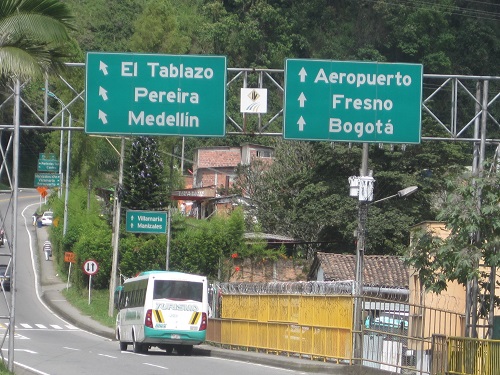
This piece of coffee heaven is Manizales, Colombia. The main highway to neighboring Pereira is even called the coffee highway, the Careterra de Café. Coffee grows everywhere from lowlands to mountain tops. Coffee loves cloudy skies, rain and moderate temperatures making the daytime highs of 70 degrees and nighttime lows of 58 degrees perfect.
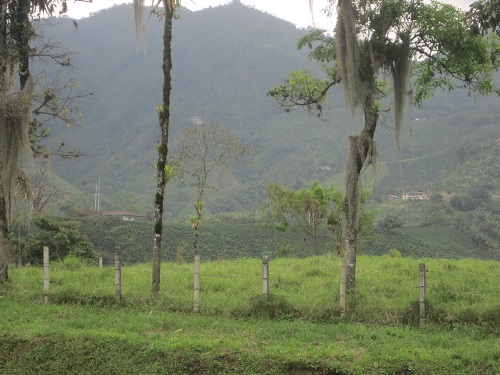
Along the Coffee Highway
Manizales was founded in the mid-19th century by 14 families who moved into this mountainous region specifically to grow coffee. They are now known as the founders or Fundadores. The local upscale mall is the Fundadores and a large local grocery store is La 14 in reference to the founders. Coffee culture is everywhere and Manizales is the home of the Colombian Coffee Growers Association. There are large coffee roasting companies everywhere but our focus is on the small family operations. We visited one such company recently. Dad came from Tolima, Colombia a generation ago and founded a tilladora. This word translates as thresher in Google but is the operation for removal of the husk on the green coffee bean before roasting. The first photo is the coffee fruit and the bean.

The next is coffee before and after removal of the husk.

Roasting coffee is an art. In our article about organic coffee roasting companies we listed types of roast and roasting temperatures.
Cinnamon Roast 195 °C (383 °F)
New England Roast 205 °C (401 °F)
American Roast 210 °C (410 °F)
City Roast 220 °C (428 °F)
Full City Roast 225 °C (437 °F)
Vienna Roast 230 °C (446 °F)
French Roast 240 °C (464 °F)
Italian Roast 245 °C (473 °F)
Spanish Roast 250 °C (482 °F)
But there is more to the process. The roaster also needs to listen and smell the coffee. An excellent roast requires the skills of an experienced roaster. In this photo Juan Fernando Hoyos Alzate tests the coffee during the process.

Once the coffee is ready it is released onto a wide surface to cool and mixing blades help in the process.


The end result is perhaps the best cup of coffee in the world.
Two Types of Coffee
Just like the rest of the coffee growing world, Colombia has had to deal with coffee leaf rust. The coffee growers in Colombia saw the plague coming and were well along towards a solution when the leaf rust hit.
When coffee leaf rust swept into Latin America the Colombian coffee research organization, Cenicafé started work on producing a Colombian leaf rust resistant coffee. This was in the 1980s. Today Colombian leaf rust resistant coffee comes in two varieties, Colombian and Castillo. The first is a cross between an old Colombian variety, Caturra, and a rust-resistant strain from Southeast Asia, the Timor hybrid. Castillo is an offshoot of further cross breeding of the first Colombian leaf rust resistant coffee strain. Replanting with Colombian leaf rust resistant coffee in Colombia has reduced the incidence of leaf rust from 40% to 5% from 2011 to 2013.
Nevertheless the two basic coffee varieties, Arabica and Caturra are still grown. Arabica thrives at higher altitudes where leaf rust is not an issue and Caturra is the modified lowland variety although the low lands around Manizales are about 5,000 feet!
Here are Caturra on the left and Arabica on the right.

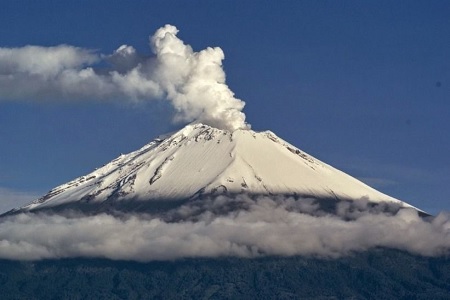
And here is the view from the Hotel Careterro in Manizales toward the 15,000 foot high volcano, Nevada Ruiz.

Gourmet Coffee Brands
For many folks there is a good cup of coffee, OK coffee, or bad coffee. In the world of true coffee lovers there is good coffee or exceptional coffee. And, for the true connoisseur there is gourmet coffee, either regular or one of the organic coffee brands. Although there is USDA certified organic coffee there is no agency that certifies gourmet coffee brands.
USDA Organic Coffee Certification
But, all gourmet coffees have several things in common. These coffees are all Arabica coffee varieties grown in volcanic soil in mountainous terrain. And a gourmet coffee has been carefully processed and quickly delivered to the consumer. No matter how good a roasted coffee was to begin with, it does not age like a fine wine. Old coffee is never gourmet coffee.
And, a gourmet coffee is freshly roasted, French roast or otherwise, in a small batch, immediately ground, and brewed. Coffee starts to age the moment the contents of the roasted bean are exposed to the air. And ground coffee is really not gourmet because it has aged before it ever got to you.
Although we like to promote Fair Trade coffees, being fairly traded is not an issue with gourmet coffees as they have a following and charge plenty for their coffee.
All of this having been said, what are some specific gourmet coffee brands?
Gourmet Coffee Brands
- Gesha coffee from Panama
- Kopi Luwak from Indonesiae
- El Injerto from Guatemala
- Yauco Selecto AA from Puerto Rico
- Kona from Hawaii
- Blue Mountain from Jamaica
- Several excellent coffees from Colombia
Gourmet Coffee Brands 1: Gesha from Panama
Gesha coffee is a Arabica variety that originated near a village of the same name in Ethiopia.
Gesha is an heirloom varietal. The seed stock is extremely pure. It has not been cross bred or altered. It is a faithful replica of the original seed stock from around Gesha, Ethiopia. The plant was tried in Central America in the 1950s because of its disease resistance.
Hacienda la Esmeralda is a coffee farm in Panama famous for its small plots of Gesha coffee.
Hacienda la Esmeralda gesha coffee has sold at auction for $100 a pound! There are a few other growers of gesha coffee in Honduras, Costa Rica and Colombia. A unique Gesha variety is called Santuario and sells typically for about $80 a pound.

Very Expensive Gesha Coffee
Gourmet Coffee Brands 2: Kopi Luwak from Indonesia
This is perhaps the most expensive coffee in the world as noted by the website most expensive coffee! You may or may not like how this coffee comes to be but it is one of the gourmet coffee brands. The palm civet cat eats the choicest coffee berries.
During the digestion process the coffee cherries and the pulp are removed but the coffee beans are not digested. During this process some kind of unique fermentation occurs which is responsible for giving the civet coffee its special flavor.
The feces of the civet cat are collected and the coffee beans isolated and cleaned. The process may be unique but the coffee commands a high price of as much as $500 a pound!
Gourmet Coffee Brands 3: El Injerto from Guatemala
Finca El Injerto is a coffee farm in Guatemala. They have won multiple awards for their coffee. They are also proud of the fact that their operation has been certified as carbon neutral.
Our commitment with our coffee’s quality has earned us multiple awards, being acknowledged as one of the best 5 coffees in the world.
Gourmet Coffee Brands 4: Yauco Selecto AA from Puerto Rico
Yauco Select production is limited to about 3,000 bags. This coffee has been a gourmet favorite for years and years. The coffee culture on Puerto Rico goes back a quarter of a millenia!
Over 250 years ago, a few coffee trees were first introduced to the island of Puerto Rico. At the time, coffee was mostly a Caribbean crop in the new Continent.
This is also a gourmet coffee that you can order online.
Gourmet Coffee Brands 5: Kona from Hawaii
Kona coffee is a market name for one of the most expensive coffees in the world. This coffee is Arabica and cultivated on the Big Island of Hawaii. It grows on the slopes of Hualalai and Mauna Loa in the North and South Kona Districts.
Be careful when ordering this coffee online. Hawaii forbids any coffee not grown where Kona is grown to be labeled as Kona coffee. But you can find coffee from elsewhere that may even contain a few percent Kona beans being sold as 100% Kona coffee. Of course your first hint will be when you make coffee and get a bad taste. Make sure that what you order is grown, processed, and packaged in Hawaii!
Gourmet Coffee Brands 6: Blue Mountain from Jamaica
Like Kona coffee, Blue Mountain coffee from Jamaica comes from a specific region of the island. And like Kona, there are several growers who produce coffee on Blue Mountain. And, all of them are expensive, running about $200 a pound. To avoid being scammed, order online from an estate like BaronHall to be sure you are getting genuine Blue Mountain coffee from Jamaica.
Gourmet Coffee from Colombia
There are lots of excellent full body Arabica coffees from Colombia in South America. We wrote that what gourmet coffees have in common is volcanic soil in the mountains. And these coffees are grown by people who have lived the coffee culture for generations. This description fits most of the coffee grown in the Colombian coffee growing axis, the “Eje Cafetero.” Where good Colombian coffees differ from other gourmet coffees is in the price. You can afford to drink gourmet coffee from Colombia every day.
We also noted that no matter how good a coffee is, it will not age well. Coffee is not a fine wine that gets better on the shelf. So, do you want to take advantage of one or more of the excellent gourmet coffee brands from Colombia? If so why not buy Arabica coffee directly from Colombia?
The folks who contacted us about coffee from Colombia ranged from people who were simply interested in Colombian coffee to roasters across the globe who were interested in prices and the specifics of getting bulk wholesale green coffee beans shipped from Colombia. With our readers’ and clients’ questions in mind here is some useful information about our business connecting Colombian Arabica coffee growers to coffee lovers everywhere.
A Word about Juan Valdez
Maybe you will just pass on paying $200 a pound for coffee. You can still find good Colombian coffee at your local supermarket. To make sure that it is 100% Colombian coffee look for the guy with his buro on the package. This is Juan Valdez and his buro, Conchita.
The Juan Valdez name was invented by the Colombian Coffee Growers Association in the middle of the 20th century. When you see Juan on the label it means you are getting 100% Colombian coffee.
And if you want the freshest green or roasted Colombian coffee contact us at BuyOrganicCoffee.org. We will have our suppliers in Juan’s country send the coffee directly to you.

Arabica Coffee from Colombia
Fair Trade Coffee
What is Fair Trade coffee? Where does it come from and who makes it? Is it organic coffee or is it a gourmet coffee brand? Is Fair Trade a good cup or coffee or just an expensive one?
Fair Trade Coffee
The idea behind Fair Trade coffee is provide a price floor for small scale coffee farmers for their coffee. The FairTrade.org.uk website writes about coffee farmers and the beginnings of the Fair Trade idea.
Fairtrade was started in response to the dire struggles of Mexican coffee farmers following the collapse of world coffee prices in the late 1980s. With Fairtrade, certified coffee producer organisations are guaranteed to receive at least the Fairtrade Minimum Price for their coffee, which aims to cover their costs of production and act as a safety net when market prices fall below a sustainable level. Through their producer organisations, farmers also receive the additional Fairtrade Premium to invest in business or community improvements.
The coffee bean is subject to the same swings as other agricultural commodities and farmers cannot simply cease coffee production until prices recover. Fair Trade tries to protect their small farmers and farmers cooperatives from ruin during down times.

Fair Trade International Logo
Small Coffee Farms Help by Fair Trade
The coffee market is huge and worldwide but the majority of coffee is produced on small coffee farms by the small producer or cooperative. None of these growers have the pricing power to gain a better market share or better price. They are largely at the mercy of a global supply chain. And the profits increase as one ascends the supply chain away from the coffee farmer.
Fair Trade Coffee Helps Smooth Out Boom and Bust Cycles
When there is a good year more coffee is produced that can be sold at reasonable prices. But, at the same time the costs of the small coffee farmer do not change. The situation in Mexico in the 1980’s was just one example of the boom and bust cycles that can devastate both small and large coffee farmers. A price guarantee for Fair Trade coffee helps farmers survive when the price of coffee falls.
A Unique Product and Supply Chain
We have written about gourmet coffee brands and have noted that these folks have well known brands and do not have a problem selling their product and making money. This is the situation that Fair Trade wants to copy. To do this they help coffee farmers take care of their land and grow better coffee. And they market their product to coffee drinkers as coffee that is good to drink and good for the coffee farmer.
But, to sell Fair Trade coffee it has to pass through the supply chain to the coffee roaster and to you. Thus there are Fair Trade certified growers and coffee roasters.
More Than Just Coffee
Coffee is not unique in being produced by small farms and being subject to boom and bust cycles. So, as Fair Trade has grown it has included bananas, chocolate, cotton, flowers, sugar, tea and many other commodities to its list of Fair Trade products.
Fair Trade Coffee versus Organic Coffee
Is fair trade coffee the same as healthy organic coffee? When does fair trade coffee differ from organic coffee and when are they the same thing? Fair Trade certification is not the same as USDA organic coffee certification. However, there are certified organic coffees produced by Fair Trade farmers. And Fair Trade coffee farmers learn and apply sustainable agricultural practices. So, much of Fair Trade coffee is organic coffee in fact even if it is not certified. Fair Trade coffee farmers learn to avoid synthetic fertilizers, herbicides, pesticides, fungicides and other chemical that get into the coffee and linger in the soil and water table. Unfortunately, to be certified as organic, a grower needs to have their soil tested and have in place a verified plan for every practice and procedure starting with planting and including crop maintenance, harvest, de-husking, bagging, and transport. And at all times organic coffee must separated from non-organic coffee to avoid cross contamination. This is simply too expensive and difficult for a small and subsistence coffee farmer to do.
Does Anyone Else Follow the Fair Trade Coffee Model?
We have written about both UTZ and Rainforest Alliance. Both of these organizations follow a plan similar to that of Fair Trade. They teach small coffee growers how to farm better and they help the farmer get a better price for his or her coffee. These organizations are also concerned about child labor practices and childhood education. Both of them also deal with a wide variety of food products and not just coffee.

Rainforest Alliance
Where Does the Money Go with Fair Trade Coffee?
Fair Trade coffee is a wonderful idea but does this system achieve its stated goals? An article in The Guardian discussed not so fair trade. It wonders if enough of the money brought in by Fair Trade prices goes back to farmers in developing countries.
Economist Paul Collier argues that Fairtrade effectively ensures that people “get charity as long as they stay producing the crops that have locked them into poverty”. Fairtrade reduces the incentive to diversify crop production and encourages the utilisation of resources on marginal land that could be better employed for other produce. The organisation also appears wedded to an image of a notional anti-modernist rural idyll. Farm units must remain small and family run, while modern farming techniques (mechanisation, economies of scale, pesticides, genetic modification etc) are sidelined or even actively discouraged.
Part of the problem is that they need to sell Fair Trade coffee at a bit of a premium in order send money back to farmers. But the advertising and promotional costs cut into available revenues. There appears to be a tightrope that these folks need to walk in order to fulfill their mission.
Where Can You Get Fair Trade Coffee?
One easy place to try a cup of Fair Trade coffee is your local Starbucks. 100% of their espresso roast is Fair Trade coffee. However, Starbucks is not 100% Fair Trade. Rather they say that their coffee is “ethically sourced.”
An offshoot organization in the USA is Fair Trade America. Their website lists where you can get Fair Trade coffee. These sources include both coffee shops where you can walk in for a cup and online sources as well. A competing USA organization is Fair Trade USA. They have a similar set up and purpose.

Fair Trade America Logo
Best Organic Coffee Brands
Are you willing to pay extra for a cup of coffee that is organic? Then you might as well go with the best organic coffee brands. So, first of all, what do high quality organic coffees have in common? And what makes one organic coffee different from another? Are there other factors besides coffee brand that you should pay attention to? And finally what are some of the best organic coffee brands?
What Do the Best Organic Coffee Brands Have in Common?
- Climate, soil, elevation
- A culture of growing coffee
- Certification
- Aroma, flavor and antioxidants
- Dedication to growing the best coffee
Best Organic Coffee Brands Have These Things in Common: Mountains, volcanic soil and overcast with rain
It is not a coincidence that the good coffee in the world is grown in the mountains. Nor is it just luck that coffee regions have or have had active volcanoes with rich volcanic soil. The best organic coffee brands come from these regions where it is also cloudy and where it rains a lot.
Altitude
Coffee grown at higher altitudes where it is cooler grows more slowly and this results in more taste.
Volcanic Ash Soils
The University of Hawaii at Manoa writes about volcanic ash soils which are called andisols.
Mineralogy: Volcanic soils largely consist of non-crystalline (amorphous) minerals, such as allophone and imogolite. These minerals form strong bonds with organic matter. As a result, organic matter generally accumulates in the surface horizon. In addition to organic matter, volcanic soils may also contain high amounts of volcanic glass material with the possibility of amorphous iron and aluminum minerals.
Physical Traits: Andisols are usually light and fluffy and are easily tilled. Like a sponge, these soils also hold a lot of water.
Fertility: When not highly weathered, volcanic soils are typically very fertile soils.
The short version is that volcanic soils are highly fertile, easy to cultivate, hold water well, and tend to retain other organic nutrients near the surface where plants can use them.

Nevado Ruiz Volcano
Cloudy with rain
Organic coffee is not irrigated nor does it receive synthetic fertilizers. Organic coffee nevertheless needs water. And it does best if the water supply is constant without periods of drought.
The best organic coffee brands are therefore grown where there is enough rain and where the cloud cover prevents the soil and plants from drying out. The fact that volcanic soil retains water very well is also a plus.
The Coffee Growing Culture
Way back in 2011 we wrote about organic Kona coffee.
Organic Kona coffee is grown on mountainous slopes on the Big Island of Hawaii. Kona coffee benefits from mild weather and moist growing conditions as well as the volcanic soil of the Hawaiian Islands.
Although Hawaiian coffee was first grown on large plantations a crash in the worldwide coffee market in 1899 led owners to lease or sell land to their workers. This started a tradition of family operated coffee farms of five to twelve acres. The fact that families continue to grow on the same land has led to the tradition of sustainable coffee growing that is the hallmark of growing healthy organic coffee. Top grades Kona coffee are Kona Extra Fancy, Kona Fancy, Kona Number 1, Kona Select, and Kona Prime.
The best organic coffee brands come from long term coffee growing cultures. For another example, Arabica coffee from Colombia has been grown by families in the “Cafetero” of Colombia in South America for generations.

Colombian Coffee
Certification of the Best Organic Coffee Brands
You will always pay more for organic coffee than regular. And the best organic coffee brands can command very high prices. To make sure that you are getting organic coffee look for the certification seal from the USDA (United States Department of Agriculture). The USDA certified organic coffee seal tells you that
sustainable agricultural practices were used and that the organic coffee is free of many of the pesticide, herbicide, and synthetic fertilizer residues that can be found on regular coffee products.
USDA Organic Coffee Certification
Other useful certifications are Rainforest Alliance and Smithsonian Bird Friendly seal. These certifications tell you that sustainable farming was used, fair labor practices were enforced and a fair price was paid to the farmer. But these are not strictly organic coffee certifications.
Why Are Some of the Best Organic Coffee Brands Different from Others?
Not all volcanic soil is the same. Some areas have been farmed for hundreds of years and have lost some fertility. Weather patterns change and some mountainous areas may not receive the reliable rainfall needed to guarantee high quality coffees. But, the most important reason why the best organic coffee brands differ from one another is the beans!
Coffee farmers have been growing coffee for a thousand years. And they have picked unique beans and replanted them to produce new varieties. Genetic mutation is always producing beans that are a little different. Also folks like the Colombian coffee growers association have worked to develop new and more disease resistant Arabica strains. These new coffee varieties retain the high qualities of Arabica coffee. But they are stronger in fighting off the plant disease known in Latin America as la roya.
What Is Important Besides Buying the Best Coffee Brands?
How old is the bag of coffee you are buying? Even high quality Arabica organic coffee loses its aroma and flavor with age. Look for an expiration date on the bag of coffee you are buying. And, if you want guaranteed fresh coffee, freshly roasted at the source, contact us at BuyOrganicCoffee.org.
If you want your coffee to retain freshness and flavor do not buy ground coffee. Buy whole bean coffee and grind just enough for each use. Even the best organic coffee brands will lose their flavor when ground and not used immediately. Coffee roasted in small batches is always the best.
Some of Best Places for Organic Coffee
Come to Latin America for the best organic coffee brands. Latin American produces more coffee than anyone else. And reliably the best organic coffees come from the Eje Cafetero (coffee growing axis) in the mountains of Colombia. A similarly good but smaller region is western Panama in the province of Chiriquí.
Here is a short list single origin coffees from Panama
- Finca Villa Estrella Boquete Coffee
- Boquete Panama Coffee
- Café Ferdabella
- Geisha Coffee
- Café de Luna
- Café Suarez
- Palo Alto
- Ruiz Family Coffee

Volcan Baru
Here is a short list of coffees from the Eje Cafetero of Colombia
- Volcan
- Linea Rojo
- Sostenible
- Frailes
- Origen
- Oma
- Juan Valdez
- Medalla de Oro
- Aguila Roja
- Sello Rojo
- Colombian Export
- Café la 14
- Olympica
- Lucafe
For help with wholesale quantities of high quality export coffee or certified organic coffee from Colombia contact us at BuyOrganicCoffee.org at your convenience.
Jamaica Blue Mountain Organic Coffee
Jamaican Blue Mountain Coffee comes from the Blue Mountains of Jamaica. These brands are mild coffee, low on bitterness. Because these coffee brands have a great reputation they are expensive. Four fifths of Jamaica Blue Mountain coffee ends up in Japan.
The Blue Mountains provide an excellent climate for coffee-They rise to over seven thousand feet with rich soil, excellent drainage, and abundant rainfall.
Costa Rica
If you are looking for environmentally friendly shade grown organic coffee, look for brands of organic coffee from Costa Rica. This region has volcanic soil, mountains and rainfall similar to Colombia and Panama.
Tesoros del Sol
This name means treasures of the sun. Their coffee is hard bean Arabica grown at high altitude in the Alajuela mountainous district of Costa Rica. This organization was founded in order to help local coffee farmers develop and maintain sustainable farming practices. Tesoros del Sol ships certified organic green coffee beans throughout the world. They have a coffee club in which members are routinely sent one of the nicest brands of Costarican organic or regular coffee.
Tree Frog Coffee
Tree Frog will send you freshly roasted coffee, directly from the estate. It is famous for its sweet aroma, smooth body, and rich taste and a professional roasting process. The intent of this coffee plantation is to not only provide you with a great cup or healthy organic coffee but maintain a healthy ecosystem as well.
Keens Beans Organic Coffee
Keens shade grown beans are hand-picked and sun dried. This company grows its full body coffee in Costa Rica but roasts the green coffee beans in Pensacola, Florida. This allows for more rapid shipping to North American customers. And, if you choose to roast your beans at home a few at a time, simply order green coffee beans from Keens Beans.
Muddy Waters
This company produces coffee in an area that has grown coffee since 1779. Muddy Waters obtains its organic coffee from some of the best growers from San Jose, Alajuela, Heredia, Puntarenas, and Cartago provinces, the traditional coffee growing districts of Costa Rica.
Café Britt
On their website, prices are quoted in Costarican colones instead of dollars. The company sells nine different brands of Costarican organic coffee.
Organic Coffee at the Grocery Store
Two easy to find organic coffee brands are at Whole Foods and at Sam’s Club or Wal-Mart.
Marques de Paiva Organic Whole Bean Coffee is grown in Brazil. This coffee comes in foil bags of 10 and 40 ounces. It even is available as a decaffeinated organic coffee.
Whole Foods has an organic whole bean coffee as well as Allegro Coffee Company organic coffee. The company provides customers with a Fair Trade Guarantee.
Other easy to find organic coffee brands include Caffe Ibis, Café de Chiapas, Elan Organic Coffees, Equator, Golden Valley Farms Coffee Roasters, Green Mountain Coffee, S&D coffee, and Sun Coffee Roasters.