Wholesale Organic Fair Trade Coffee
Where do you find wholesale coffee if your preference is healthy organic coffee? Commonly, wholesale batches of organic coffee are purchased directly from coffee growers and cooperatives, whereas standard coffee commonly enters a worldwide supply chain and ends up where price, supply, and demand dictate. Coffee giants like Starbucks send their people throughout the world to find huge quantities of coffee. What do you do if you want organic coffee at wholesale prices? And what if you want to coffee grower to get a fair price for his coffee? That is where you want wholesale organic fair trade coffee.
Fair Trade Coffee
The essence of fair trade coffee is that it is produced by farmers who are members of a democratically run cooperative. The coffee is grown without the use of child labor. The coffee is organically grown in that the use of pesticides and herbicides is limited. And, importantly, the farmer receives both a minimum price for his crop and a premium for abiding by the criteria involved. Strictly speaking Fair Trade coffee is certified by one of the Fair Trade related agencies. However, there are other coffee certifications that assure one of a fair trade results without necessarily having a fair trade sticker on the bag of coffee. UTZ and Rainforest Alliance are two good choices for wholesale organic fair trade coffee without a specific fair trade label on the package.
Making a Living Growing Organic Coffee
About one percent of the seventy million tons of coffee produced each year is organic coffee. The premium paid for organic versus regular coffee runs from ten to forty percent. At issue for small organic coffee producers is the price of being certified by an agent of the United States Department of Agriculture. It can cost a small coffee grower in the mountains of Panama $500 a year to get and retain certification. If he is not getting a sufficient premium for his organic coffee the extra effort and the cost are not worth it. One route that many small growers take is to affiliate with UTZ or Rainforest Alliance. Both of these agencies teach and require an organic approach to coffee farming, avoidance of child labor and sustainable agricultural practices. They also help the small coffee grower find buyers.
Wholesale Organic Fair Trade Coffee from the Grower
What if you want to purchase wholesale organic fair trade coffee directly from the grower? How do you find coffee growers without tramping up and down the mountains of the Colombian Eje Cafetero (coffee growing axis of Colombia)? And how do you get the coffee from the farm and export it to the USA, Japan or Europe? How can you get a few bags of coffee and how can you get a ton of wholesale organic fair trade coffee? You can book a flight to Manizales, Colombia in the heart of the Cafetero, put on your hiking boots and start walking, or you can deal with folks who live and work in Latin America, specifically Panama and Colombia, and are native English speaker as well as native Spanish speakers. For more info about access to wholesale organic fair trade coffee, contact us at Buy Organic Coffee.
Organic Shade Grown Coffee
If you are looking for the best coffee, the best healthy organic coffee, you are probably looking for organic shade grown coffee. As the name implies, shade grown organic coffee is grown in the shade of a tree canopy. These habitats are commonly in a cloudy part of a mountain range. Coffee growers plant coffee where there are already trees or plant coffee along with a variety of shade trees. This sustainable agricultural practice results in high quality organic coffee. Birds nest in the shade trees which are the cornerstone of this healthy habitat. Many coffee farmers plant plantain or fruit trees along with their coffee. This practice provides shade for the coffee and a secondary crop or two to harvest. Look for USDA, UTZ or Rainforest Alliance certification when you want organic shade grown coffee. Unfortunately, there are many coffee farmers who simply harvest coffee that grows in the forest and sell locally because they cannot afford fees necessary to gain official USDA organic coffee certification of their product. The United States Department of Agriculture certifies organic shade grown coffee through its many offshore affiliates but the USDA does not help a small grower in Mexico, Guatemala, Costa Rica, Panama, Colombia or Ecuador to find buyers. On the other hand both UTZ and the Rainforest Alliance work with coffee farmers to help them market their products.

UTZ Organic Shade Grown Coffee
UTZ Organic Shade Grown Coffee
The long term goals of UTZ are good agricultural practices, safe and healthy working conditions, abolishment of child labor, and environmental protection. A UTZ grower learns to do the following and then continues to do what is needed.
- Reduce and prevent soil erosion
- Keep records of fertilizer and chemical use and use these products responsibly
- Follow good farming practices including integrated pest management
- Avoid deforestation
- Protect water sources, native and endangered species
- Use native fauna for shade grown coffee
- Train workers properly in their own language
- Implement and follow through on health and safety requirements
- Teach and require good hygiene
UTZ follows coffee from planting to the roaster, carries out yearly inspections and promotes the organic shade grown coffee brands of its clients.
Rainforest Alliance Organic Shade Grown Coffee
Rain Forest Alliance Organic Shade Grown Coffee
An alternative to organic coffee certification is for a grower to be Rainforest Alliance certified. The Rainforest Alliance is a non-governmental organization that works to conserve biodiversity. It does so for agricultural products by influencing consumers to buy what is good for the environment and good for small farmers. Rainforest Alliance certified means that the coffee that you buy was produced using good land use practices. Rainforest Alliance certified coffee is part of a broader sustainable agriculture program of tropical crops, including coffee, bananas, cocoa, oranges, cut flowers, ferns, and tea. Certified coffee farms meet a strict set of environmental standards that include preservation of the ecosystem and reduction in use of synthetic chemicals of all sorts. Like UTZ, Rain Forest Alliance helps its clients promote their organic shade grown coffee brands.
For help finding small growers of organic shade grown coffee deal with people who work where it is grown. Contact Buy Organic Coffee for more info.
Wait Five Years for a Cup of Coffee
For folks who are used to stopping by Starbucks for a cup of coffee on the way to work it may be a little difficult to imagine that they might have to wait five years for a cup of coffee! This thought is occasioned by an article we read in the online Arizona Daily Star. The article had to do with indigenous coffee growers in Mexico and the damage done to their organic coffee crops and their lives by coffee leaf rust. Mexico is the biggest exporter of USDA certified organic coffee. Many of the producers of organic coffee in Mexican state of Chiapas are indigenous families living in the cloud forest. They produce shade grown organic coffee in the Mexican highlands under the shelter of a cool forest canopy. This environment is conducive to high quality organic coffee. Unfortunately, coffee leaf rust has arrived in the highland of Chiapas. If you get your organic coffee from this region you may have to wait five years for a cup of coffee.
Coffee Leaf Rust and Organic Coffee
Leaf rust attacks coffee crops and leaf rust kills organic coffee crops. If an organic grower is unable to treat the problem with non-chemical means he risks losing his crop and his livelihood. The fungus’ proper name is Hemileia vastatrix. When it is not controlled the disease kills coffee plants and reduces coffee growers to poverty. It is known among Latin American coffee growers as roya. The issue for organic growers is that quarantine and destruction of individual plants is not always effective. Thus a grower who has put the time, effort, and money into getting organic coffee certification may lose everything unless he turns his back on organic practices and spays the heck out of his coffee plants. Then he can only sell his produce at regular coffee prices and not the higher prices that good quality organic coffee commands. If he loses his crop he needs to replant, probably after spraying the soil, and wait five years for new organically grown coffee plants to reach maturity.
Colombian Alternatives
Do you really want to wait five years for a cup of coffee? There are alternatives. We wrote some time back about the efforts of the Colombian coffee growers association in developing high quality strains of Arabica coffee that are resistant to la roya, the leaf rust. This Colombian rust resistant coffee has successfully reduced the incidence of leaf rust in Colombian crops to less than five percent. In the early 1980’s Cenicafé started work on producing a Colombian leaf rust resistant coffee. The Colombian leaf rust resistant coffee comes in two varieties, Colombian and Castillo. The first is a cross between an old Colombian variety, Caturra, and a rust-resistant strain from Southeast Asia, the Timor hybrid. Castillo is an offshoot of further cross breeding of the first Colombian leaf rust resistant coffee strain. Replanting with Colombian leaf rust resistant coffee in Colombia has reduced the incidence of leaf rust from 40% to 5% from 2011 to 2013. Need to wait five years for a cup of coffee? You will not if you buy Colombian brands of organic coffee. Check in with us at Buy Organic Coffee for more info.
Leaf Rust and Drought Drive Arabica Prices Higher
The price of Arabica coffee beans is twice what it was a year ago. It turns out that both leaf rust and drought drive Arabica prices higher. Both problems also devastate the finances of small coffee farmers. A recent article in the New York Times notes the terrible damage done as a leaf rust fungus cripples coffee production across Central America.
A plant-choking fungus called coffee rust, or la roya, has swept across Central America, withering trees and slashing production everywhere. As exports have plunged over the last two years, the effects have rippled through the local economies.
La roya as it is known in Latin America, was the culprit that devastated coffee plantation on the island of Ceylon (now Sri Lanka) in the mid-19th century and led British planters to switch to tea! The disease spread from the East Indies to South Asia and Africa and eventually arrived in the new world, almost a century later around 1970. It is possible to defeat the disease as we note in our article, Colombian Leaf Rust Resistant Coffee While a plague of coffee leaf rust threatens the livelihoods of coffee growers and workers throughout Central America, in the coffee producing nation of Colombia, the workers at the Cenicafé have found a cure. Cenicafé is a research organization funded by the Colombian Coffee Growers Federation – the folks who bring you Juan Valdez coffee. In the early 1980’s Cenicafé started work on producing a Colombian leaf rust resistant coffee. Today it comes in two varieties, Colombian and Castillo. The first is a cross between an old Colombian variety, Caturra, and a rust-resistant strain from Southeast Asia, the Timor hybrid. Castillo is an offshoot of further cross breeding of the first Colombian leaf rust resistant coffee strain. Replanting with Colombian leaf rust resistant coffee in Colombia has reduced the incidence of leaf rust from 40% to 5% from 2011 to 2013. Until other nations can replant with resistant strains leaf rust, and drought, drive Arabica prices higher.
And Drought in Brazil
Although the effects of La Roya on coffee production in Central America are severe they are not the main reason for higher coffee prices. Brazil produces a third of the coffee consumed in the world. And now coffee prices are double due to the Brazil drought.
Coffee prices have doubled since late last year, and drinkers of the black stuff may soon start to notice. The culprit: a severe drought in Brazil, the origin of roughly a third of the world’s coffee. The dry spell has wreaked havoc on this year’s harvest of Arabica beans, which are used for the vast majority of global coffee production.
As a combination of leaf rust and drought drive coffee prices higher where can a person go for good quality Arabica coffee at a fair price? Colombia may be the answer as there are lots of rust free organic coffee brands in Colombia and production seems to be going up. For more info feel free to contact us at Buy Organic Coffee today.
Arabica Gourmet Coffee
If you are looking for Arabica gourmet coffee your best choice for quality and a wide selection is from the Colombian brands of organic coffee. Colombian coffee comes from the Cafetero, the mountainous region of Colombia between Bogotá and the Pacific. This region comprises the departments or administrative regions of Caldas, Risaralda, Quindío, parts of the Valle de Cauca and Antioquia the region Northeast of Tolima. The major cities in the Cafetero are Manizales, Pereira and Armenia.
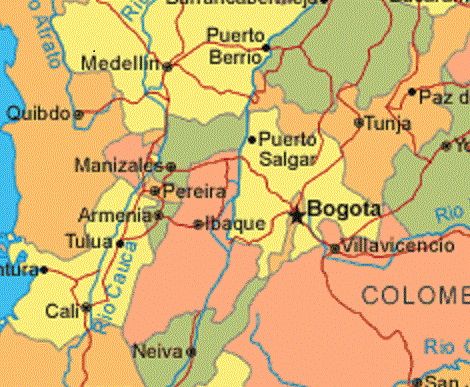
Arabica Gourmet Coffee in Colombian Cafetero
In the Cafetero of Colombia they grow Arabica coffee, some of the finest in the world. Colombia has slipped behind Vietnam in volume of coffee production because Vietnam produces lower quality Robusta coffee beans they are no threat to Colombia in Arabica Gourmet Coffee. Colombia does not produce as much coffee as Brazil because it is a smaller country. However, Colombia specializes in Arabica gourmet coffee.
Brands of Colombian Arabica Gourmet Coffee
If you want into the Éxito supermarket on the lower level of the Fundadores Mall in Manizales you can buy Arabica gourmet coffee off the shelf for a few dollars a bag. Here are a few easily available examples of Arabica gourmet coffee.
- Café Colombia Export by Casan: Northern región of Cauca Valley
- Café La 14 by Cafexcoop S. A.: Sevilla, Cauca Valley
- Café Excelso by Oma: Roasted in Bogotá
- Café Aguila Roja: Cauca Valley
- Olimpica Café: Barranquilla
- Café Sello Rojo: Roasted and packed in Medellin
- Medalla de Oro: Pereira, Risaralda
- SR Coffee: Nariño, near Manizales
These coffees typically sell for around 7,000 Colombian pesos or $3.50 a pound on the shelf in Colombia. These same brands of Arabica gourmet coffee are found on Amazon selling for up to $20 a bag!
Gourmet Coffee Taste and Aroma
Ideally your gourmet coffee is healthy organic coffee. This means that the coffee free from many impurities found in regular coffee. However, the bulk of coffee production in Colombia follows sustainable agricultural practices. As such even Colombian coffee that is not certified as organic is commonly grown according to organic practices. Because Colombia has effectively dealt with the problem of coffee leaf rust there is no need to spray Arabica gourmet coffee for this fungus. The Colombian Cafetero is mountainous, usually cloudy and rainy. These are ideal conditions for growing Arabica coffee. Coffee is picked at the peak of perfection, carefully dried and sorted and then either shipped as green coffee beans or roasted and put in bags for retail sale. Careful attention to detail leads to many brands of Arabica gourmet coffee in Colombia where they are basically spoiled by having wonderful coffee every day. Coffee aroma is also affected by roasting. The aroma of the original coffee predominates at lower roasting temperatures while the caramelization caused by roasting lends a burnt taste seen in French and Spanish roasts at higher roasting temperatures. No matter how you like your coffee roasted you will find many excellent brands of gourmet Arabica coffee in the Cafetero of Colombia.
Wholesale Green Coffee
The best way to store coffee is before it is roasted. The most cost effective way to purchase coffee is in wholesale quantities. Thus wholesale green coffee is what roasters around the world buy. Green coffee beans retain their flavor and antioxidant potency for two years if stored properly. Once coffee beans are roasted they retain their flavor and potency for six months when correctly stored. Once roasted coffee is ground and exposed to the air, it starts to lose its flavor and antioxidant properties immediately. So, if you want to ship one of the great brands of Colombian coffee to the USA, Europe or Japan you will want wholesale green coffee.
Wholesale Coffee
The majority of coffee enters a worldwide supply chain and ends up where price, supply, and demand dictate. On the other hand healthy organic coffee is commonly purchased directly from coffee growers and cooperatives while standard Big coffee chains commonly have multiyear contracts with growers. But what about a smaller company that wishes to purchase organic wholesale green coffee? Where do they go? Who do they deal with and what are the problems they need to overcome? Coffee importers typically buy and hold very large quantities of coffee and sell at optimum prices as the market allows. Roasters are to a degree at the mercy of importers for quantity, quality, and price of their coffee beans. Nevertheless, roasters, who sell prepackaged coffee to large retailers, are said to have the highest profit margin of any individual segment of the supply chain.
Your Man in Colombia, Panama or Costa Rica
It is usually the large coffee chain that can afford to deal directly with producers around the world. But, as a smaller chain of coffee houses or marketer of selected brands of organic coffee, you have an option. You can deal with someone who speaks your language, lives in the heart of the coffee growing regions of the Americas and can deal directly with coffee farmers and exporters. We have written before about the difficulty in getting bags of roasted coffee out of Colombia and the need to pass sniff tests by a machine and then a sniffer dog at the airports in Pereira or Bogota. If you would like to get wholesale green coffee from Colombia, Panama or Costa Rica consider dealing with the folks at Buy Organic Coffee.
Wholesale Organic versus Regular Coffee and Finding a Source
Organic coffee is roughly one percent of world production (67,000 tons versus 69,000,000 tons) and sells at a premium to regular coffee. The average premium over regular coffee has ranged from ten to forty percent in the last ten years. However, when coffee prices go down in general, so can the price paid for organic coffee. Well known and trusted producers commonly command a higher premium than unknowns. This presents a problem for unknowns who pay for Bio Latina organic coffee certification or certification by other reputable certification agencies. Certification does not guarantee sales or profits! For the individual who would like to buy, roast, package, and sell organic coffee in the USA or Europe how does he go about finding an organic grower with products to sell? If you want organic wholesale green coffee talk to the folks at Buy Organic Coffee.
Coffee and Weight Loss
Is there are relationship between coffee and weight loss? According to the Mayo Clinic, the caffeine in coffee
may slightly boost weight loss or prevent weight gain, but there’s no sound evidence that increased caffeine consumption results in significant or permanent weight loss.
They go on to say this in regard to coffee and weight loss, appetite and metabolism:
Appetite suppression: Caffeine may reduce your desire to eat for a brief time, but there’s not enough evidence to show that long-term consumption aids weight loss.
Calorie burning: Caffeine may stimulate thermogenesis — one way your body generates heat and energy from digesting food. But this probably isn’t enough to produce significant weight loss.
Green Coffee Bean Extract
On the other hand there are folks selling coffee bean extract and promoting it as a weight loss tool. One study regarding coffee and weight loss demonstrated short term weight loss with coffee bean extract.
Some commentators have remarked that it is probably the caffeine that helps one lose weight with coffee bean extract. However, the study author believes that a chemical called chlorogenic acid in unroasted beans is what does the trick. A next logical step would be to take another group of overweight volunteers and give half of them caffeine pills and the other half coffee bean extract with the same amount of caffeine and compare the results.
This author would rather be in a test group that drank healthy organic coffee with the same amount of caffeine. What concerns objective observers likes the doctors at the Mayo Clinic is that there is no evidence of a long term relationship between coffee and weight loss. This is similar to what was seen decades ago when doctors routinely prescribed amphetamines and thyroid extract for weight loss. Both methods increased metabolism in the short term and neither resulted in weight loss without sustained, lifetime use. In each case the bad side effects of long term stimulation with amphetamines or excessive amount of thyroid hormone outweighed the moderate loss of weight caused by these substances. At least with a good cup of organic coffee you get to enjoy the coffee and its other health benefits without worrying about side effects.
Other Good Things from Coffee
While the question of coffee and weight loss is not yet resolved there are lots of good reasons to drink coffee, especially healthy organic coffee. Coffee drinkers experience half the incidence of Type II Diabetes and lower rates of cancers of the colon, prostate, and liver. Drinking coffee reduces the frequency of depression and the risk of suicide. The antioxidants in coffee appear to be responsible for lower rates of both Alzheimer’s disease and Parkinson’s disease. And we have even found recently that coffee can lower the mortality from liver cirrhosis that was caused by drinking alcohol. And if you choose to drink organic coffee you can exclude all of those pesticide and herbicide residues that can occur in regular coffee. And, if you want to try caffeine or the antioxidants in coffee for weight loss, healthy organic coffee is a tasty and healthy option.
Growing Coffee in the Shade
There are several great aspects of growing coffee in the shade. First of all it helps preserve the environment. Shade trees provide habitat for birds. Trees help prevent soil erosion. Growing coffee in the shade without excessive use of synthetic fertilizers and without herbicides and pesticides helps keep the water table pure as well. And, second, growing coffee in the shade typically results in better coffee. Coffee is naturally a shade-loving plant. It is only recently that coffee strains have been developed to allow for closely spaced coffee plants in full sun. These plants typically require use of herbicides, pesticides and synthetic fertilizers whereas growing coffee in the shade results in better coffee and a cleaner environment.

Growing Coffee in the Shade – Song Bird
Coffee Plants Love Shade
Shade grown organic coffee is a return to historic and time tested growing techniques. Natural coffee strains grow best in partial or total shade. The truth is that coffee many plants dry out and die if planted in full sun. So the traditional way to grow coffee is under a canopy of trees. This method of planting on hillsides helps prevent erosion as is still seen in regions of Colombia, Panama, and other parts of the world where coffee is grown on steep slopes. By keeping coffee in its normal habitat growers avoid the repeated infestations of plant diseases and insects seen when crowding the plants in an attempt to increase production. The chances of destroying a whole coffee crop is reduced when the plants are not packed together into a plant monoculture but interspersed among other plants and trees. The means of growing coffee in the shade is in a mixed stand of hardwood trees and fruit trees. There are easily forty different species of tree seen on shade grown organic coffee plantations. It is the mixture of trees and plants that supports an ecosystem of birds and small animals, preserves the soil and protects the ground water. Growing coffee in the shade like this is a self-sustaining way to preserve the ecosystem. Birds and other small animal eat the pests that otherwise would kill coffee plants or require chemicals to control.
Planting Coffee in the Forest
Many small family operations are growing coffee in the shade of an existing forest. Others clear very small sections for planting while retaining the forest canopy for shade. Planters who start with bare ground commonly start by planting rows of plantain to help control erosion on slopes and provide the initial cover for growing coffee in the shade. When growers use plantain or fruit trees they are able to harvest two or more crops from the same ground. Because the price at which a grower can sell his coffee can vary from year to year, another crop or two on the same ground helps him avoid over dependence on coffee for his income. Shade grown organic coffee comes with three possible certifications. One is the USDA certification as organic coffee. The others are UTZ certification and Rain Forest Alliance certification. These two organizations do more than just certify. They teach and they help growers find buyers as well.
USDA Organic Coffee Certification
UTZ Organic Coffee Certification
Rainforest Alliance Certification
Treat Cirrhosis with Coffee
Last week we posed and answered the question, Is coffee good for you? We listed a whole host of health benefits of drinking coffee. We noted that healthy organic coffee is the best choice as it is free from many impurities that can show up in a regular cup of coffee. Now we see a new benefit of drinking coffee. You can essentially treat cirrhosis with coffee. Chronic liver disease including cirrhosis kills more than thirty thousand people a year in the USA. According to newly reported research drinking two cups of coffee a day can reduce the risk of dying from cirrhosis by sixty-six percent. Researchers looked at a variety of caffeine-containing drinks but it turns out that you can only treat cirrhosis with coffee. That is to say that only coffee leads to a substantial reduction in the risk of dying from cirrhosis. It is important to note that this benefit does not apply to cirrhosis causes by Type B hepatitis.
Treat Cirrhosis with Coffee and Avoid Alcohol
It is a known fact that cirrhosis of the liver is commonly caused by drinking too much alcohol. The study in the journal Hepatology confirmed that fact. If one has developed cirrhosis for any reason aside from infectious hepatitis one can treat cirrhosis with coffee and cut the risk of dying from that disease down to a third of what it was originally. As the study noted, other caffeine drinks did not have this effect. Thus one can assume that it is the antioxidants in coffee that allow one to treat cirrhosis with coffee, two or cups a day, and reduce the likelihood of cirrhosis related death by two thirds. And, be advised, that if you have cirrhosis and choose to treat cirrhosis with coffee you still need to cut out the alcohol!
Antioxidants and the Benefits of Drinking Coffee
Antioxidants are molecules that inhibit cell damage and cell death in the human. They inhibit the oxidative breakdown of other molecules in the cell. This is important because oxidation is a factor in sickness and aging. Antioxidants help prevent the damage caused by excessive oxidation and are believed to inhibit the process of aging. Diseases often cause what it known as an oxidative reaction. This sort of reaction produces free radicals which in turn start chain reactions. These result in cell and tissue damage. The human body has its own antioxidants to control this situation but often it needs help. Natural means of controlling oxidation include vitamins C and E as well as glutathione. Depleted levels of antioxidants lead to a condition called oxidative stress in which body cells are damaged. Regular and organic coffee antioxidants are in the same class of molecules that help reduce oxidation. We already knew that antioxidants in coffee help reduce the incidence of Type II diabetes, various forms of cancer, Alzheimer’s and Parkinson’s diseases, depression and the risk of suicide. Now it turns out that you can even treat cirrhosis with coffee. What is different here is that a person already has the disease and the outcome of the disease is changed if one drinks two or more cups of coffee a day. This is different from the ability of coffee to reduce the incidence of the disease itself. So, enjoy your morning cup of coffee and if you know someone with cirrhosis consider serving them a cup or two as well.
Is Coffee Good for You?
We drink a lot of coffee. It is the official wake up drink. The USA consumes 4.2 Kilograms of coffee per person per year. Eighty-three percent of adults in the USA drink coffee and sixty-three percent drink coffee every day. But, is coffee good for you? The health effects of drinking coffee are pretty good. Read on to find out more about how coffee is good for you. And read to learn especially how organic coffee is even better!
Coffee and Health
Scientific research tells us that drinking coffee reduces the risk of Type II diabetes, prostate cancer, endometrial cancer, colon cancer, glaucoma, depression, suicide, skin cancer, Alzheimer’s disease, Parkinson’s disease, and gall stones. Is coffee good for you? Looks like it is. For one to experience the health benefits of drinking coffee one need to drink coffee every day and usually one needs to drink two, three, or more cups a day. The keys to the health benefits of coffee are the antioxidants.
Antioxidants are molecules that inhibit cell damage and cell death in human cells which normally come from oxidative breakdown of other molecules in the cell. Oxidation is a factor in sickness and aging. Antioxidants help prevent damage caused by excessive oxidation and to a degree inhibit the process of aging. When an oxidative reaction brought on by disease gets going it produces free radicals that start chain reactions which in turn cause cell and tissue damage. The human body has or uses antioxidants to control this situation. Coffee antioxidants fall into the class of molecules that help reduce oxidation. A specific antioxidant is methylpyridium. It is formed from the chemical trigonelline when coffee beans are roasted. Methylpyridium increases the activity of phase II enzymes with help protect against colon cancer.
Is coffee good for you? Yes, it is. And is organic coffee even better? Healthy organic coffee is free of the up to 133 impurities often found in regular coffee. Research by the Australian Food Standards Authority showed that as many as one hundred thirty-three contaminants can be in a cup of commercially available coffee. These include metals like aluminum and zinc, pesticide residues, ochratoxin A, acrylamide, furan, and polycyclic aromatic hydrocarbons. Some polycyclic aromatic hydrocarbons are found to cause cancer. Furans have been associated with skin disorders, liver problems, certain kinds of cancers, impairment to the reproductive, endocrine, and immune system, as well as effects on embryonic development. Drink organic coffee grown by sustainable agricultural practices and avoid the intake of pesticide and herbicide residues with your morning brew.
Is Coffee Good for You?
Coffee wakes you up in the morning and peps you up during the day. Along the way the antioxidants in coffee do things to help prolong your life, avoid degenerative disease, alleviate depression, and generally make things better. Organic coffees do all of this and they do not include the impurities that can be found in regular commercially available coffee. If you want the best of all possible worlds, drink organic coffee.